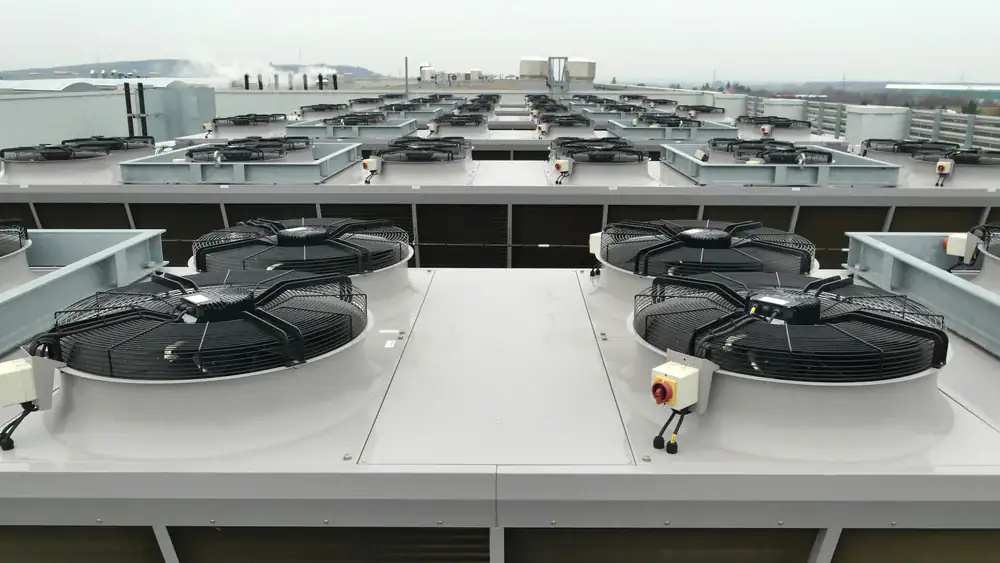
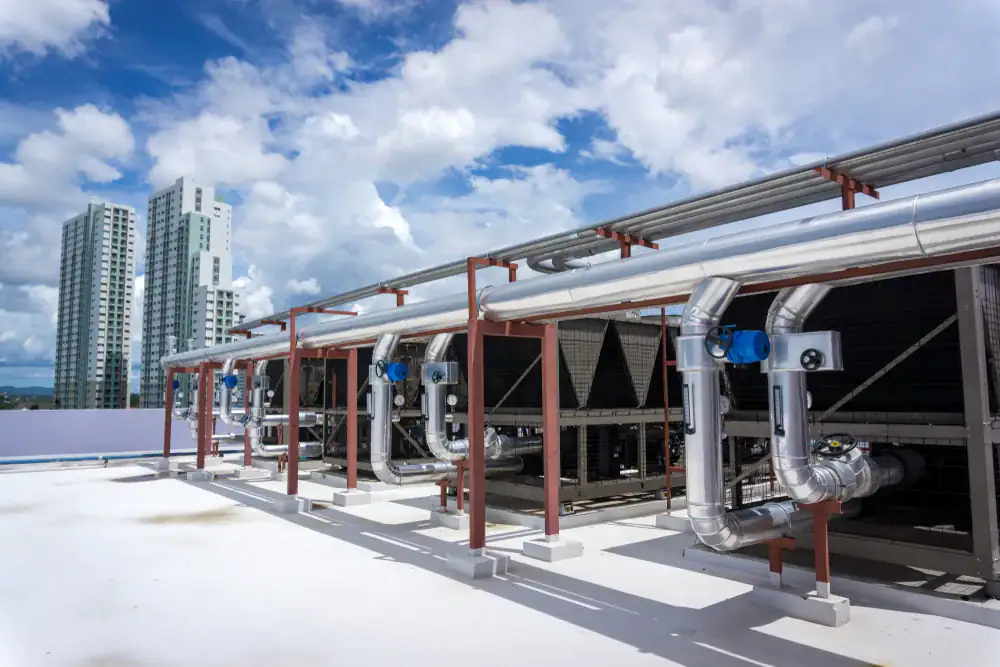
Air-cooled and water-cooled chillers both provide cooling for commercial buildings, but they work differently and suit different situations. Air-cooled chillers use fans to blow outdoor air across condenser coils, releasing heat directly to the atmosphere. They’re typically installed outdoors on roofs or ground level, don’t need cooling towers, and work well for small to medium facilities. They cost less to install, require simpler maintenance, and don’t use water, making them practical where water is expensive or limited. Water-cooled chillers transfer heat to water that circulates through a cooling tower, which then releases the heat. These systems are usually installed indoors, handle larger cooling loads more efficiently, and last longer because they’re protected from weather. They’re common in hospitals, large office buildings, and facilities with substantial cooling needs. Water-cooled systems are more energy-efficient, especially at higher capacities, but require cooling towers, water treatment, and more complex maintenance. The right choice for your facility depends on your building size, cooling requirements, available space, water availability, and long-term operating costs. Both types need regular professional maintenance to run efficiently and avoid breakdowns.
 Call Now