VRF Systems Bexar County TX

Vrf Systems

Your commercial building has different temperature needs in every space. One system shouldn’t force everyone into the same setting. VRF systems give you precise control over each zone while cutting energy costs by up to 55% compared to traditional HVAC.

Over 20 Years Experience

Certified VRF Technicians

24/7 Emergency Service Available

Veteran Owned and Operated

Variable Refrigerant Flow Systems Texas

What Makes VRF Different

Variable refrigerant flow systems use refrigerant instead of air or water to deliver heating and cooling throughout your building. One outdoor unit connects to multiple indoor units, each controlling its own zone independently. The system adjusts refrigerant flow based on real-time demand in each space, so you’re only using energy where it’s actually needed. This technology has been proven in commercial buildings since the 1980s. In Japan, VRF systems are installed in 50% of midsize office buildings and 33% of large commercial buildings. Now that same efficiency and control is available for Bexar County commercial properties. Unlike traditional HVAC that runs at full capacity or shuts off completely, VRF systems modulate continuously. That means consistent temperatures, quieter operation, and dramatically lower energy bills.
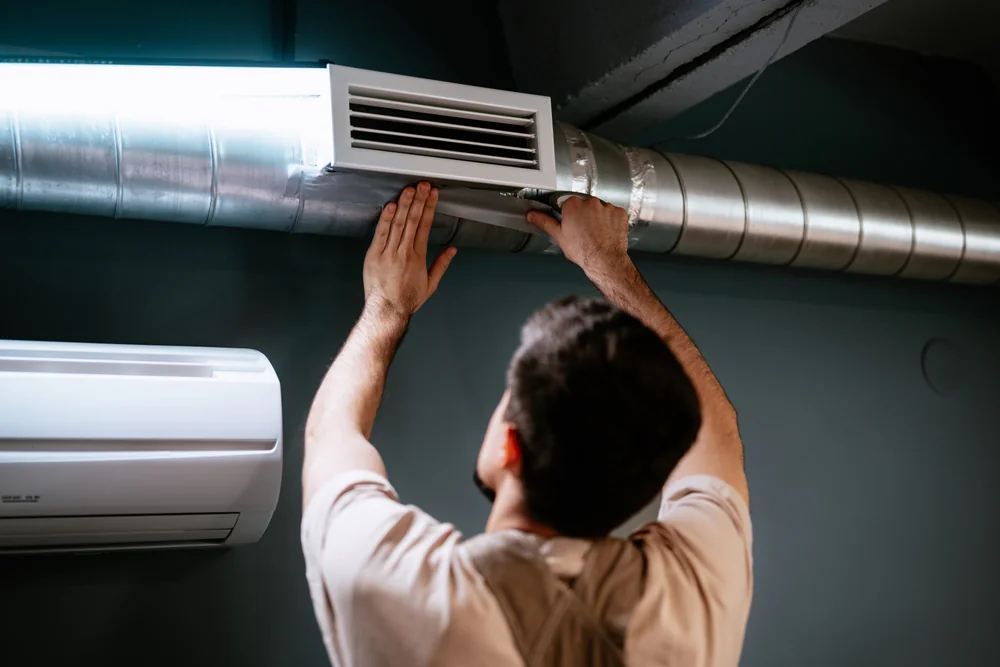
A person adjusts or installs a vent cover on a metal air duct attached to the ceiling in TX, with a wall-mounted air conditioning unit visible nearby, possibly during an ac replacement San Antonio project.
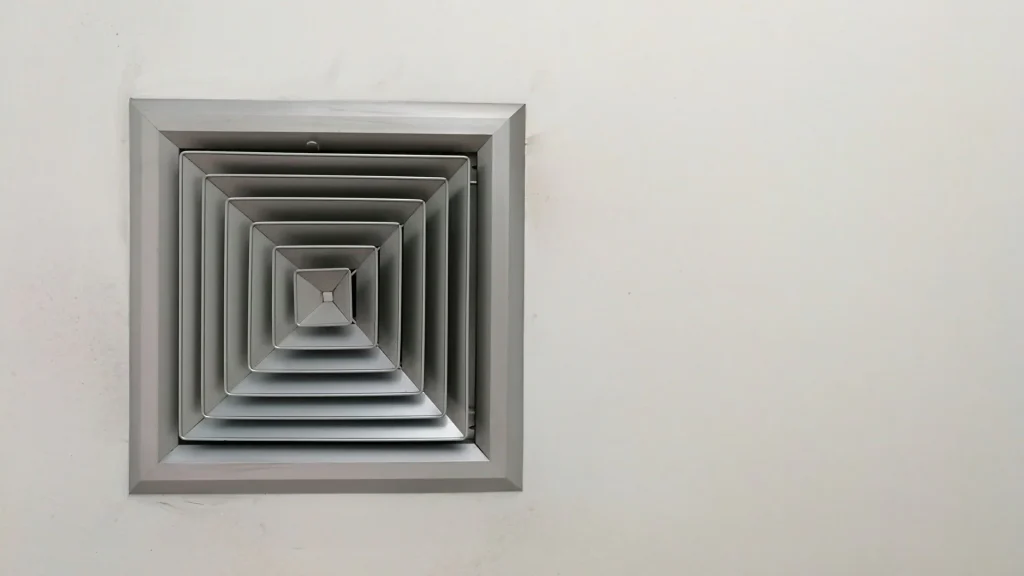
A square metal air vent with concentric layers is mounted on a plain white wall—its geometric, symmetrical pattern suggests recent ac replacement in San Antonio, TX, appearing clean and unused.

Commercial VRF HVAC Bexar County

Built for Buildings with Different Needs

Most commercial buildings have zones that need different temperatures at the same time. South-facing offices get hot from sun exposure while interior conference rooms stay cool. First-floor retail spaces need different settings than upper-floor offices. Traditional HVAC forces you to pick one temperature for everyone. VRF systems handle this naturally. Up to 50 indoor units can connect to a single outdoor unit, each with its own thermostat and settings. Heat recovery models can even provide heating to one zone while cooling another, transferring thermal energy between spaces instead of wasting it. This matters in Bexar County where Texas heat puts constant strain on commercial cooling systems. When your system can target exactly where cooling is needed instead of overcooling the entire building, you save money every single day. Office buildings, hotels, retail spaces, and multi-family properties all benefit from this level of control. The technology uses inverter-driven compressors that adjust speed based on actual demand. That’s different from traditional systems that run at 100% capacity every time they turn on, regardless of whether you need full cooling or just a slight adjustment.

VRF Installation Benefits Bexar County

What You Actually Get

VRF systems solve the problems that traditional commercial HVAC can’t—individual zone control, simultaneous heating and cooling, and energy savings that show up on every utility bill.

VRF System Installation San Antonio

Installation That Sets You Up Right

VRF systems require specialized installation knowledge. The refrigerant lines must be pressure tested, properly evacuated, and charged with precise refrigerant volumes. Shortcuts during installation lead to efficiency losses and premature failures down the road. We follow manufacturer specifications exactly. That includes proper brazing techniques, thorough system testing, and correct refrigerant charging. Our technicians receive ongoing training on VRF technology because this isn’t something you learn from traditional HVAC experience alone. The installation process starts with a detailed assessment of your building’s layout, occupancy patterns, and heating and cooling requirements. We account for Texas climate conditions that impact system performance. Zone design matters—putting the right capacity indoor units in the right locations determines whether your system performs efficiently or struggles. Refrigerant line routing gets planned to minimize distance and elevation changes while staying within manufacturer limits. Indoor units come in various configurations—wall-mounted, ceiling cassettes, ducted—selected based on your space requirements and aesthetic preferences. The outdoor units need adequate clearance for airflow and service access. Once installed, we commission the system completely. That means verifying performance, documenting results, and training your team on thermostats, controls, and routine maintenance. You’re not left guessing how to operate your new system.
Keep Your Home Comfortable & Your Air Flowing Right

Breathe Easier, Stay Comfortable, Live Better

Common questions about Vrf Systems

Energy savings typically range from 30-55% compared to traditional commercial HVAC systems. The exact savings depend on your building’s size, occupancy patterns, and how you’re currently heating and cooling your space. VRF systems save energy because they only deliver heating or cooling where it’s needed, when it’s needed. Traditional systems run at full capacity regardless of actual demand, wasting energy to maintain set temperatures. VRF uses inverter-driven compressors that adjust speed continuously based on real-time conditions in each zone. Buildings with varying occupancy levels throughout the day see the highest savings. For example, if only half your building is occupied in the morning, the system only conditions those occupied zones instead of cooling the entire building. Over a year, those daily savings add up significantly on your utility bills.
VRF systems work exceptionally well in office buildings, hotels, multi-family residential properties, retail spaces, healthcare facilities, and educational institutions. The common factor is buildings that need different temperatures in different zones at the same time. Office buildings benefit because conference rooms, private offices, and open work areas all have different heating and cooling needs. Hotels need individual room control so guests can set their own comfort levels. Multi-family properties give each unit independent temperature control, improving tenant satisfaction. Retail spaces handle varying loads from customer traffic and door openings. Buildings undergoing renovations or retrofits are ideal candidates because VRF requires less structural modification than installing new ductwork. The compact refrigerant lines route more easily through existing structures. New construction projects benefit from the design flexibility and reduced structural requirements compared to traditional systems.
VRF systems should be inspected twice a year, ideally before heating and cooling seasons begin. Regular maintenance is simpler than traditional commercial HVAC because there’s less equipment involved. The main tasks include changing or cleaning filters on indoor units, cleaning coils on both indoor and outdoor units, checking refrigerant levels, inspecting electrical connections, and verifying that all sensors and controls are functioning correctly. The outdoor compressor unit requires minimal maintenance compared to chilled water systems or boilers. One advantage of VRF is that maintenance can be performed on individual zones without shutting down the entire system. If one indoor unit needs service, the rest of your building stays comfortable. The key is not neglecting maintenance just because the system runs reliably. Performance and efficiency decline first when maintenance is skipped, affecting your energy bills before you notice comfort issues.
Heat recovery VRF systems can absolutely provide simultaneous heating and cooling to different zones. This is one of the biggest advantages over traditional HVAC. During spring and fall in Bexar County, you might have south-facing offices that need cooling from sun exposure while north-facing spaces need heating. Heat recovery systems transfer thermal energy from zones that need cooling to zones that need heating, using the waste heat productively instead of rejecting it outside. This dramatically improves efficiency compared to running separate heating and cooling equipment. Standard heat pump VRF systems operate all zones in the same mode—either all heating or all cooling. These cost about 20% less than heat recovery systems but offer less flexibility. The right choice depends on your building’s layout and whether different areas regularly need opposite conditioning. Most multi-story commercial buildings benefit from heat recovery capability because thermal loads vary significantly by floor and exposure.
One major advantage of VRF systems is that individual indoor units can be serviced without shutting down the entire system. If one zone has an issue, the other zones continue operating normally. This minimizes disruption to your business operations compared to central systems where a compressor failure shuts down cooling for the entire building. Common issues include communication errors between indoor and outdoor units, refrigerant leaks, sensor malfunctions, or electrical problems. Many problems can be diagnosed through error codes displayed on the system. Our technicians carry common replacement parts on service trucks to complete repairs quickly. More complex repairs requiring specialized components may take longer, but we can often provide temporary solutions to maintain basic climate control while parts are sourced. The key is working with technicians who have specific VRF training and experience. These systems are more complex than traditional HVAC and require specialized knowledge to diagnose and repair correctly.
VRF systems typically cost more upfront than traditional commercial HVAC, but the total cost of ownership often favors VRF over the system’s lifespan. Installation costs range from $20-27 per square foot depending on building size, system complexity, and specific requirements. However, energy savings of 30-55% mean you’re recovering that investment through lower utility bills every month. Reduced maintenance costs add to the savings since VRF requires less service than chiller-based systems. The lifespan of 10-15 years with proper maintenance is comparable to traditional systems. Buildings that need extensive ductwork modifications for traditional HVAC may find VRF actually costs less to install because refrigerant lines are smaller and more flexible. The scalability also matters—you can build VRF systems in stages as your building expands, deferring some installation costs. For buildings with high occupancy variation or diverse temperature needs, the operational savings make VRF a smart long-term investment even with higher initial costs.
Need more information?
Call Now