
Your HVAC system in Cibolo runs harder than systems almost anywhere else in the country. We’re talking 2,200+ hours of runtime annually compared to 600 in cooler states. That kind of workload shortens equipment life by 25-33% and turns minor issues into expensive failures if you’re not staying ahead of them.
Here’s what matters: a system that’s installed correctly for Texas heat, maintained before problems show up, and repaired by someone who knows the difference between a real issue and a sales pitch. You get lower energy bills because your system isn’t fighting itself. You avoid emergency calls that cost $100-$300 more than they should. Your equipment lasts closer to 12 years instead of dying at 8.
The outcome isn’t just cold air. It’s knowing your system won’t leave you stranded during the next heatwave, and you’re not bleeding money every month because something wasn’t done right the first time.
We’re a veteran-owned HVAC company that’s been handling heating and cooling services in Cibolo and across Central Texas for over two decades. We’re licensed, insured, and we’ve seen what happens when systems are pushed to their limit year after year in this climate.
Cibolo sits in one of the most demanding HVAC markets in the country. You’re dealing with sustained 100-degree days, systems that run 20+ hours straight, and the kind of humidity that makes everything work harder. We size units for your actual load, not what’s easiest to install. We maintain systems before they fail. And when something breaks, we fix it without trying to sell you a new system you don’t need.
We treat your home the way we’d treat our own. That’s not a tagline—it’s how we’ve stayed in business for 20 years while others come and go.

You call or submit a request online. We ask a few questions to understand what’s going on—whether it’s an emergency, a maintenance check, or you’re looking at a new install. If it’s urgent, we’re dispatching a certified technician within two hours. For scheduled work, we find a time that works for you.
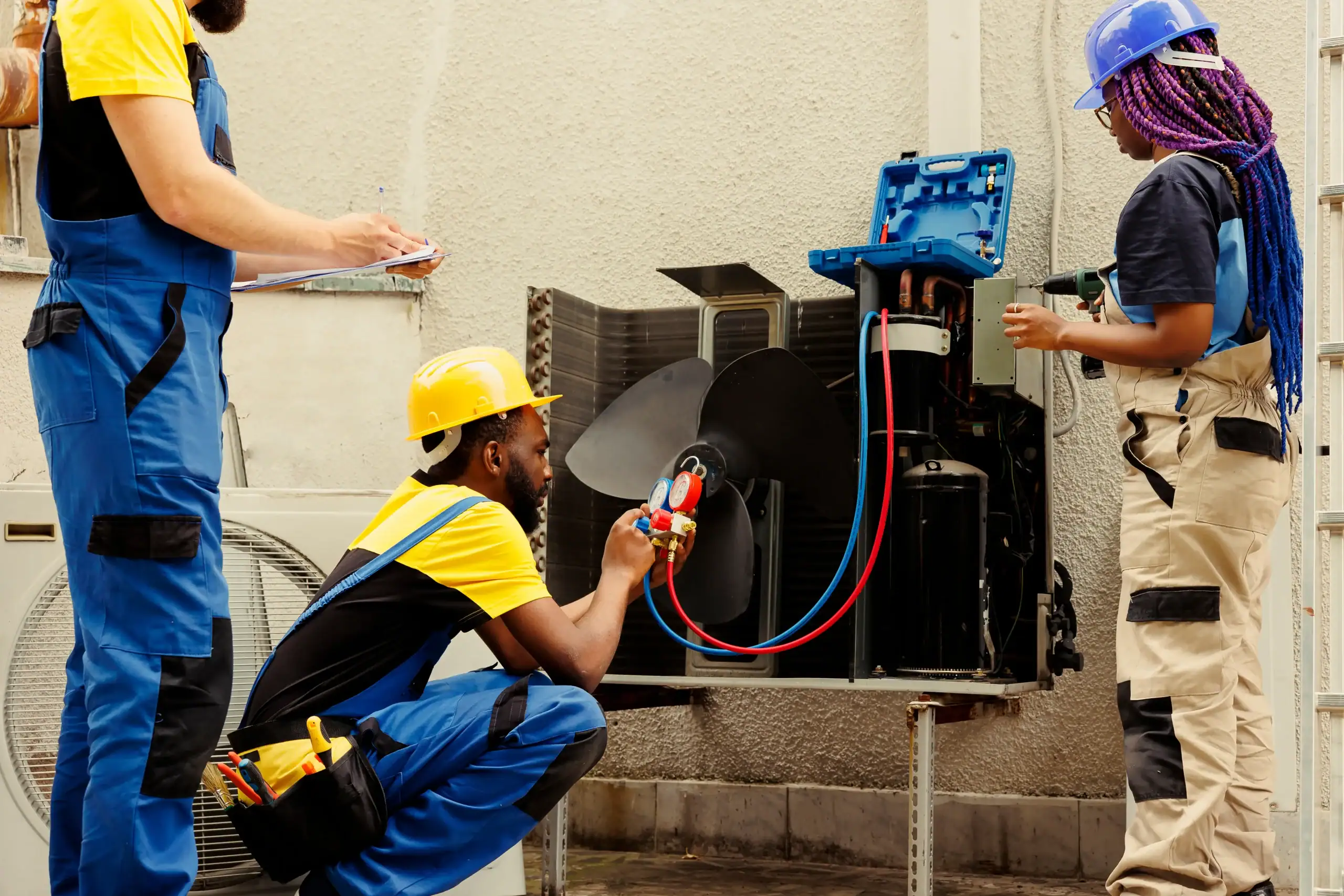
When we arrive, we diagnose the actual problem. Not the upsell version—the real one. You get transparent pricing before any work starts. No surprise fees, no bait-and-switch. If it’s a repair, we handle it on the spot in most cases. If it’s maintenance, we’re checking refrigerant levels, cleaning coils, testing airflow, and catching issues before they become expensive. For installations, we’re doing load calculations based on your home’s size, insulation, and how Texas heat actually affects your space.
After the work’s done, we test everything, walk you through what we did, and make sure you’re clear on what to expect moving forward. If you have questions later, you call the same number and talk to someone who knows your system. That’s it—no runaround, no transfers to a call center three states away.
Ready to get started?
We handle the full range of heating and cooling services in Cibolo: installation, repair, and maintenance for both residential and commercial properties. That includes AC systems, furnaces, heat pumps, and indoor air quality solutions like duct cleaning, sealing, and humidity control.
Installation means proper sizing for Texas conditions. A 2,000-square-foot home in Cibolo needs a unit on the higher end of the 2.5-5 ton range because of how much your system runs here. Undersizing leads to constant runtime and early failure. Oversizing causes short cycling and humidity problems. We calculate the load, install it right, and make sure your airflow is balanced so every room gets the cooling it’s paying for.
Maintenance is where you save money. Clean systems use 41-60% less energy on the fan and blower. A dirty filter alone can drop efficiency by 15%. We’re checking the components that fail most often under Texas heat—compressors, capacitors, contactors—and replacing them before they leave you without AC on a 105-degree afternoon. Regular maintenance cuts your risk of emergency repairs in half and extends your equipment life by years.
Repairs are straightforward. We diagnose the issue, explain what failed and why, and give you options. Most repairs run $200-$900. Emergency calls can hit $600-$1,100 because of after-hours premiums and the urgency involved. Our goal is to keep you out of that second category with proactive maintenance and honest assessments when something does go wrong.

Twice a year—once before cooling season and once before heating season. In Cibolo, that usually means late March and late October. Your system works harder here than in most of the country, logging over 2,200 hours annually compared to 1,000 in moderate climates.
That extended runtime accelerates wear on every component. Refrigerant levels drop. Coils get caked with dust and pollen. Filters clog faster because your system is pulling air constantly. Capacitors and contactors degrade under the heat. If you’re only checking once a year, you’re giving problems six extra months to turn into failures.
Bi-annual maintenance catches those issues early. You’re also improving efficiency—dirty systems can lose 15% or more in performance, which shows up on your energy bill every month. The average Texas homeowner spends $30,000-$50,000 on HVAC over 20 years. Regular maintenance is the easiest way to stay on the lower end of that range.
It depends on your home’s square footage, insulation, window placement, and how much direct sun exposure you get. A 2,000-square-foot home in Cibolo typically needs a 3.5 to 5-ton unit, leaning toward the higher end because of local heat conditions. But that’s a starting point, not a final answer.
Proper sizing requires a load calculation. We measure your space, check insulation levels, account for ductwork, and factor in how many windows face west or south. Undersized units run constantly and never catch up. Oversized units short cycle—they cool too fast, shut off before dehumidifying, and leave your home feeling clammy even when the thermostat says 72.
Texas heat makes this even more critical. Your system will run 2,500+ hours a year here. If it’s sized wrong, you’re either burning extra energy or replacing components years earlier than you should. A correct load calculation costs you nothing upfront and saves you thousands over the life of the system.
10 to 12 years on average, compared to 15-20 years in cooler climates. The difference is runtime and heat stress. Cibolo sees sustained 100-degree temperatures where your AC runs 20+ hours a day for weeks at a time. That kind of workload shortens equipment life by 25-33% compared to systems in moderate climates.
Compressors overheat. Capacitors fail. Refrigerant leaks develop faster. All of that is normal wear under Texas conditions, but it’s accelerated. The systems that make it to 12-15 years are the ones that were installed correctly and maintained consistently. The ones that die at 8-10 years were either undersized, poorly maintained, or installed by someone who didn’t account for local demands.
You can’t change the climate, but you can control how your system handles it. Bi-annual maintenance, prompt repairs, and proper installation from the start are the difference between replacing your system at year 10 versus year 15. Over a 30-year homeownership period, that’s the difference between two replacements and three—a $5,000-$8,000 swing.
Call us immediately. We offer 24/7 emergency HVAC services in Cibolo with a two-hour response time. When it’s 105 degrees outside, waiting until morning isn’t an option—especially if you have young kids, elderly family members, or health conditions that make extreme heat dangerous.
While you’re waiting, check your thermostat settings and make sure your circuit breaker didn’t trip. Sometimes it’s something simple. If the breaker is fine and the system still isn’t running, don’t keep resetting it. You could be dealing with a compressor failure, refrigerant leak, or electrical issue that gets worse the more you cycle power.
Emergency calls cost more—usually $100-$300 above standard rates because of after-hours premiums and the immediacy involved. But the alternative is a house that hits 90+ degrees indoors, potential heat-related health issues, and damage to your home if humidity spikes. We carry the parts that fail most often in Texas heat, so most emergency repairs get handled the same visit. You’re not waiting days for a part to ship while your house turns into an oven.
Yes. Emergency service calls typically add $150-$500 in service fees on top of the repair cost, and the total can run $600-$1,100 depending on what failed and when you call. After-hours, weekends, and holidays all carry premium rates because we’re pulling technicians away from their families and prioritizing your call over scheduled work.
The repair itself costs the same—parts and labor don’t change. What changes is the urgency fee and the fact that you’re getting immediate service instead of waiting for the next available appointment. In Cibolo, 75% of HVAC emergencies happen during sustained heatwaves when systems are running maximum capacity for days or weeks straight. Demand spikes, availability drops, and rates reflect that.
The way to avoid emergency pricing is proactive maintenance. Bi-annual checkups catch failing capacitors, low refrigerant, and worn contactors before they leave you without AC. It’s not foolproof—things still break—but it cuts your emergency risk in half. A $150-$200 maintenance visit twice a year is a lot cheaper than a $1,000 emergency call at 9 p.m. on a Saturday in July.
Absolutely. Texas requires HVAC contractors to be licensed through the Texas Department of Licensing and Regulation. That license proves the contractor has the required experience, passed competency exams, and carries proper insurance. If someone shows up without a license, they’re operating illegally—and you have zero recourse if the work is done wrong or your system gets damaged.
Licensed contractors are also insured, which protects you if something goes wrong during installation or repair. Unlicensed operators might be cheaper upfront, but they’re not covering damages, they’re not pulling permits, and they’re not following code. When you go to sell your home, unpermitted HVAC work can kill a deal or force you to pay for a full reinstall to satisfy the buyer’s lender.
We’re fully licensed and insured. You can verify our credentials with TDLR before we ever start work. It’s not just about legality—it’s about accountability. Licensed contractors have something to lose if they cut corners. Unlicensed operators disappear the moment there’s a problem, and you’re stuck holding the bill.
Other Services we provide in Cibolo
 Call Now