VRV Systems Bexar County TX

Vrv Systems

Your commercial space needs reliable heating and cooling that doesn’t drain your budget. VRV systems from Texas Air Repair deliver precise temperature control for every zone while slashing energy costs by up to 55% compared to traditional HVAC.

Veteran Owned and Operated

Emergency Service When You Need It

Specialized VRV Training and Certification

Upfront Pricing Before We Start

Commercial VRV Systems Bexar County

Advanced Climate Control Built for Texas Businesses

Variable refrigerant volume systems represent a major shift in how commercial buildings handle heating and cooling. Instead of forcing every zone to the same temperature, VRV air conditioning adjusts refrigerant flow to match the exact needs of each area. One conference room needs cooling while your server room runs hot? No problem. This technology originated with Daikin in 1982 and has become the standard for energy-efficient commercial HVAC across the globe. In Bexar County, where temperatures regularly exceed 100 degrees and cooling costs can make or break your operating budget, that efficiency matters. The system uses one outdoor unit connected to multiple indoor units through refrigerant piping. Each indoor unit operates independently, giving you complete control over every zone in your building without the waste of traditional systems that cool or heat spaces nobody’s using.
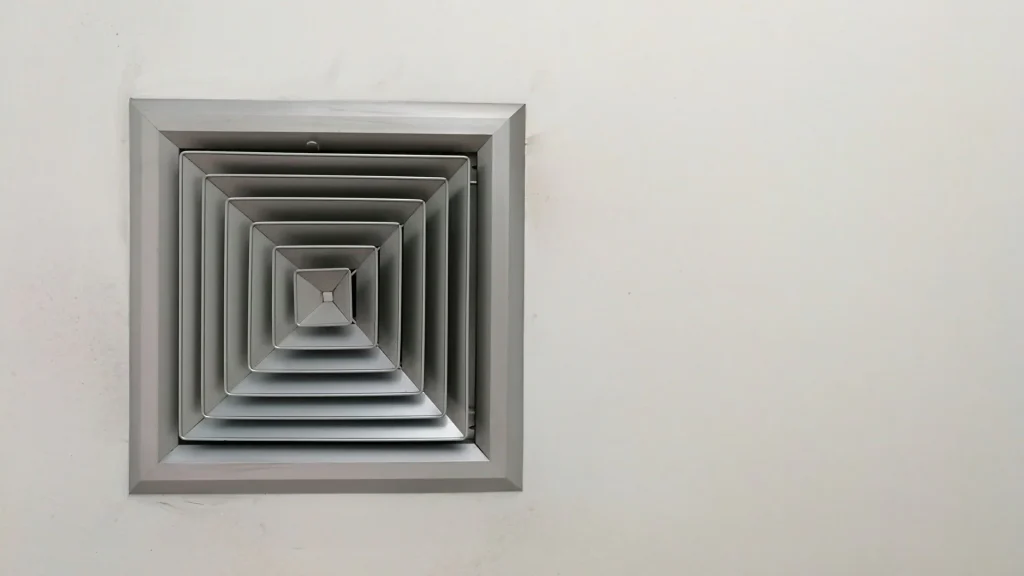
A square metal air vent with concentric layers is mounted on a plain white wall—its geometric, symmetrical pattern suggests recent ac replacement in San Antonio, TX, appearing clean and unused.
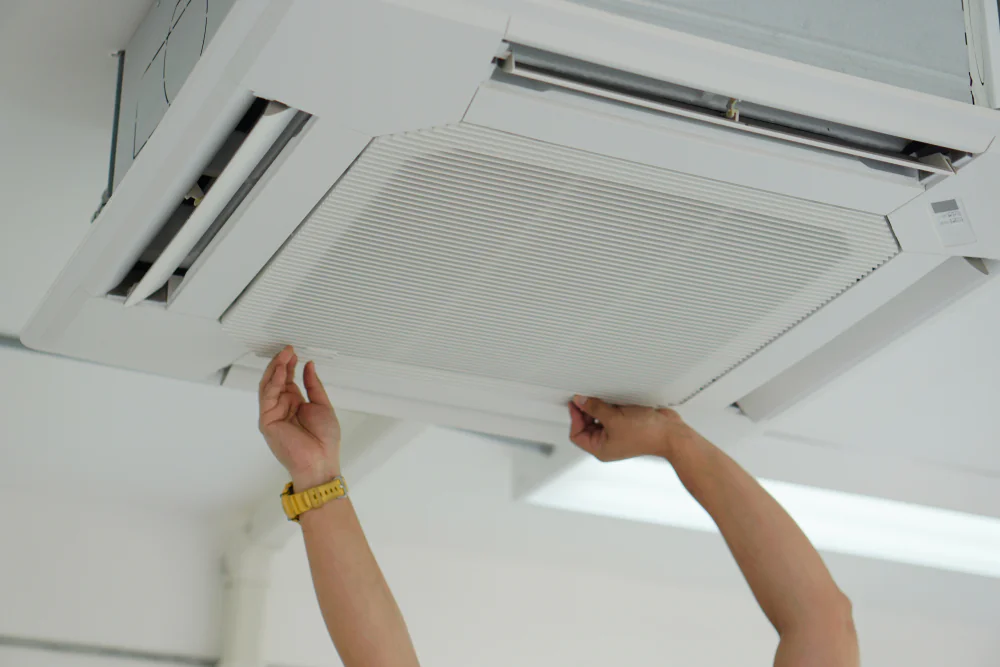
A person’s hands, wearing a yellow wristwatch, are opening or adjusting a ceiling-mounted air conditioning unit panel in TX, possibly preparing for an ac replacement San Antonio service.

Variable Refrigerant Flow vs Traditional HVAC

Why VRV Outperforms Standard Commercial Systems

Traditional HVAC systems work like a light switch. They’re either blasting at full capacity or completely off. That constant cycling wastes energy, creates temperature swings, and wears out components faster than necessary. VRV systems adjust continuously. The inverter-driven compressor ramps up or down to deliver exactly the cooling or heating each zone requires at any given moment. Think of it like cruise control for your building’s climate instead of flooring the gas pedal then slamming the brakes over and over. In San Antonio’s climate, where outdoor temperatures can swing dramatically and your building’s needs change throughout the day, that precision makes a measurable difference. Your south-facing offices might need cooling while your north-facing spaces need less. Your occupied areas require comfort while empty rooms don’t need conditioning at all. The system recovers heat from zones that need cooling and redirects it to zones that need heating. That’s energy you’ve already paid for being put to work instead of vented outside. Over the course of a year in Bexar County, that recovered energy adds up to significant savings on your utility bills.

VRV System Benefits San Antonio

What You Actually Get From VRV Technology

Beyond the technical specs, here’s what matters for your day-to-day operations and your bottom line when you invest in variable refrigerant volume systems.

VRV System Installation Process Texas

What Professional Installation Actually Involves

Proper VRV system installation requires more than mounting equipment and connecting pipes. The process starts with a detailed load calculation for your specific building. We analyze your square footage, insulation, window placement, occupancy patterns, and equipment heat loads to size the system correctly. The outdoor unit placement matters. It needs adequate airflow, protection from debris, and positioning that allows for proper refrigerant line routing. Indoor units go where they’ll deliver optimal airflow for each zone without creating hot or cold spots. Refrigerant piping must follow manufacturer specifications exactly. Pipe sizing, oil return considerations, and pressure drop calculations all affect system performance. We use the design programs provided by manufacturers to ensure every connection meets their engineering standards. Control wiring connects all the components so they communicate properly. Each indoor unit needs to report its demands to the outdoor unit, which then adjusts compressor speed and refrigerant distribution accordingly. The system also integrates with your building management system if you have one, giving you centralized monitoring and control. After installation, we commission the system by testing every zone, verifying refrigerant charge, checking electrical connections, and confirming that all sensors and controls function as designed. You get a system that’s ready to deliver the energy savings and comfort you’re paying for.

Keep Your Home Comfortable & Your Air Flowing Right

Breathe Easier, Stay Comfortable, Live Better

Common questions about Vrv Systems

There’s no technical difference. VRV stands for Variable Refrigerant Volume and is Daikin’s trademarked name for the technology they invented in 1982. VRF stands for Variable Refrigerant Flow and is what other manufacturers call their versions of the same technology. Both terms describe systems that adjust refrigerant flow to multiple indoor units from outdoor condensing units, providing individual zone control with high energy efficiency. The operating principles, components, and benefits are identical regardless of which term is used. When you’re evaluating systems for your Bexar County facility, focus on the manufacturer’s reputation, the installer’s expertise, and how well the system matches your specific needs rather than worrying about the VRV versus VRF terminology.
VRV system installation typically costs around $18 per square foot for commercial applications in the San Antonio area, compared to $12 to $15 per square foot for conventional systems. For a 15,000 square foot office building, you’re looking at a total project cost between $365,000 and $410,000 depending on the specific equipment selected, the complexity of your building layout, and zoning requirements. While that’s a higher upfront investment than traditional HVAC, the energy savings usually deliver payback within 3 to 5 years. You’ll see 30% to 55% lower energy costs compared to conventional equipment, plus reduced maintenance expenses since components experience less wear from continuous operation instead of constant on-off cycling. Many Bexar County businesses also qualify for utility rebates or tax incentives for installing high-efficiency commercial HVAC systems, which can offset part of the initial cost.
Yes, if you choose a heat recovery VRV system. These systems can heat some zones while cooling others at the same time by transferring heat from areas that need cooling to areas that need heating. This is particularly valuable in commercial buildings where different spaces have different thermal loads throughout the day. Your server room might need cooling year-round while your north-facing offices need heat on winter mornings. Your kitchen generates heat that needs removal while your dining area needs warmth for customer comfort. Heat recovery systems capture that excess heat and redirect it where it’s useful instead of just venting it outside. Standard heat pump VRV systems provide either heating or cooling to all zones at once, which works fine for many applications but doesn’t offer the same flexibility. When we assess your building, we’ll recommend whether heat recovery capability makes sense for your specific situation based on your space usage and operational patterns.
VRV systems need regular filter changes, coil cleaning, and refrigerant level checks to maintain peak performance. The most common maintenance issue we see is neglected filter changes, which restrict airflow and force the system to work harder, reducing efficiency and potentially causing compressor problems. Filters should be changed monthly or quarterly depending on your environment. The outdoor unit needs periodic cleaning to remove debris, leaves, and dirt that can block airflow through the condenser coils. Indoor unit coils also need cleaning to maintain heat transfer efficiency. We check refrigerant charge levels during maintenance visits because even small leaks can significantly impact system performance and energy consumption. Electrical connections, control wiring, and communication between indoor and outdoor units should be verified regularly to catch issues before they cause failures. Most commercial VRV installations benefit from quarterly maintenance visits, though the specific schedule depends on your operating hours, environment, and usage patterns. Proper maintenance extends equipment life, maintains energy efficiency, and prevents the majority of breakdowns that would otherwise disrupt your business operations.
VRV systems handle Texas heat and humidity extremely well, often better than traditional commercial HVAC equipment. The variable speed operation allows the system to run longer cycles at lower capacities, which improves dehumidification compared to systems that cycle on and off frequently. When outdoor temperatures in Bexar County hit 100 degrees or higher, VRV systems maintain consistent indoor comfort by adjusting compressor speed to match the exact cooling demand rather than struggling to keep up with undersized equipment or wasting energy with oversized units. The technology was originally developed in Japan and has been refined for extreme climates worldwide, including regions with heat and humidity similar to San Antonio. Modern VRV outdoor units are designed to operate efficiently even when ambient temperatures exceed 115 degrees. The key is proper system sizing and professional installation by technicians who understand how to account for Texas climate conditions in the load calculations and equipment selection. We have over 20 years of experience with commercial HVAC in this region, so we know exactly how to spec and install systems that perform reliably through our hottest summers and occasional winter cold snaps.
With proper maintenance, VRV systems typically last 15 to 20 years, similar to or slightly longer than well-maintained traditional commercial HVAC equipment. The variable speed operation actually reduces wear on components because the system isn’t constantly cycling on and off like conventional equipment. Compressors, which are usually the most expensive components to replace, experience less stress from continuous operation at varying speeds compared to the repeated startup loads in traditional systems. The modular design also means that if one indoor unit fails, you can replace just that component without replacing the entire system, which extends the overall system life and reduces replacement costs. Regular maintenance is critical for achieving maximum lifespan. Neglected filters, dirty coils, and refrigerant leaks will shorten equipment life regardless of the technology. We’ve seen properly maintained VRV systems in San Antonio commercial buildings still performing efficiently after 18 years, while poorly maintained traditional systems fail in under 10 years. The key factors are the quality of the initial installation, adherence to manufacturer maintenance recommendations, and prompt attention to any issues before they cause cascading failures throughout the system.
Need more information?
Call Now