Your energy bills drop because the system isn’t fighting itself anymore. You stop worrying about whether it’ll make it through another Texas summer pushing past 100 degrees or one of those deceptive winter nights that dip into the 30s.
You get consistent temperatures in every room instead of that one bedroom that’s always too hot or the living room that never quite warms up. The system runs quieter because it’s not straining to compensate for dirty coils, clogged filters, or refrigerant leaks.
When something does go wrong, you’re not scrambling through search results at 9 PM hoping someone picks up. You already know who to call because the local HVAC company you chose actually answers and shows up when they say they will. That’s what reliable heating and cooling services in Shavano Park, TX should look like.
We’ve been handling HVAC services in Shavano Park, TX and across the San Antonio area for over three decades. We’re veteran-owned, which means the same discipline that kept equipment running in challenging conditions now keeps your home comfortable year-round.
Every technician on our team is licensed, certified, and insured. That’s not just for our protection—it’s for yours. When someone’s working on a system that costs thousands to replace, credentials matter.
Shavano Park’s housing stock is 94% owner-occupied, and most homeowners here understand the value of maintaining what they own. You’re not looking for the cheapest option—you’re looking for the right one. We’ve built our reputation in this community by showing up on time, quoting the job honestly, and doing the work correctly the first time.

You call or submit a request, and we schedule a time that actually works for your day. We don’t give you a four-hour window and show up whenever—we respect your time because we know you have other things to handle.
A certified technician arrives and runs a full diagnostic before touching anything. You get a clear explanation of what’s wrong, what it’ll cost to fix, and how long it’ll take. No work starts until you approve the price.
Once you give the go-ahead, we complete the repair or installation using quality parts from brands like Trane, Carrier, Lennox, and Rheem. We test the system to make sure it’s running efficiently, walk you through what we did, and answer any questions. Then we clean up and get out of your way. If it’s an emergency situation—system failure during extreme heat or a cold snap—we’re available 24/7 because waiting until Monday isn’t an option when temperatures are dangerous.
Ready to get started?
Every service call includes a complete system evaluation—not just the part that’s obviously broken. We check refrigerant levels, inspect electrical connections, test airflow, examine ductwork for leaks, and clean components that affect efficiency.
In Shavano Park’s climate, where summer temperatures regularly exceed 100 degrees and humidity strains compressors, your AC works harder than systems in milder regions. We look for the wear patterns specific to South Texas conditions: stressed capacitors from constant cycling, coil corrosion from humidity, and duct leaks common in homes built before modern sealing standards.
For heating services, we inspect heat exchangers for cracks (a safety issue), test ignition systems, verify thermostat calibration, and check for carbon monoxide risks. Even though winters here are mild compared to northern states, those nights dropping into the 30s still require a furnace or heat pump that fires up reliably.
You also get transparent communication about whether repair makes sense or if replacement is the smarter financial move. We’re not here to sell you a new system if yours has good years left, but we’re also not going to let you sink money into repairs that cost half what replacement would run.

We offer true 24/7 emergency service, which means someone answers the phone at 2 AM on Sunday, not just during business hours. For genuine emergencies—complete system failure during extreme temperatures—we prioritize same-day response.
What qualifies as an emergency? No heat when it’s freezing outside and you have young kids or elderly family in the house. No AC when temperatures are pushing 105 and someone has a medical condition affected by heat. Those situations get handled immediately.
For urgent but not life-threatening issues, we typically get a technician to your Shavano Park home within a few hours during normal operation times. We don’t make you wait two days without climate control like some companies do during peak season. Our local presence in the San Antonio area means we’re not driving from across the city—we can respond faster because we’re already nearby.
The honest answer depends on your system’s age, the repair needed, and how much life it has left. Here’s how we look at it: if the repair costs more than 30-50% of what a new system would run, and your current system is over 12-15 years old, replacement usually makes more financial sense.
A typical AC repair in Shavano Park might run $300-$800 for common issues like a failed capacitor, refrigerant leak repair, or blower motor replacement. A full system replacement ranges from $5,000-$12,000 depending on size, efficiency rating, and installation complexity.
But there’s more to consider than just the immediate cost. Older systems use R-22 refrigerant, which is being phased out and costs significantly more than newer refrigerants. They also run less efficiently, which means higher monthly energy bills. A new high-efficiency system can cut cooling costs by 30-40% in Texas heat. We’ll walk through the actual math with you—what you’ll spend on the repair, what you’re likely to spend on energy over the next few years, and what replacement would cost upfront but save long-term. Then you decide what makes sense for your situation.
Regular maintenance isn’t upselling—it’s the difference between a system that lasts 10 years and one that makes it to 18-20. Here’s what actually happens when you skip it: refrigerant levels drift out of spec, making the compressor work harder and shortening its life. Coils accumulate dust and debris, reducing efficiency by 20-30%. Electrical connections loosen from vibration, creating fire risks.
In Shavano Park’s climate, your AC runs hard from April through October. That’s six months of near-constant operation in temperatures that regularly hit 95-105 degrees. Your system needs at least annual maintenance—ideally twice a year, once before cooling season and once before heating season.
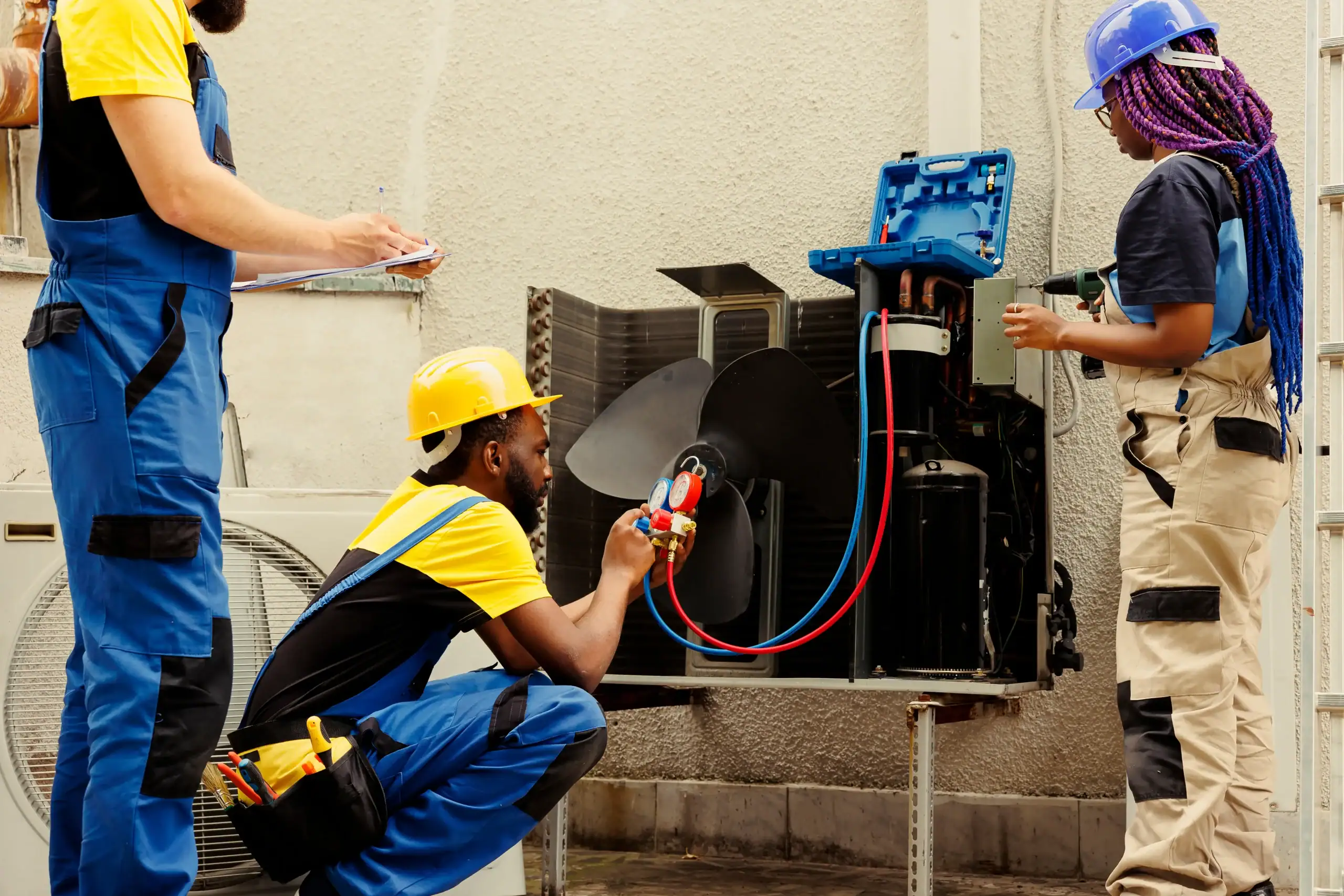
A maintenance visit includes cleaning coils, checking refrigerant, testing electrical components, lubricating moving parts, inspecting ductwork, replacing filters, and calibrating the thermostat. It takes about an hour and typically costs $100-$150. Compare that to a compressor replacement at $1,500-$2,500 or a full system at $8,000+. The small preventive cost beats the large emergency repair every time. Plus, most manufacturers require proof of regular maintenance to honor warranties, so skipping it can void your coverage right when you need it most.
In Texas, HVAC contractors must hold a license from the Texas Department of Licensing and Regulation. You can verify any contractor’s license status on the TDLR website by searching their business name or license number. If they’re legitimate, they’ll provide that number without hesitation.
Insurance is just as important. A proper HVAC contractor carries both general liability insurance and workers’ compensation. General liability protects your property if something gets damaged during the job. Workers’ comp protects you if a technician gets injured on your property—without it, you could be liable for their medical bills.
Ask to see certificates of insurance before work begins. Real contractors have them readily available and won’t get defensive about the request. If someone hesitates, pushes back, or says they’ll “send it later,” that’s a red flag. The HVAC industry has plenty of unlicensed operators who undercut prices because they’re skipping insurance, proper training, and legal requirements. That cheap quote looks good until something goes wrong and you discover they have no coverage and no accountability. Every technician we send to your home carries credentials you can verify, and we provide insurance documentation upfront because we know informed homeowners ask for it.
We install and service all major brands—Trane, Carrier, Lennox, Rheem, Goodman, York—because different situations call for different equipment. But if you’re asking what holds up best in South Texas heat, we typically recommend Trane, Carrier, or Lennox for their durability in high-use climates.
Shavano Park homes run AC units hard for six months straight in temperatures that stress compressors and coils. The brands that perform best here have robust compressors, corrosion-resistant coil coatings, and solid warranties. Trane’s reputation for lasting 15-20 years in Texas heat is well-earned. Carrier offers excellent efficiency ratings that translate to lower energy bills. Lennox makes quality units with good smart home integration if that matters to you.
That said, proper installation matters more than brand name. A mid-tier unit installed correctly will outperform a premium unit installed poorly. We size systems based on your home’s actual square footage, insulation, window placement, and ductwork—not just a general estimate. An oversized unit cycles on and off constantly, wearing out components faster and failing to dehumidify properly. An undersized unit runs nonstop and never quite cools the space. We calculate the load correctly, install to manufacturer specs, and make sure the system is set up to handle what Texas summers throw at it.
First, check your thermostat settings and make sure it’s actually set to cool, not just fan mode. Sounds basic, but it happens more than you’d think. Then check your air filter—a clogged filter restricts airflow and makes the system work harder while cooling less effectively. If the filter looks like it hasn’t been changed in months, replace it and see if that helps.
If the filter is clean and settings are correct, go outside and look at the condenser unit. Is it running? Can you hear the fan? Is there visible ice buildup on the refrigerant lines? Ice means you likely have a refrigerant leak or airflow problem. Don’t try to chip the ice off—turn the system off and call for service.
Check your circuit breakers to make sure nothing tripped. Sometimes the outdoor unit loses power while the indoor blower keeps running, giving the impression the system is working when it’s not. If everything appears to be running but you’re getting warm air or weak airflow, you’re probably looking at low refrigerant, a failing compressor, or a duct leak. Those aren’t DIY fixes. Refrigerant handling requires EPA certification, and misdiagnosing compressor issues can turn a $400 repair into a $2,000 mistake. Call us and we’ll diagnose it properly and fix it right the first time.
Other Services we provide in Shavano Park
 Call Now