Your HVAC system stops working overtime. That’s the first thing you’ll notice after a proper commercial air duct cleaning in China Grove, TX.
When dust and debris clog your ductwork, your system has to push harder to move the same amount of air. The U.S. Department of Energy reports that businesses waste up to 40% of their heating and cooling energy this way. Clean ducts mean your blowers aren’t fighting resistance with every cycle, which translates directly to lower utility bills—often 20-30% lower within the first few months.
Your equipment lasts longer too. HVAC systems with clean ductwork can run 30-50% longer than neglected ones. A system that would normally need replacement at 15 years might give you 20 years instead. That’s real money staying in your budget instead of going toward premature equipment replacement.
And your space feels different. Employees stop complaining about stuffiness or dust on their desks. Customers walking into your facility notice fresher air. The American College of Allergists found that 50% of illnesses are caused or worsened by poor indoor air quality, so cleaner ducts mean fewer sick days and better productivity across your team.
We’ve been handling commercial HVAC work across the San Antonio area for over two decades. We’re veteran-owned, which means we show up when we say we will, we do the work right, and we don’t waste your time with upsells you don’t need.
China Grove sits just 12 miles east of San Antonio, and we’ve worked with businesses throughout Bexar County long enough to know what commercial properties here deal with—the heat load, the dust, the specific challenges of maintaining HVAC systems in Texas. Your building isn’t the same as a house, and we don’t treat it that way.
Our technicians are NADCA-certified and trained on industrial-grade equipment. We’re available 24/7 because we understand that HVAC problems don’t wait for business hours. When something breaks or needs attention, you need someone who can respond fast and fix it correctly the first time.
We start with a camera inspection of your entire duct system. This isn’t optional—it’s how we identify problem areas, measure the extent of buildup, and document what’s actually happening inside your ductwork. You’ll see the footage too, so you know exactly what you’re dealing with before we start.
Next, we create negative pressure across your system using truck-mounted vacuums. These aren’t residential shop vacs—they’re industrial units powerful enough to pull debris through large commercial duct runs. We seal off sections systematically and use specialized brushes and air tools to dislodge buildup from duct walls, coils, and blower components.
The debris gets pulled directly into our containment system, not into your building. We clean supply ducts, return ducts, grilles, diffusers, and the air handling unit itself. If we find mold or significant contamination, we’ll discuss sanitization options that actually work for commercial applications.
After cleaning, we run another camera inspection to verify the work and show you the difference. Then we test airflow and system performance to make sure everything is running as it should. The whole process is designed to minimize disruption to your operations—we work around your schedule, not the other way around.
Ready to get started?
You get a complete system cleaning—not just the easy-to-reach sections. That means supply and return ducts, registers and grilles, diffusers, heating and cooling coils, drip pans, fan motors and housings, and the air handling unit housing. We also inspect and clean your HVAC unit’s blower assembly because that’s where a lot of efficiency gets lost.
For businesses in China Grove, this matters more than you might think. The median household income here is over $103,000, which means commercial properties tend to be well-maintained and owners expect professional work. Your customers and employees notice details, and air quality is one of those details that affects how people feel about your space.
We use NADCA-certified methods and commercial-grade equipment designed for larger systems. Our truck-mounted vacuums generate enough suction to handle extensive ductwork in office buildings, retail spaces, restaurants, and industrial facilities. We’re not trying to stretch residential equipment to do commercial work—we own the right tools for the job.
If your system needs sanitization, duct sealing, or repairs, we’ll tell you. But we won’t push services you don’t need. Our goal is to solve the problem you called us about and make sure your HVAC system runs efficiently for years to come.
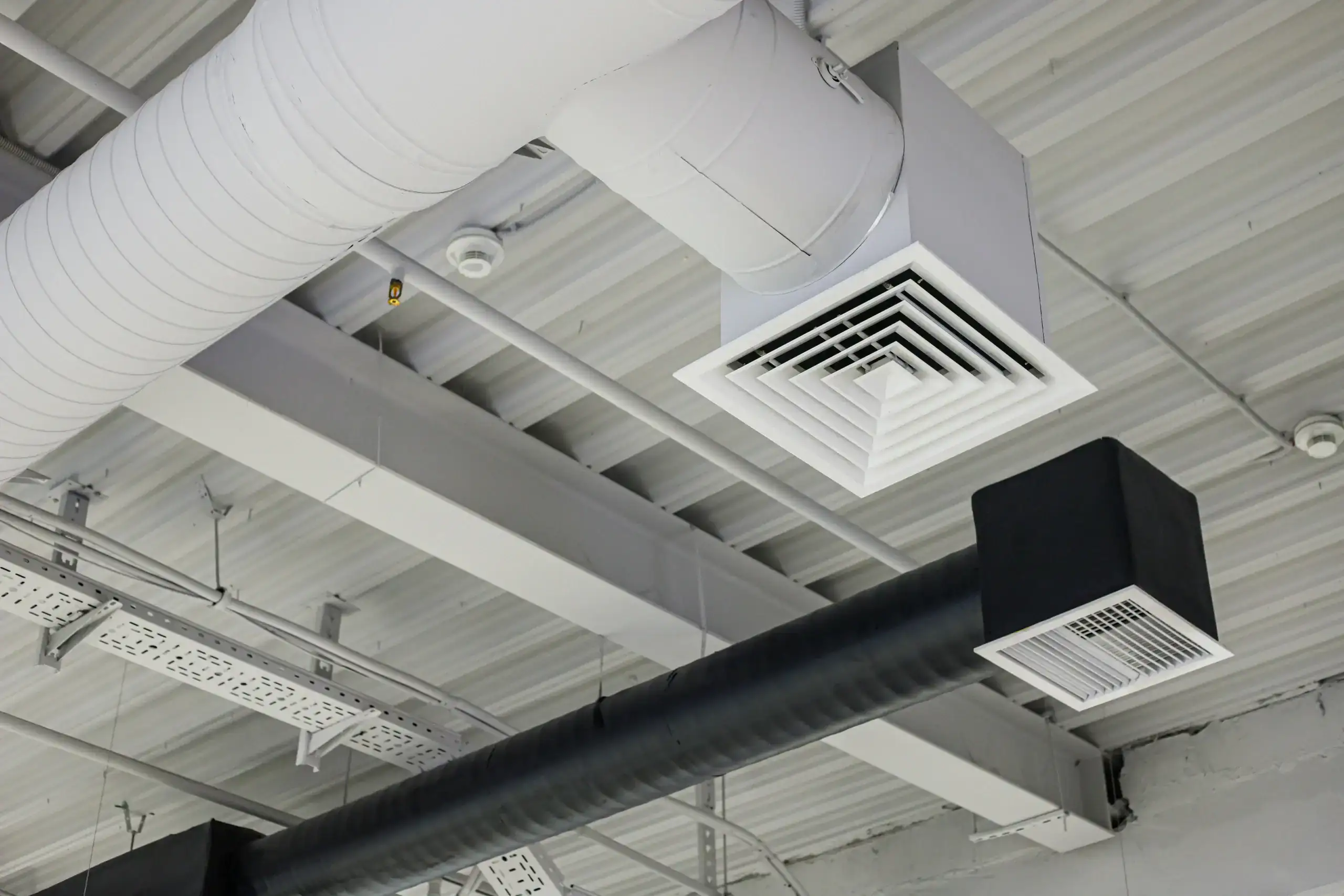
Most commercial buildings benefit from professional duct cleaning every three to five years, but your specific timeline depends on what kind of business you run and how your building gets used.
Restaurants, medical facilities, and manufacturing spaces usually need more frequent cleaning—sometimes annually—because they generate more airborne particles. Cooking grease, medical waste particles, and industrial dust all accumulate faster than normal office debris. Retail and office spaces with standard use can often go longer between cleanings, closer to the five-year mark.
You’ll know it’s time when you notice visible dust around vents, increased energy bills without explanation, or employee complaints about air quality. If your HVAC system is running longer cycles to maintain temperature, that’s another sign. The buildup doesn’t happen overnight, but once it reaches a certain point, it starts costing you money every month in wasted energy and increased wear on your equipment.
Commercial systems are fundamentally different in size, complexity, and the equipment required to clean them properly. A typical commercial building has ductwork that’s measured in hundreds or thousands of feet, not dozens. The ducts themselves are larger, the airflow requirements are higher, and the systems often run continuously or near-continuously.
That means the equipment needed is completely different. Residential duct cleaning companies use portable vacuums and smaller tools. Industrial duct cleaning requires truck-mounted vacuum systems powerful enough to create negative pressure across massive duct runs, specialized brushes designed for larger ducts, and inspection cameras that can navigate complex commercial layouts.
The standards are different too. Commercial work often requires NADCA certification and compliance with OSHA and EPA regulations, especially in certain industries. A restaurant has different requirements than a medical office, which has different requirements than a warehouse. Understanding these distinctions and knowing how to address them properly is what separates actual commercial duct cleaning from someone just trying to scale up residential methods.
Yes, but the amount depends on how much buildup you’re starting with and how hard your system has been working to compensate. The U.S. Department of Energy states that proper HVAC maintenance, including duct cleaning, can reduce energy costs by 20-30%.
Here’s why that happens. When dust, debris, and buildup coat your ductwork and HVAC components, your system has to work harder to push air through. Your blower motor runs longer. Your heating and cooling equipment cycles more frequently. All of that extra work translates directly to higher energy consumption. Research shows that intervention systems—meaning systems that were cleaned after significant buildup—saved between 41% and 60% on fan energy alone.
Most businesses in China Grove see return on investment within one to two years just from energy savings. That doesn’t even account for avoiding premature equipment replacement or reducing emergency repair calls. The savings compound over time because your system isn’t wearing itself out fighting against resistance every time it runs.
There are visible signs and operational signs. Start with your vents and registers—if you see dust buildup around the edges or dark streaks on the walls near supply vents, that’s debris being pushed out of your ductwork. Pull off a register cover and look inside with a flashlight. If you see dust coating the interior surfaces, that’s what’s lining your entire system.
Operationally, watch your energy bills. If they’re climbing without a corresponding increase in usage or change in rates, your HVAC system is likely working harder than it should. Listen to how long your system runs to reach set temperatures. If it’s running longer cycles than it used to, that’s often a sign of restricted airflow from buildup.
Employee complaints matter too. If your team mentions stuffiness, dust on their desks, or allergy symptoms that seem worse at work, poor air quality from dirty ducts is often the culprit. The American College of Allergists reports that 50% of illnesses are caused or aggravated by indoor air pollution. You can also request a camera inspection—we’ll run a camera through your ductwork and show you exactly what’s in there. No guessing, no sales pitch, just footage of your actual ducts so you can make an informed decision.
Your costs go up and your equipment wears out faster. That’s the short answer. The longer answer is that neglected ductwork creates a cascade of problems that get more expensive the longer you wait.
First, your energy bills climb because your HVAC system has to work harder to move air through restricted, debris-filled ducts. That extra work means more wear on blower motors, fan belts, and other mechanical components. Parts that should last 15 years might fail at 10. Your system runs longer cycles, which means more frequent breakdowns and higher repair costs.
Indoor air quality deteriorates too. Dust, mold spores, and other contaminants circulate through your building every time the system runs. That affects employee health and productivity. In certain industries—healthcare, food service, childcare—it can also create compliance issues with health and safety regulations. Both OSHA and the EPA require businesses to maintain their air handling systems to control airborne contaminants. Ignoring that can result in fines or failed inspections. The problem doesn’t fix itself, and the longer you wait, the more expensive the eventual cleaning becomes because there’s more buildup to remove.
Yes. We schedule commercial duct cleaning around your operations, not the other way around. For many businesses, that means working evenings, weekends, or during your slowest hours. We understand that downtime costs you money, so we plan the work to minimize impact on your daily operations.
The timeline depends on your building size and system complexity. A small office might take four to six hours. Larger commercial buildings or facilities with multiple HVAC systems can take a full day or more. We’ll walk through your space beforehand, assess the scope, and give you an accurate time estimate so you can plan accordingly.
We’re also available 24/7 for emergency situations. If you discover a major problem that can’t wait, we can respond quickly. Being veteran-owned means we approach every job with discipline and efficiency—we show up when scheduled, we work systematically, and we don’t leave a mess behind. Our goal is to get your ductwork clean and your system running efficiently with as little disruption to your business as possible.
Other Services we provide in China Grove
 Call Now