
Your electric bill drops the first month. Most Kirby homeowners upgrading from older 10 SEER units to modern 16 SEER2 systems see 25-35% lower cooling costs—that’s $200-$350 back in your pocket every year. Add in utility rebates up to $1,000 and federal tax credits around $600, and the payback period shrinks fast.
Your house cools evenly again. No more hot spots in the back bedrooms or fighting over the thermostat. Modern variable-speed systems adjust output based on actual demand, so you’re not stuck with the old “blast cold air or nothing” approach.
You stop worrying about breakdowns during heat waves. A new AC system replacement in Kirby, TX means you’re covered by manufacturer warranties and you’re not gambling every summer on whether a 15-year-old compressor will survive another June.
Texas Air Repair is veteran-owned and we’ve been handling AC unit replacement in Kirby, TX and across Bexar County for over 20 years. We’re not a franchise with rotating techs. You get the same crew from estimate to installation.
Kirby’s housing stock runs older than newer San Antonio suburbs, which means ductwork surprises and electrical panel limitations come up more often here. We’ve handled enough of them to know what actually needs upgrading versus what’s just upsell material.
Our owner Henry Rodriguez has held EPA certification since 1995. Every tech on our crew is licensed, insured, and trained on both legacy systems and the newest heat pump technology. We don’t subcontract installs to the lowest bidder.

We start with an in-home assessment that actually measures your space. Square footage, insulation levels, window placement, ductwork condition—these determine what size system you need, not just what fits the slab outside. Oversized units short-cycle and waste energy. Undersized units run nonstop and never catch up.
You’ll get upfront pricing before we touch anything. We calculate costs for the equipment, labor, any ductwork modifications, electrical work if your panel needs upgrading, and disposal of your old system. That number doesn’t change unless you change the scope.
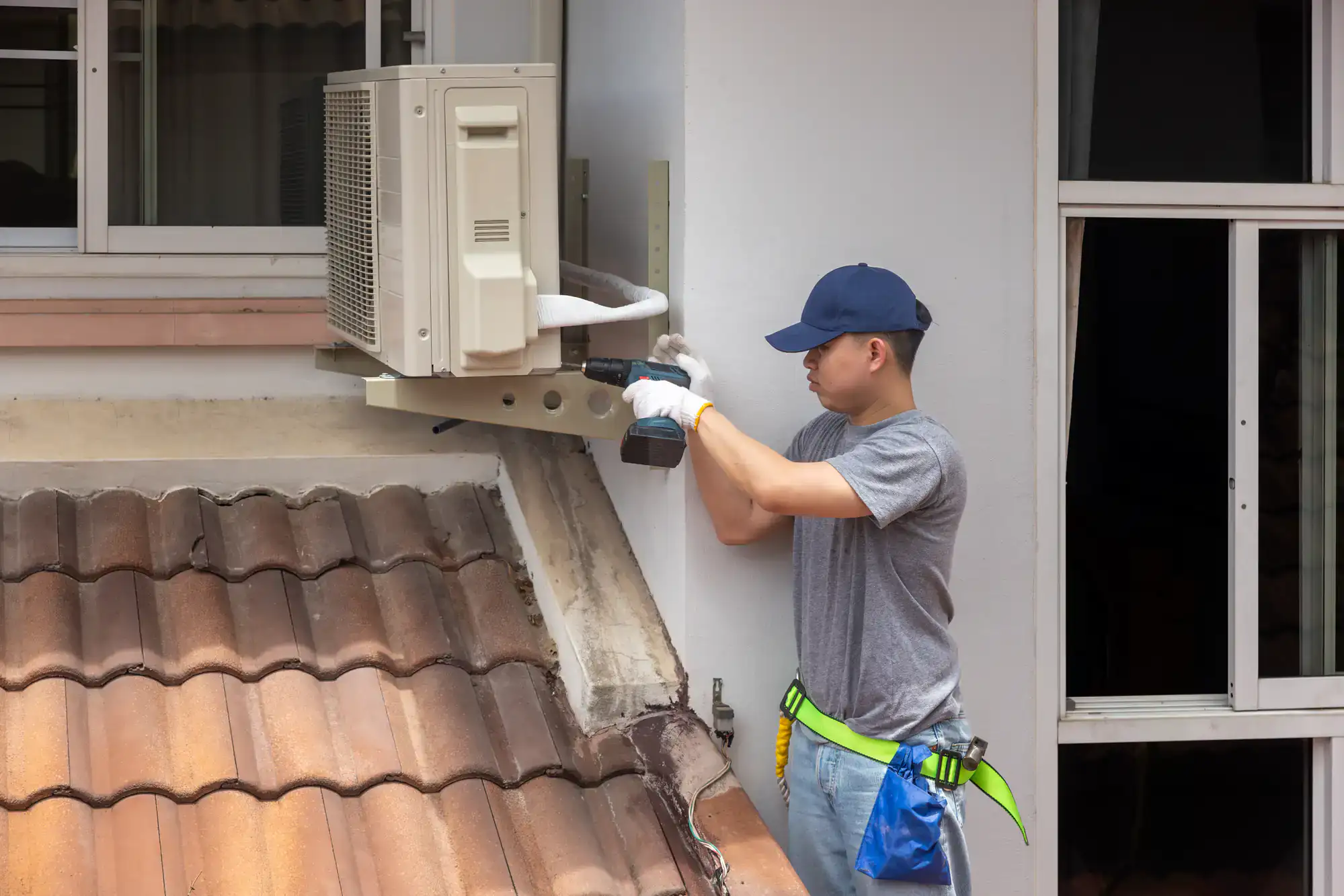
Installation typically takes one to two days depending on complexity. We pull permits, coordinate inspections, and handle the utility rebate paperwork so you’re not chasing down forms. Most Kirby homes have straightforward attic access, but if we run into structural issues or code violations from previous work, we’ll walk you through options before proceeding.
After install, we test airflow at every register, verify refrigerant charge, calibrate your thermostat, and show you how to use any new features. You get manufacturer warranty documentation and our contact info for anything that comes up.
Ready to get started?
Every air conditioning replacement in Kirby, TX through Texas Air Repair includes proper load calculation using Manual J standards. That’s the industry-standard method for sizing systems correctly, and it’s skipped more often than you’d think. We also inspect and test your ductwork for leaks—sealing ducts can improve efficiency by 20% and qualifies for additional utility rebates.
You’ll get options for indoor air quality upgrades during installation. Kirby’s humidity levels hover around 75% in summer, which creates ideal conditions for mold and dust mites. Adding whole-home dehumidification or UV air purifiers during an HVAC replacement costs less than retrofitting later.
We handle all permit requirements and schedule inspections with the city. Bexar County requires permits for system replacements, and passing inspection protects you if you ever sell the house. Some contractors skip this step to save time—we don’t.
Your new system comes with manufacturer warranties that typically cover parts for 5-10 years depending on the model. We also offer maintenance agreements that include two annual tune-ups, priority scheduling, and discounted repairs. Catching small issues during routine maintenance prevents most emergency breakdowns.
Full system replacement in Kirby typically runs $6,000 to $14,000 depending on system size, efficiency rating, and any ductwork or electrical upgrades needed. A basic 3-ton 14 SEER2 system for a 1,500 square foot home usually lands around $7,500 installed. Upgrading to 16 SEER2 or higher adds $1,500-$3,000 but cuts your cooling costs by 25-35% annually.
Financing options exist if paying upfront isn’t realistic. Many manufacturers offer 0% interest for 12-24 months on approved credit. Utility companies like CPS Energy also provide rebates—$400 to $1,000 for high-efficiency systems—and federal tax credits cover 30% of equipment costs up to $600 for AC or $2,000 for heat pumps.
The real cost question is whether repairing your current system makes sense. If your unit is over 12 years old and the repair estimate exceeds $2,000, replacement usually wins financially. Multiply the age of your system by the repair cost—if that number tops $5,000, you’re better off replacing.
If your system is under 10 years old and the repair costs less than $1,500, fixing it usually makes sense. If it’s over 15 years old or the repair bill approaches half the cost of replacement, you’re throwing money at a system that’s near the end anyway.
Here’s the math we use: multiply your unit’s age by the repair cost. A 14-year-old system needing a $400 repair equals $5,600—that’s replacement territory. The same formula with a 7-year-old system and $400 repair gives you $2,800—repair makes more sense.
Also consider how often you’re calling for service. If you’ve had three or more repair visits in the past two years, your system is telling you something. Compressor failures, refrigerant leaks, and evaporator coil issues are expensive fixes that often lead to more problems down the line. Texas heat accelerates wear on AC components faster than moderate climates, so systems here rarely make it past 15 years without major issues.
Most residential AC system replacements in Kirby take one full day for straightforward installs. If your ductwork needs modifications, your electrical panel requires upgrading, or we’re also replacing your furnace or air handler, expect two days.
We start early—usually 8 AM—and work straight through. The old system comes out first, then we install the new outdoor condenser, indoor air handler or furnace, connect refrigerant lines, wire the thermostat, and test everything before we leave. You’ll have cooling the same day unless we hit unexpected issues like rotted roof decking around the old unit or undersized electrical service.
Some companies rush installs to squeeze in more jobs. We don’t. Proper refrigerant charging alone takes 30-45 minutes of testing and adjustment. Skipping that step costs you efficiency and shortens compressor life. We also pull permits and coordinate city inspections, which adds a day or two to the timeline but keeps everything legal and protects your home value.
Size depends on square footage, insulation quality, window placement, ceiling height, and how many people live there—not just the tonnage of your old unit. A proper load calculation using Manual J standards gives you the right answer. Most Kirby homes between 1,400-1,800 square feet need 3 to 3.5 tons. Homes over 2,000 square feet usually require 4 tons or more.
Bigger isn’t better with AC systems. An oversized unit cools the house too quickly, shuts off before removing humidity, and cycles on and off constantly. That wastes energy and leaves your house feeling clammy. Undersized systems run nonstop during summer and never quite catch up, which spikes your electric bill and wears out components faster.
We measure your home during the estimate and factor in Kirby’s specific climate data—average high temperatures, humidity levels, and sun exposure. If your house has older single-pane windows or minimal attic insulation, that affects sizing too. Some contractors just match your old unit’s tonnage and call it done. That’s lazy and often wrong, especially if your original system was incorrectly sized to begin with.
Yes, but how much depends on what you’re replacing. Upgrading from a 10 SEER system to 16 SEER2 cuts cooling costs by roughly 40%. For a typical Kirby home spending $250 monthly on summer electricity, that’s $100 back in your pocket every month from June through September—$400 annually.
Texas homes run AC units 2,200+ hours per year, nearly double the national average. That constant runtime means efficiency upgrades pay back faster here than in moderate climates. Add in utility rebates and federal tax credits, and your payback period often drops to 7-10 years. If you’re planning to stay in your home longer than that, the math works.
Higher SEER ratings also mean better humidity control and more consistent temperatures. Variable-speed systems adjust output in small increments instead of blasting full power every cycle. You’ll notice the difference in comfort immediately, and your electric meter will confirm it by the second billing cycle. Just don’t expect miracles if your ductwork leaks or your insulation is shot—efficiency starts with the system but depends on the whole house working together.
Spring—March through early May—gives you the best combination of availability, pricing, and weather. Demand hasn’t peaked yet, so you’re not competing with emergency replacements during heat waves. You also have time to research options instead of making a panic decision when it’s 102 degrees and your house feels like an oven.
Waiting until summer means longer lead times, limited equipment selection, and potential emergency service fees. When everyone’s AC fails at once during a heat wave, you’re looking at week-long waits and whatever system the distributor has in stock. Fall and winter work too, but most people don’t think about AC replacement until they need it.
If your system is over 12 years old, schedule a replacement consultation before peak season. Even if you’re not ready to commit, you’ll have pricing, financing options, and a timeline mapped out. That way, if your system does fail in July, you’re not starting from scratch while your family sweats through the decision process.
Other Services we provide in Kirby
 Call Now