Summary:
Your AC goes out. It’s July. It’s 103 degrees outside and the house is already warming up. You grab your phone and start searching — and within minutes, you’ve got three names, two voicemails, and one operator who says they can be there in an hour. So you say yes. Most people do.
The problem isn’t that you made a fast decision. The problem is that the HVAC industry has no shortage of operators who thrive precisely in that moment — when you’re hot, stressed, and just want it fixed. This guide is about what to check before you say yes, even when the clock is ticking.
Why Hiring the Wrong HVAC Contractor in Texas Is a Bigger Risk Than You Think
Texas doesn’t let just anyone do HVAC work legally. The state requires all contractors who install, repair, or maintain heating and cooling systems to hold a valid license through the Texas Department of Licensing and Regulation — TDLR for short. That’s not a suggestion. It’s the law.
When unlicensed work goes wrong — and it does — your homeowner’s insurance may refuse to cover the damage. You have no legal recourse against an unlicensed contractor. And in a market like Bexar County, where summer heat is a genuine health risk, a bad repair isn’t just an inconvenience. It’s a real problem.
How to Check If an HVAC Contractor Is Licensed in Texas
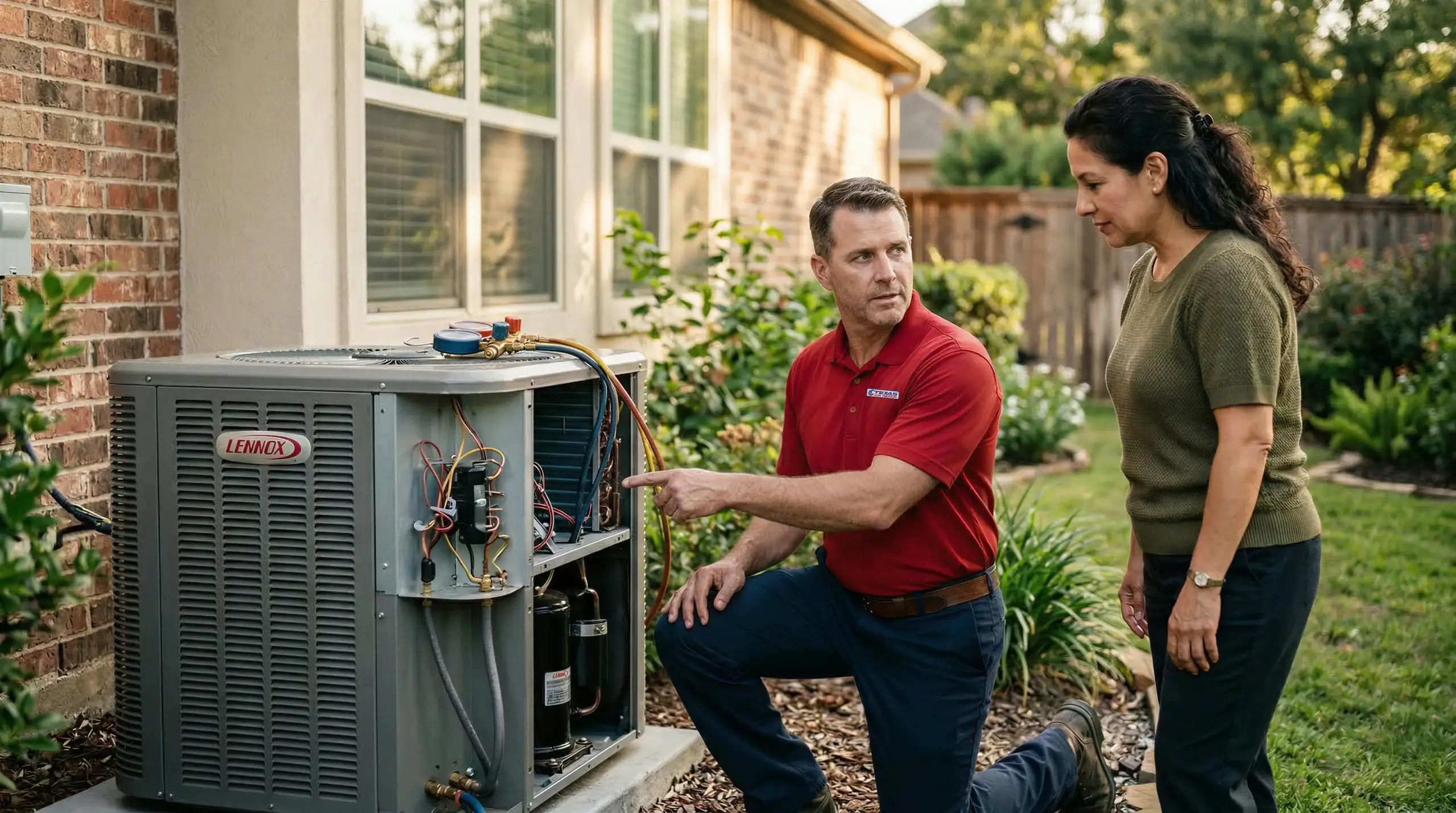
The TDLR license is the first thing to verify — and it takes about two minutes. Go to TDLR.texas.gov, search the company or contractor’s name, and confirm their license is active. A legitimate HVAC contractor will have no hesitation giving you their license number before you commit to anything. If someone gets cagey about it, that tells you what you need to know.
Getting a TDLR contractor license in Texas isn’t easy. Applicants need a minimum of four years of hands-on HVAC experience under a licensed contractor, plus a passing score on a state licensing exam. That barrier exists for a reason — it filters out people who watched a few YouTube videos and bought a van. When a contractor holds a current TDLR license, it means they’ve put in the time, passed the test, and are accountable to a state regulatory body that can pull that license if they operate badly.
Beyond the state license, look for EPA 608 certification. Federal law requires this for any technician who handles refrigerants — the chemicals that make your AC actually cool the air. A contractor without EPA 608 certification is legally prohibited from purchasing or handling refrigerants. If they’re doing refrigerant work anyway, that’s not just a technicality. It’s a federal violation, and it puts you in a difficult position if anything goes wrong.
The combination of an active TDLR license and EPA 608 certification is the baseline. Not a gold star — the floor. Any contractor you consider should clear both without hesitation.
What to Ask an HVAC Contractor Before the Work Starts
Most homeowners don’t ask nearly enough before letting someone start on their system. A few direct questions can tell you a lot about who you’re actually dealing with.
Ask for a written estimate before any work begins. Not a ballpark, not a verbal number — a written, itemized estimate that spells out what’s wrong, what parts are needed, what labor costs, and what the total will be. Any contractor who resists this or says they’ll figure it out as they go is waving a flag you shouldn’t ignore.
Ask whether the technician working on your system is an employee of the company or a subcontractor. Some operations — especially larger ones running high call volumes — dispatch subcontractors they’ve never met. That’s not automatically a problem, but you deserve to know who’s actually in your home and whether that person is covered under the company’s insurance policy.
Speaking of insurance: ask directly whether the company carries general liability insurance and workers’ compensation. If a technician is injured on your property and the company doesn’t carry workers’ comp, you could be held liable. This isn’t a hypothetical — it happens. A legitimate operation carries both without exception.
One more question worth asking, especially if you’re facing a repair on an older system: ask what happens if the recommended repair doesn’t solve the problem. A contractor who stands behind their diagnosis will give you a clear answer. One who hedges or pivots immediately to “you might just need a new unit” before they’ve even looked closely may be running a different playbook than you think.
The best contractors welcome these questions. We’ve heard them before, we have clean answers, and we understand that a homeowner doing their homework is a sign of someone who will be a good long-term customer — not a hassle.
Red Flags That Should Stop You From Hiring an HVAC Contractor in Bexar County
Knowing what good looks like is useful. Knowing what bad looks like is essential. There are a handful of patterns that show up repeatedly when HVAC jobs go wrong, and most of them are visible before any work starts.
The biggest one is pressure. Any contractor who tells you the deal expires today, that your system is “about to fail” based on a five-minute look, or that you need a full replacement when you called about a specific repair — that’s not urgency, that’s a tactic. Real diagnoses take time and honesty, not manufactured alarm.

How to Vet an HVAC Contractor Quickly During an Emergency
Emergency HVAC calls are where the industry’s worst actors do their best business. When it’s 10 PM on a Saturday in August, your AC has stopped working, and you have elderly family members or young kids in the house, you’re not in a position to be methodical. That’s exactly when some operators count on you not to ask questions.
Here’s what you can do even under pressure. First, check Google reviews — not the star rating, but the actual text. Look for reviews that mention honesty, transparency, or pricing. Customers who felt they weren’t taken advantage of tend to say so specifically. That language is a signal.
Second, ask upfront whether there’s an after-hours surcharge and how much it is. Some companies charge significantly more for evening and weekend calls. Knowing this before they arrive is better than finding out on the invoice.
Third — and this matters more than most people realize — ask if the repair is guaranteed. A contractor who fixes your system at midnight should stand behind that fix the same way they would on a Tuesday afternoon. If they won’t commit to that, the urgency of the situation is working against you, not for you.
In Bexar County, where summer heat is not a comfort issue but a safety one, the ability to reach a contractor who will actually come — and who won’t use your desperation against you — is worth identifying before your system fails. The best move is to find a trustworthy HVAC contractor before an emergency hits, so that when it does, you’re calling someone you’ve already vetted, not whoever answers first at midnight.
How to Tell If You Actually Need AC Repair or a Full Replacement
This is one of the most common points of confusion — and one of the most exploited. Not every failing system needs to be replaced. And not every repair is worth doing on a system that’s past its useful life. Knowing the difference requires an honest diagnosis, not a sales conversation.
A general rule of thumb that many industry professionals use: if a repair costs more than half the price of a new system and your unit is already more than ten years old, replacement often makes more financial sense over time. But that calculation only works if the diagnosis is accurate in the first place. A contractor who walks in and immediately recommends replacement without running through the actual failure points — capacitor, refrigerant charge, coil condition, blower motor — is skipping steps. Either they don’t know what they’re doing, or they’re not particularly interested in saving you money.
In Bexar County, many homes have systems that are running well past their original lifespan. The combination of long cooling seasons — running essentially from April through October — and the sheer number of hours those systems log means components wear faster here than in most of the country. That’s a real factor in the repair-versus-replace decision, and a good contractor will walk you through it with specifics, not generalizations.
What you’re looking for is a technician who explains what they found, shows you the evidence when possible, and gives you a clear picture of your options — including the honest one, even if it’s not the most profitable answer for them. That kind of transparency is rarer than it should be, and it’s worth paying attention to when you find it. Newer systems with higher SEER ratings can also meaningfully reduce what you’re spending on electricity, which in a San Antonio summer is not a small number.
Finding a Trustworthy HVAC Contractor in Bexar County, TX
The short version: verify the TDLR license, confirm EPA 608 certification, get a written estimate before work starts, and pay attention to how a contractor handles your questions. The ones worth hiring will answer directly and without defensiveness. The ones who aren’t worth hiring will usually show you that quickly too.
Bexar County’s summers don’t leave much room for a bad hire. When your system goes down in July, you need someone who shows up, diagnoses honestly, and fixes it right — not someone who uses the heat as leverage.
We started Texas Air Repair because we believed the HVAC industry in San Antonio could do better by its customers. Over 20 years later, that’s still what we’re here for. If you’re looking for a licensed, veteran-owned HVAC contractor who will give you straight answers and stand behind the work, we’d be glad to earn your call.