Summary:
Most people don’t think about their air conditioner until it stops working. That’s understandable — it’s one of those things that runs quietly in the background until suddenly it doesn’t. But in Austin, where summer temperatures regularly top 100°F for weeks at a stretch and your system can run 12 to 16 hours a day, waiting until something breaks is a gamble with real consequences. This post is for the homeowner who suspects they should probably get their system looked at but keeps pushing it off. Here’s what you actually need to know — and why timing matters more than most people realize.
Why AC Maintenance Hits Different in Austin
Austin’s cooling season doesn’t last a few months — it lasts about six. From May through October, your air conditioner is running constantly, fighting heat that doesn’t let up even after the sun goes down. The city averages over 105 days above 90°F each year, and during the worst stretches, that number climbs well into triple digits for days on end.
That kind of sustained workload accelerates wear in ways that most homeowners don’t see coming. AC systems in Texas typically last 12 to 15 years — noticeably shorter than the national average of 15 to 20 years — precisely because of how hard they run here. Regular maintenance doesn’t eliminate that reality, but it does slow it down and keep your system running efficiently while it’s still got life in it.
What Does an AC Tune-Up Actually Include?
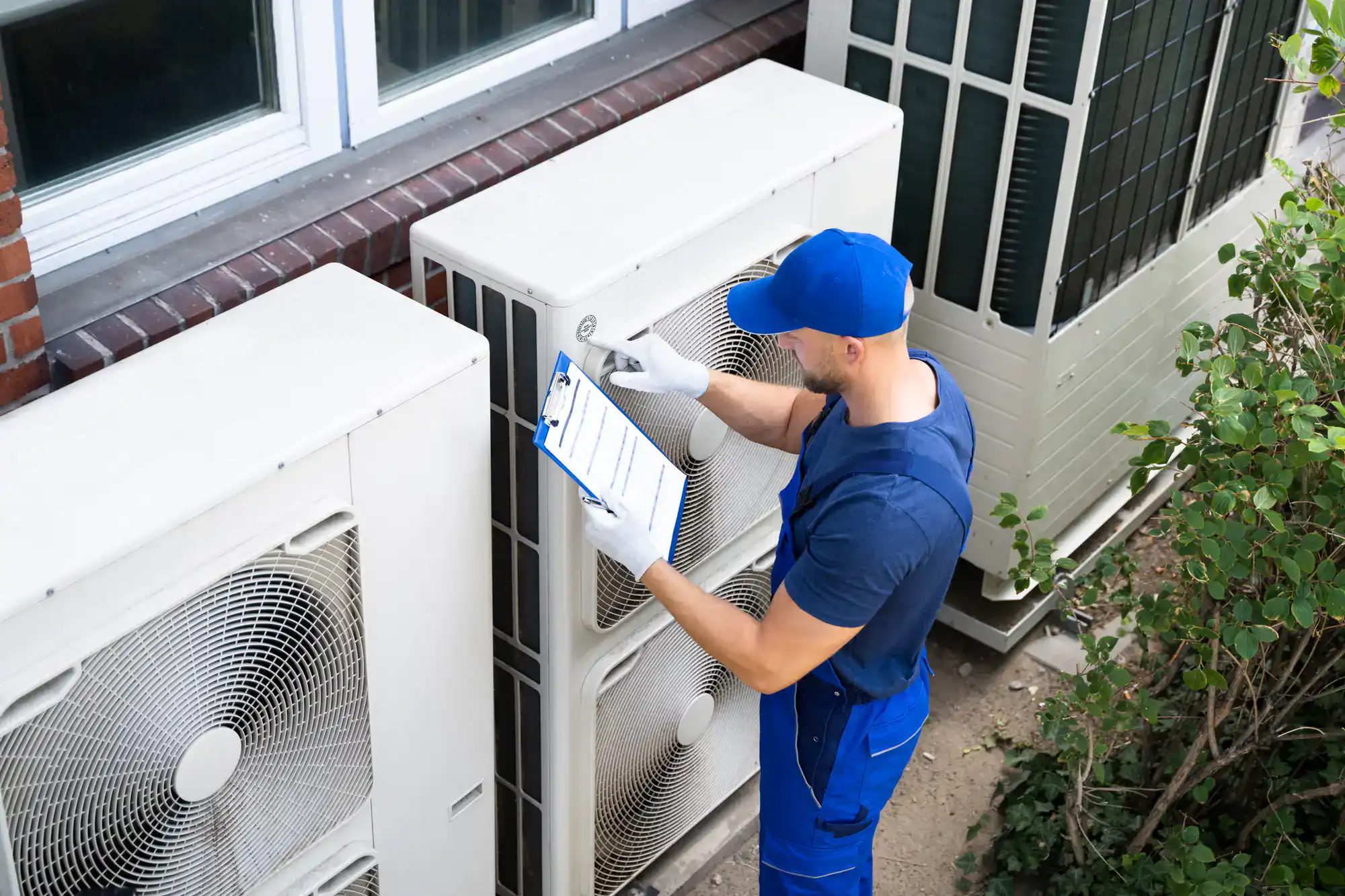
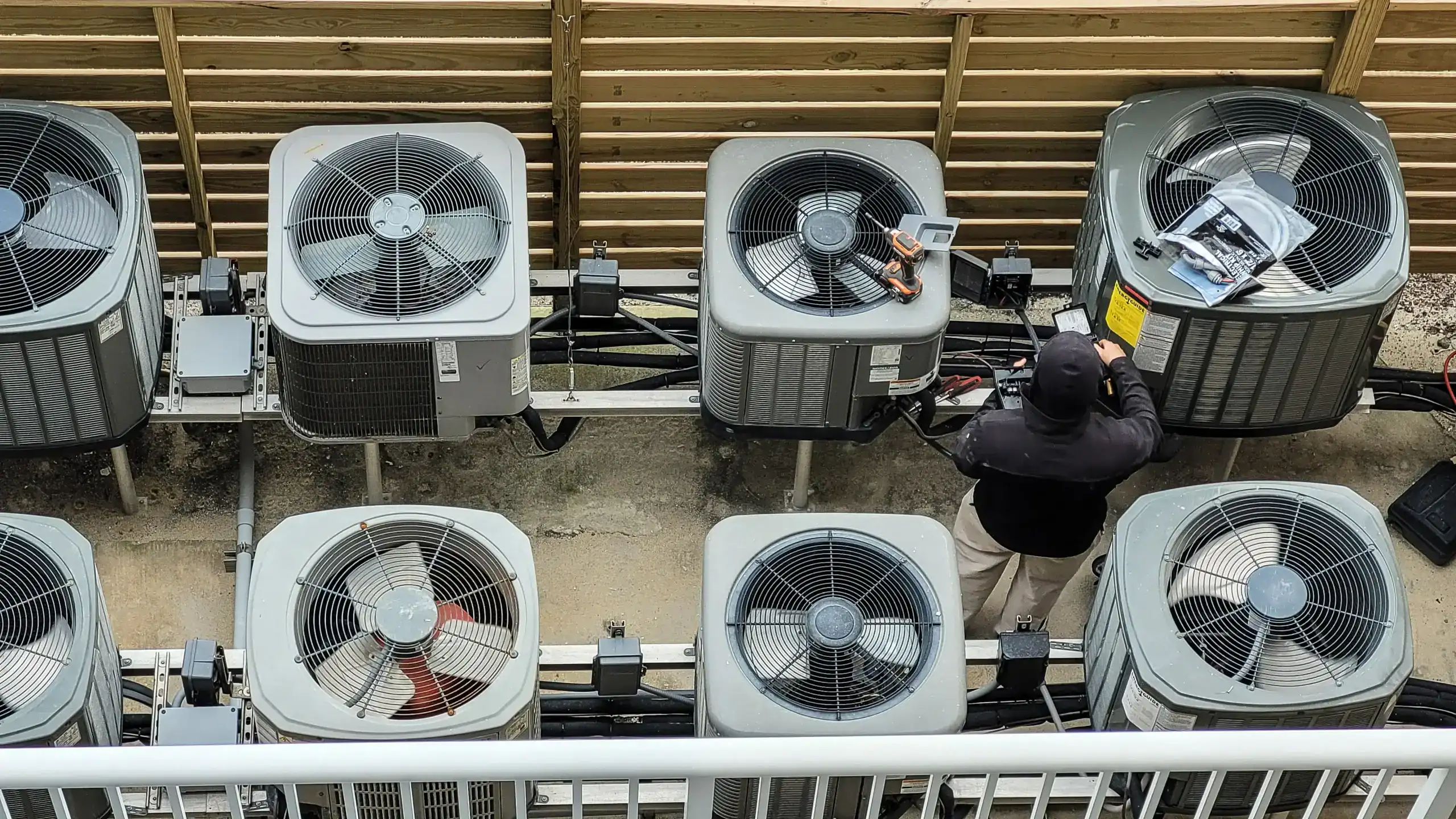
This is the question most homeowners have but don’t always ask. A professional AC tune-up isn’t just someone glancing at your unit and calling it a day. Done properly, it’s a thorough inspection and servicing of the components that determine whether your system runs efficiently, reliably, and safely through the Austin summer.
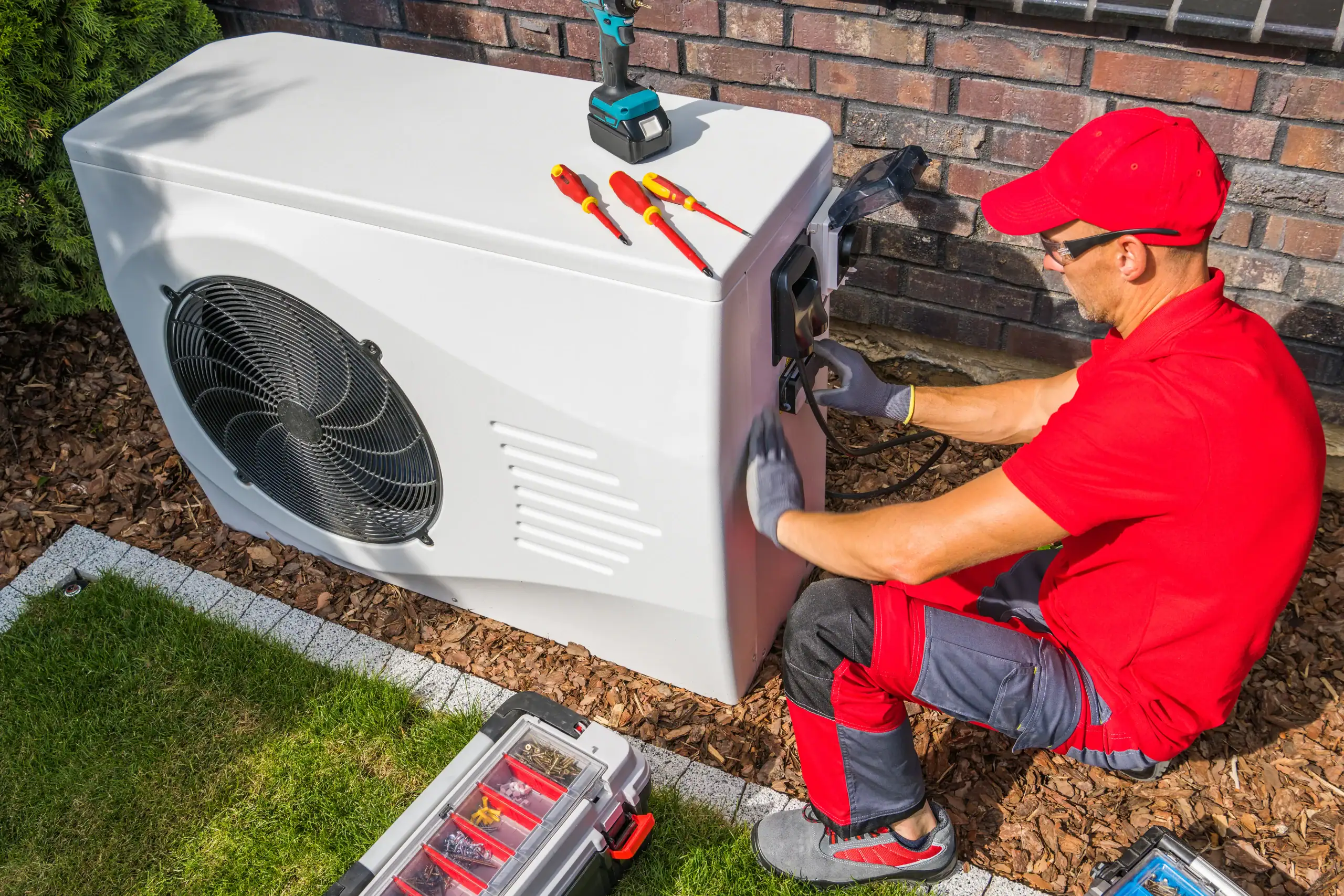
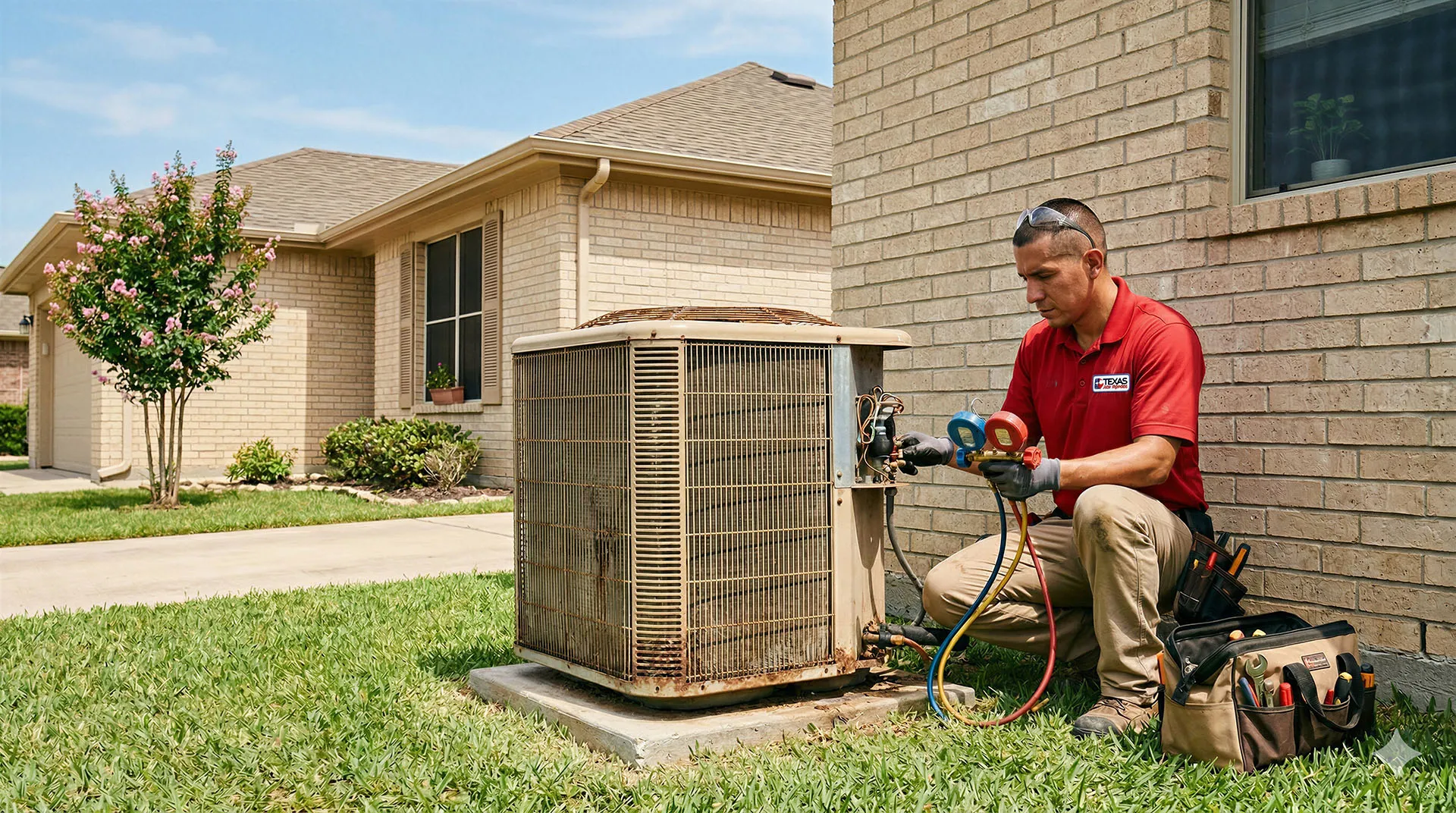
A comprehensive visit typically covers checking and topping off refrigerant levels, cleaning the condenser and evaporator coils, tightening electrical connections, lubricating moving parts, inspecting the capacitor and contactor, testing thermostat calibration, clearing the condensate drain line, checking blower motor function, and verifying overall system airflow. Each of those steps matters.
Dirty coils force your system to work harder to move the same amount of air. A failing capacitor can cause your compressor to struggle or fail outright. A clogged condensate drain can back up and cause water damage inside your home. The reason changing your filter regularly isn’t enough — even though it helps — is that most of what degrades over time is inside the system, not visible from the outside, and not accessible without tools and training.
A technician can catch a refrigerant charge that’s slowly been dropping, or spot a capacitor that’s reading low before it takes the compressor down with it. Those are the catches that make a tune-up worth scheduling.
One thing that often surprises homeowners: a quality tune-up should result in a written report of findings. If a technician spends 20 minutes at your house and hands you nothing but a verbal “looks good,” that’s not a thorough inspection. You should walk away knowing the condition of your system and what, if anything, needs attention.
Austin’s environment adds a few wrinkles worth knowing about. Cedar fever season runs December through February and sends pollen counts through the roof — that pollen ends up in your filters and on your coils before spring even starts. Homes in older central Austin neighborhoods like Hyde Park, Travis Heights, and East Austin often have systems that are approaching or past the 15-year mark, which means a tune-up is also a useful opportunity to get an honest read on remaining system life before a breakdown makes that decision for you.
Does Skipping Annual AC Maintenance Actually Void Your Warranty?
It can, and this catches a lot of homeowners off guard. Most HVAC manufacturers include language in their warranty terms requiring documented proof of annual professional maintenance. If your system fails and you can’t show a service record, the manufacturer may deny the claim — turning what would have been a covered repair into a full out-of-pocket expense.
This applies even to newer systems. A lot of homeowners assume that because their unit is only three or four years old, it doesn’t need maintenance yet. But manufacturers don’t make exceptions for age — the requirement is annual, starting from installation. If you bought a home in Round Rock, Cedar Park, Pflugerville, or anywhere in the Austin metro in the last few years and inherited a system you know nothing about, a tune-up is also your chance to establish a documented service history going forward.
The warranty angle matters most when something major fails — a compressor, a coil, a control board. Those repairs are expensive. A compressor replacement alone can run into the thousands. If your system is still under manufacturer warranty and you’ve been keeping up with annual maintenance, that’s a meaningful financial protection. If you haven’t, you may find out the hard way that the warranty you thought you had doesn’t apply.
It’s also worth noting that beyond the warranty, skipping maintenance compounds over time. A system that’s been neglected for three or four years doesn’t just need a tune-up — it often needs repairs that could have been caught earlier at much lower cost. The Department of Energy has found that proper HVAC maintenance can yield 5 to 20 percent in annual energy savings. That’s real money on an Austin Energy bill in July or August, when cooling costs peak. Speaking of Austin Energy — the city’s municipal utility actually offers rebates for professional HVAC tune-ups, specifically because well-maintained systems reduce demand on the grid during peak summer hours. It’s worth checking their current offerings at savings.austinenergy.com before you schedule.
When Should You Schedule AC Maintenance in Austin?
The ideal window for Austin homeowners is late March through May. That’s early enough to catch any issues before the heat arrives, and it’s before HVAC companies across the metro get booked solid.
Once June hits and temperatures climb, wait times stretch out. A system that fails in July — when every HVAC company in Austin is running at full capacity — means days without air conditioning in conditions that are genuinely dangerous for elderly residents, young children, and anyone with respiratory issues. Scheduling in spring means you’re not competing with every other homeowner who waited too long.
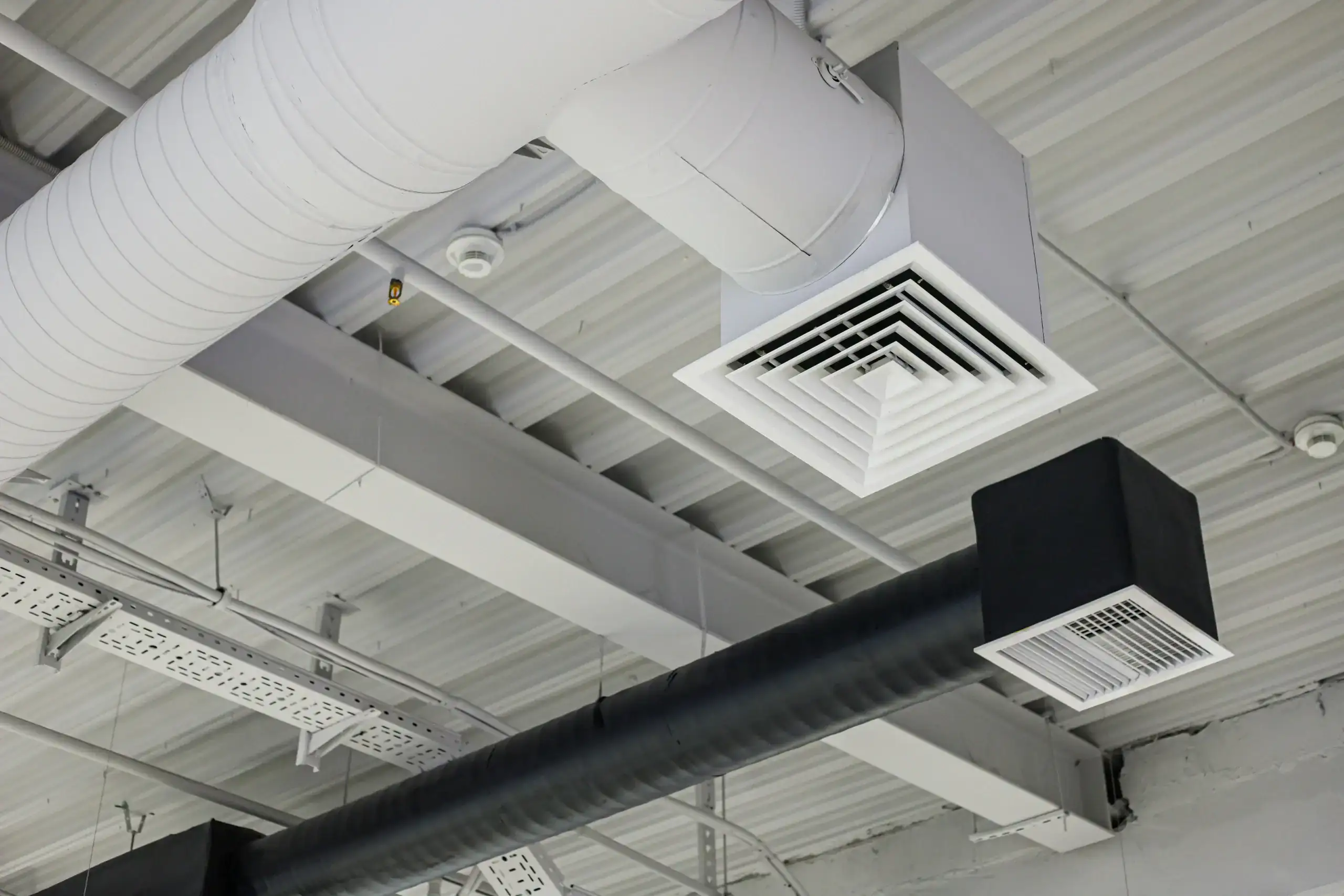
Is a Seasonal AC Tune-Up Worth the Cost?
This is the objection most homeowners wrestle with, and it’s a fair one. If your system seems to be cooling the house fine, it’s hard to justify spending money on something that feels optional.
Here’s the thing: a system can cool your home while operating well below peak efficiency. It might be running longer cycles than it should, drawing more electricity, and wearing out components faster — all while technically doing its job. Cooling the house and running efficiently are not the same thing. You won’t feel the difference until your energy bill arrives or something breaks.
The math is worth spelling out plainly. A professional AC tune-up in Austin typically runs $100 to $200 for a comprehensive visit. The average cost of a repair call is around $350. A full system replacement — which, in Austin’s climate, comes sooner than most homeowners expect — runs anywhere from $8,000 to $15,000 depending on the system. Maintenance doesn’t make your system immortal, but it does extend its useful life and reduce the likelihood of the kind of sudden failure that forces a rushed, expensive decision in the middle of summer.
Only about 30 percent of homeowners schedule preventative HVAC maintenance annually. The other 70 percent are reactive — they call when something breaks. That reactive approach works fine right up until it doesn’t, and in Austin, “until it doesn’t” usually means a July breakdown with a multi-day wait in triple-digit heat. The homeowners who stay in the 30 percent tend to have fewer emergencies, lower energy bills, and systems that last closer to their full lifespan.
How Do You Know If Your AC Needs Maintenance or Repair?
It’s a reasonable question, and the line between the two isn’t always obvious. Maintenance is proactive — it’s what you do when your system is running but you want to keep it that way. Repair is reactive — it’s what you do when something has already failed or is clearly malfunctioning.
A few signs that your system needs more than a routine tune-up: it’s not cooling your home to the set temperature, it’s cycling on and off more frequently than usual, you’re hearing new noises (grinding, rattling, squealing), there’s ice forming on the indoor unit, or your energy bills have spiked without a clear explanation. Any of those warrant a diagnostic call, not just a maintenance visit.
On the other hand, if your system is running normally but it’s been more than a year since anyone has looked at it — or you genuinely don’t know when it was last serviced — that’s a maintenance situation. A technician can assess the system, tell you what they find, and give you an honest picture of where things stand. That’s especially valuable for homeowners who recently bought a home in Georgetown, Pflugerville, or any of the fast-growing suburbs north and east of Austin, where you may have inherited a system with an unknown service history.
One thing worth understanding about the difference between a good maintenance visit and a bad one: a reputable technician will tell you what your system needs — including if the answer is nothing. The fear of being upsold is one of the biggest reasons homeowners put off scheduling maintenance, and it’s a legitimate concern in an industry where some companies use low-cost tune-ups as a pretext for high-pressure parts recommendations. The right company will give you a clear, honest assessment and let you make an informed decision. If a technician is pushing hard for repairs your system doesn’t obviously need, that’s a signal worth paying attention to.
Ready to Schedule AC Maintenance in Austin Before Summer Hits?
Austin summers don’t give you a grace period. Once the heat arrives, it arrives fast and it stays. The homeowners who come out of summer with lower bills, fewer surprises, and a system that’s still running strong are almost always the ones who got ahead of it in the spring.
A professional tune-up gives you a verified system, a documented service record, and the peace of mind that comes from knowing your AC has been checked by someone who actually knows what they’re looking at — not just someone who glanced at the outdoor unit and moved on.
If you’re in Austin, Round Rock, Cedar Park, Pflugerville, Georgetown, or anywhere in the surrounding area and you’re not sure when your system was last serviced, this is a good time to find out. We’re a veteran-owned, family-operated HVAC company with over 20 years of experience serving Central Texas — and we’re straightforward about what your system needs, including when the answer is that it’s in good shape. Reach out to Texas Air Repair before the summer rush and we’ll make sure your system is ready for whatever Austin throws at it.