Summary:
Your AC doesn’t usually quit without warning. It tells you something’s wrong—sometimes for weeks—before it finally gives out. The problem is knowing what those signals actually mean and when they’re serious enough to call someone.
In Austin, where your system runs nearly year-round and temperatures push past 100°F for months at a time, small problems turn into expensive failures fast. Catching issues early doesn’t just save money. It keeps your family comfortable and prevents those middle-of-the-night emergencies when every HVAC company in town is already swamped.
Here’s what to watch for and when it’s time to pick up the phone.
Common Signs Your AC System Is Failing
Most AC problems don’t appear out of nowhere. Your system usually gives you weeks—sometimes months—of hints before it stops working completely. The trick is recognizing what’s normal wear and what’s actually a problem that needs attention.
Some signs are obvious. Your house stays warm no matter how low you set the thermostat. Other warnings are subtler—a slight increase in your electric bill or rooms that used to stay cool suddenly feeling stuffy. Both matter, especially in a climate that pushes your AC to its limits for half the year.
Ignoring early warning signs doesn’t make them go away. It just gives small issues time to damage other components, turning a simple repair into a full system replacement. Let’s break down what you should actually be paying attention to.
Your AC Isn't Cooling Like It Used To
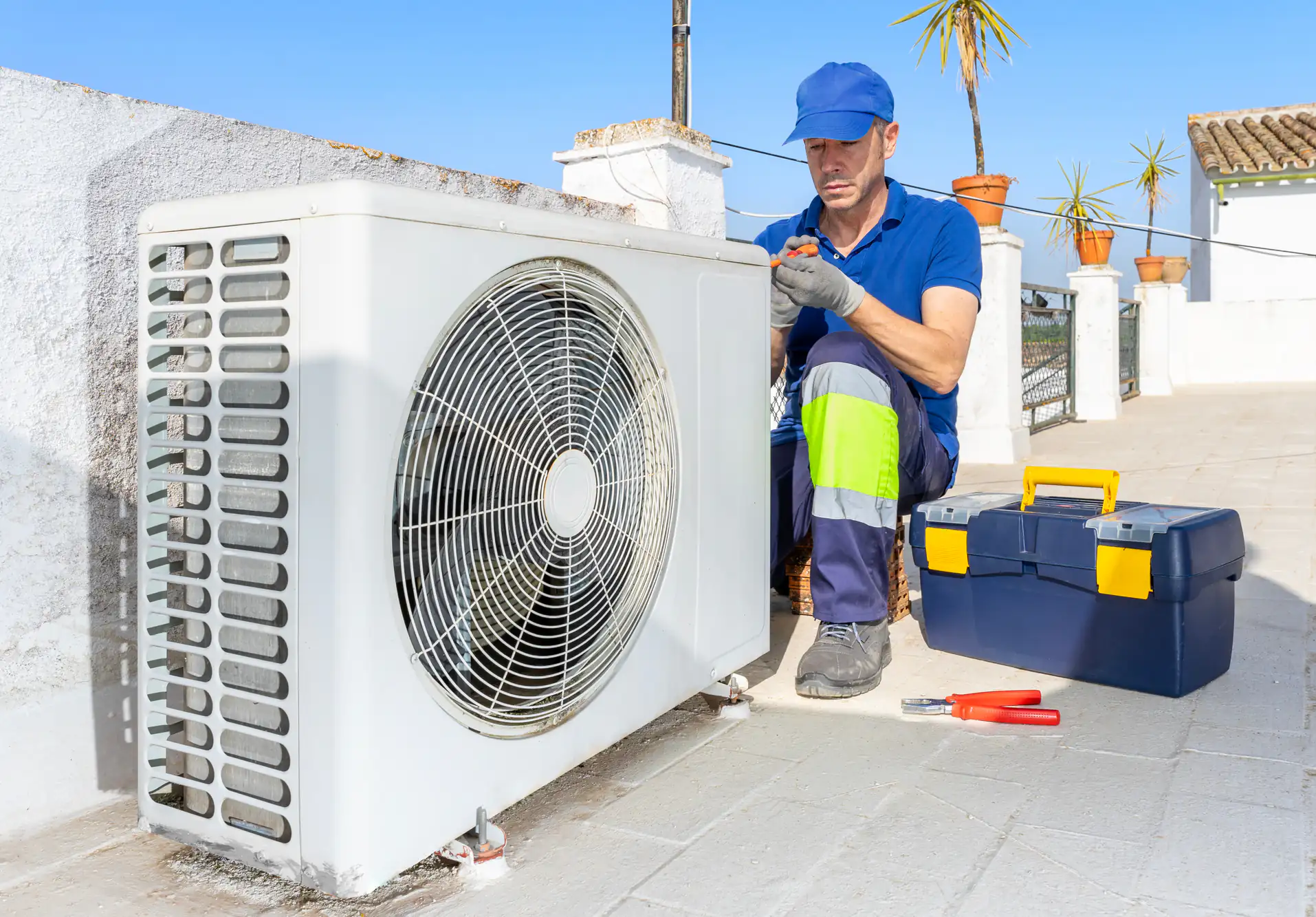
When your AC runs but doesn’t actually cool your house, something’s interfering with its ability to do its job. Maybe the air coming from your vents feels barely cool, or certain rooms never quite reach the temperature you set. Either way, your system is working harder than it should and still falling short.
Several things cause this. Low refrigerant means your system can’t absorb enough heat from your indoor air. Dirty air filters restrict airflow so severely that cool air never makes it through your vents. A failing compressor can’t pressurize refrigerant properly, killing your system’s cooling capacity entirely.
Sometimes the problem sits in your ductwork. Leaks or disconnected sections mean you’re cooling your attic or crawl space instead of your living room. Other times, your thermostat is lying to your AC about what temperature your house actually is, causing the system to shut off before it finishes cooling.
Blocked condenser coils are another common culprit in Austin. When dirt, grass clippings, and cottonwood fuzz coat your outdoor unit, it can’t release heat effectively. Your AC runs constantly but never quite catches up because it’s essentially trying to cool your house with one hand tied behind its back.
You might also be dealing with frozen evaporator coils. When airflow drops too low—usually from a clogged filter or a failing blower motor—condensation on your indoor coils freezes solid. Ice blocks airflow completely, and your AC can’t cool anything until those coils thaw and you fix whatever caused them to freeze in the first place.
Age plays a role too. Systems over 10-15 years old simply lose efficiency. Components wear out, seals deteriorate, and your AC struggles to deliver the same cooling it did when it was new. At some point, repairs stop making financial sense and replacement becomes the smarter move.
Strange Noises Coming From Your AC Unit
Your AC should run quietly in the background. When it starts making noises that grab your attention, something inside is wrong. Different sounds point to different problems, and some are more urgent than others.
Grinding noises usually mean metal is rubbing against metal somewhere it shouldn’t be. Motor bearings wear out over time, losing the lubrication that keeps them running smoothly. When bearings fail completely, the motor seizes and you’re looking at a replacement—not a repair.
Squealing or screeching often comes from belt-driven components in older systems. The belt has loosened, worn thin, or slipped out of position. Sometimes you’re hearing a fan motor that’s struggling to start because a capacitor is failing. Either way, the sound tells you a component is working way harder than it’s designed to and won’t last much longer.
Banging or clanking means something has come loose inside your unit. Could be a disconnected part bouncing around in your compressor. Could be fan blades that are out of balance and hitting the housing with every rotation. Running your system with loose parts causes damage to other components, so this one needs immediate attention.
Hissing sounds point to refrigerant leaks. The high-pressure gas escaping through a crack or failed connection makes that distinctive noise. Refrigerant leaks don’t fix themselves, and running your system while it’s low on refrigerant damages your compressor—the most expensive part to replace.
Buzzing typically indicates electrical problems. Loose wiring, failing contactors, or a compressor that’s struggling to start all produce that sound. Electrical issues aren’t just annoying—they’re potential fire hazards. If you hear buzzing, shut your system down and call for service.
Clicking is normal when your AC first turns on or shuts off. But constant clicking throughout the cooling cycle means your thermostat, relay switch, or electrical controls are malfunctioning. Your system is trying to start but can’t complete the cycle, which puts stress on electrical components and your compressor.
Rattling can be as simple as debris in your outdoor unit or as serious as a failing compressor. Start by checking for leaves, sticks, or other junk in your condenser. If the unit is clear and you’re still hearing rattling, you might have loose mounting hardware or internal components that are deteriorating.
When to Call for Professional AC Repair
Some AC problems you can handle yourself. Others need a professional—not because you’re incapable, but because the tools, training, and licensing requirements put them outside DIY territory.
Changing your air filter? That’s on you, and you should be doing it every 1-3 months depending on your household. Clearing leaves and debris from around your outdoor unit? Also your job. Checking that your thermostat is set correctly and has fresh batteries? Definitely start there before you call anyone.
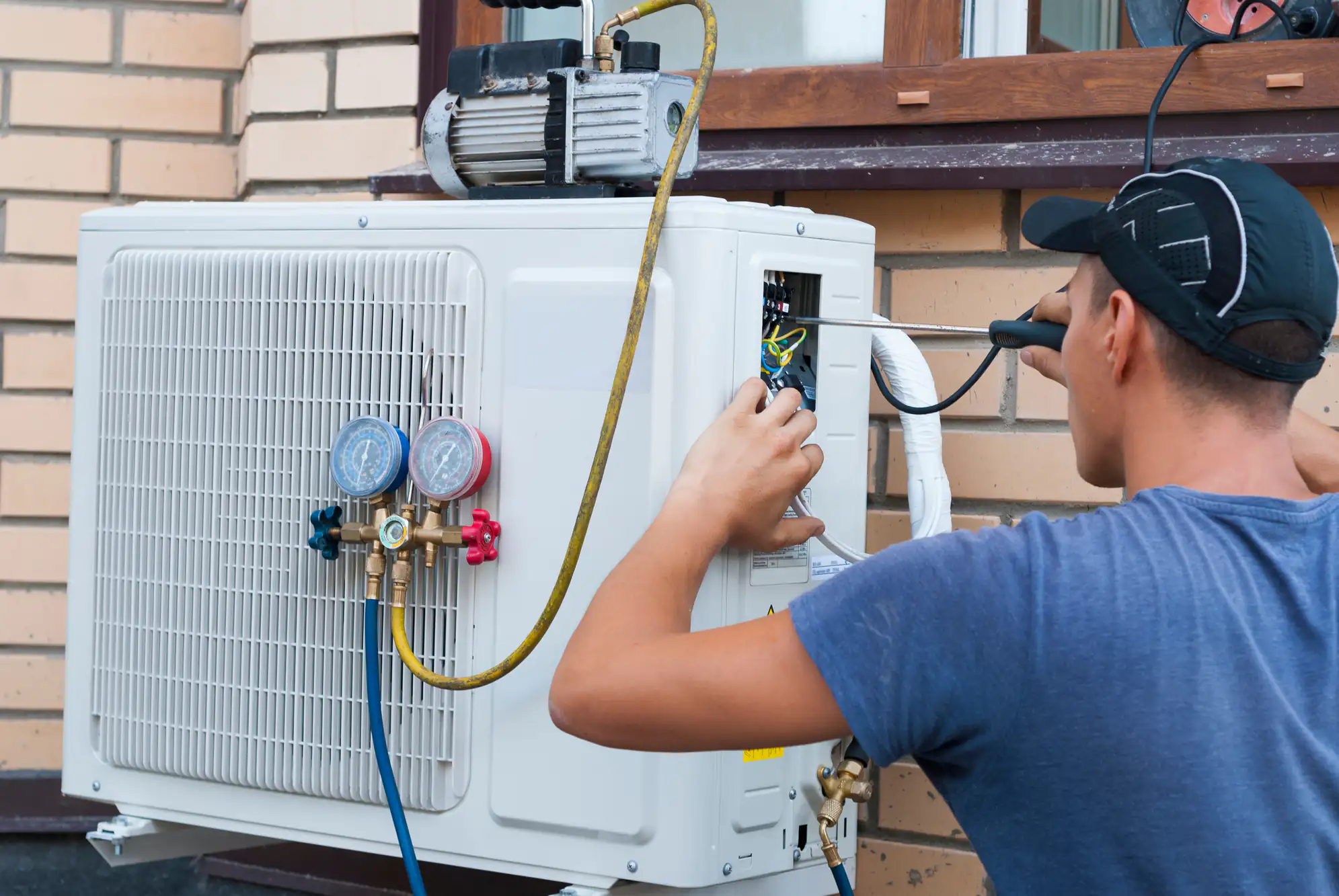
But refrigerant work requires EPA certification. Electrical repairs need someone who knows what they’re doing and carries insurance. Compressor replacements, ductwork repairs, and system diagnostics all fall into the “call a professional” category. Attempting these yourself doesn’t save money—it usually costs more when you have to pay someone to fix what you broke plus the original problem.
The decision gets easier when you know what you’re looking at. Here’s when you should stop troubleshooting and pick up the phone.
Your Energy Bills Keep Climbing
A sudden spike in your electric bill—especially if your usage hasn’t changed—often means your AC is working overtime to deliver the same cooling. Systems lose efficiency as they age, but dramatic increases in a single billing cycle point to a specific problem that needs attention.
When your AC can’t cool efficiently, it runs longer cycles trying to reach your set temperature. Those extended run times show up on your utility bill fast. In Austin’s summer heat, an inefficient system can add hundreds of dollars to your monthly costs compared to a properly functioning unit.
Several issues cause this. Low refrigerant forces your compressor to work harder while delivering less cooling. Dirty coils reduce heat transfer efficiency. A failing capacitor means your motors struggle to start and run, drawing more power than they should. Ductwork leaks mean you’re paying to cool spaces that don’t matter.
Sometimes the problem is simply age. Systems manufactured even 10 years ago are significantly less efficient than current models. If your AC is running fine but your bills keep climbing year after year, you might be throwing money at an outdated system that’s costing you more in energy waste than a new unit would cost in monthly payments.
The math matters here. Calculate what you’re spending on electricity for an inefficient system versus what a new, high-efficiency unit would cost you in monthly financing. Factor in the repair costs you’re likely facing with an aging system. Often, replacement makes more financial sense than you’d think—especially when you account for utility rebates and tax credits on energy-efficient equipment.
Don’t ignore this signal. Rising energy costs are your AC’s way of telling you it’s struggling. The longer you wait, the more money you waste on utility bills that could have gone toward a solution instead of a symptom.
Deciding Between Repair and Replacement
This is the decision that keeps homeowners up at night. Your AC needs work, and you’re trying to figure out whether to fix what you have or invest in something new. Both options cost money, and you want to make the choice that actually makes sense for your situation.
Start with age. If your system is under 10 years old and this is your first major repair, fixing it usually makes sense. You’ve got years of life left, and one repair doesn’t signal the end. But if your AC is 12-15 years old and you’re looking at expensive work, replacement often wins the cost-benefit analysis.
The $5,000 rule gives you a quick calculation. Multiply your system’s age by the repair cost. If that number exceeds $5,000, replacement typically makes more financial sense. So a 12-year-old system needing a $500 repair? That’s $6,000—probably time for a new unit. An 8-year-old system with the same $500 repair? That’s $4,000—fix it.
Repair frequency matters too. If you’re calling for service every few months, your system is telling you it’s done. Multiple repairs add up fast, and you’re essentially paying for a new system in installments while still dealing with breakdowns and discomfort.
Consider what’s actually failing. A $200 capacitor replacement on an otherwise healthy 8-year-old system? Easy decision—repair it. A $2,500 compressor replacement on a 14-year-old system that’s already had two other major repairs in the past three years? That’s a new system waiting to happen.
Energy efficiency enters the equation too. Older systems with SEER ratings below 14 cost significantly more to operate than modern units rated at 16 or higher. The monthly savings on your utility bill can offset a large chunk of your new system payment, making replacement more affordable than it appears on paper.
Refrigerant type is another factor. Systems using R-22 refrigerant face a serious problem—that refrigerant is no longer manufactured in the U.S. and has become extremely expensive. Any leak in an R-22 system basically forces replacement because recharging it costs nearly as much as a new system that uses modern, readily available refrigerant.
Your home comfort matters too. If your current system has never quite kept up with Austin’s heat, or if some rooms are always warmer than others, replacement gives you the opportunity to right-size your system and fix distribution problems. Sometimes the best repair is actually an upgrade that solves problems you’ve been living with for years.
Talk to your technician honestly about what they’re seeing. A good HVAC company won’t push you toward the most expensive option—they’ll explain what makes sense for your specific situation, your budget, and your home. That conversation should include repair costs, expected lifespan after repair, energy efficiency comparisons, and total cost of ownership over the next 5-10 years.
Getting Your AC Fixed Right in Austin
Your AC gives you warning signs before it quits. Weak cooling, strange noises, climbing energy bills, and inconsistent temperatures all mean something specific is wrong. Catching these problems early keeps small repairs from turning into emergency replacements during the hottest stretch of summer.
The decision between repair and replacement comes down to age, repair cost, and how much life your system has left. A good technician walks you through that math honestly, explaining what makes sense for your situation instead of just pushing the most expensive option.
When you need AC repair in Austin, you want someone who shows up fast, diagnoses the problem correctly, and fixes it right the first time. We bring over 20 years of HVAC experience to every service call, with certified technicians who understand exactly how Austin’s climate pushes systems to their limits. Available 24/7 for emergencies and backed by comprehensive warranties, we focus on getting your comfort restored with honest recommendations you can trust.