

Summary:
PCS season and San Antonio summer arrive at exactly the same time. If you’re moving to Joint Base San Antonio — whether you’re reporting to Fort Sam Houston, Lackland AFB, or Randolph AFB — there’s a good chance you’ll be unpacking in triple-digit heat with an HVAC system you’ve never seen before. That’s not a great combination. We’ve worked with a lot of military families across Bexar County, and the questions are almost always the same: Is this system going to hold up? Who do I call if it doesn’t? And how do I know I’m not getting taken advantage of? This page answers all of that.
What San Antonio's Heat Actually Does to an AC System
Most of the country runs their air conditioning four to six months out of the year. In Bexar County, that number is closer to eight to ten. Your system doesn’t get a real break. It runs through spring, hammers through summer, and keeps going well into fall — which means the wear cycle here is significantly compressed compared to what most people are used to.
A system that might last 18 to 20 years in a milder climate can realistically hit its limit in 12 to 15 years here. If you’re moving into a home and you don’t know the age of the unit, that’s the first thing worth finding out. An older system that’s been running hard through San Antonio summers may look fine on the surface and still be one hot July away from failing completely.
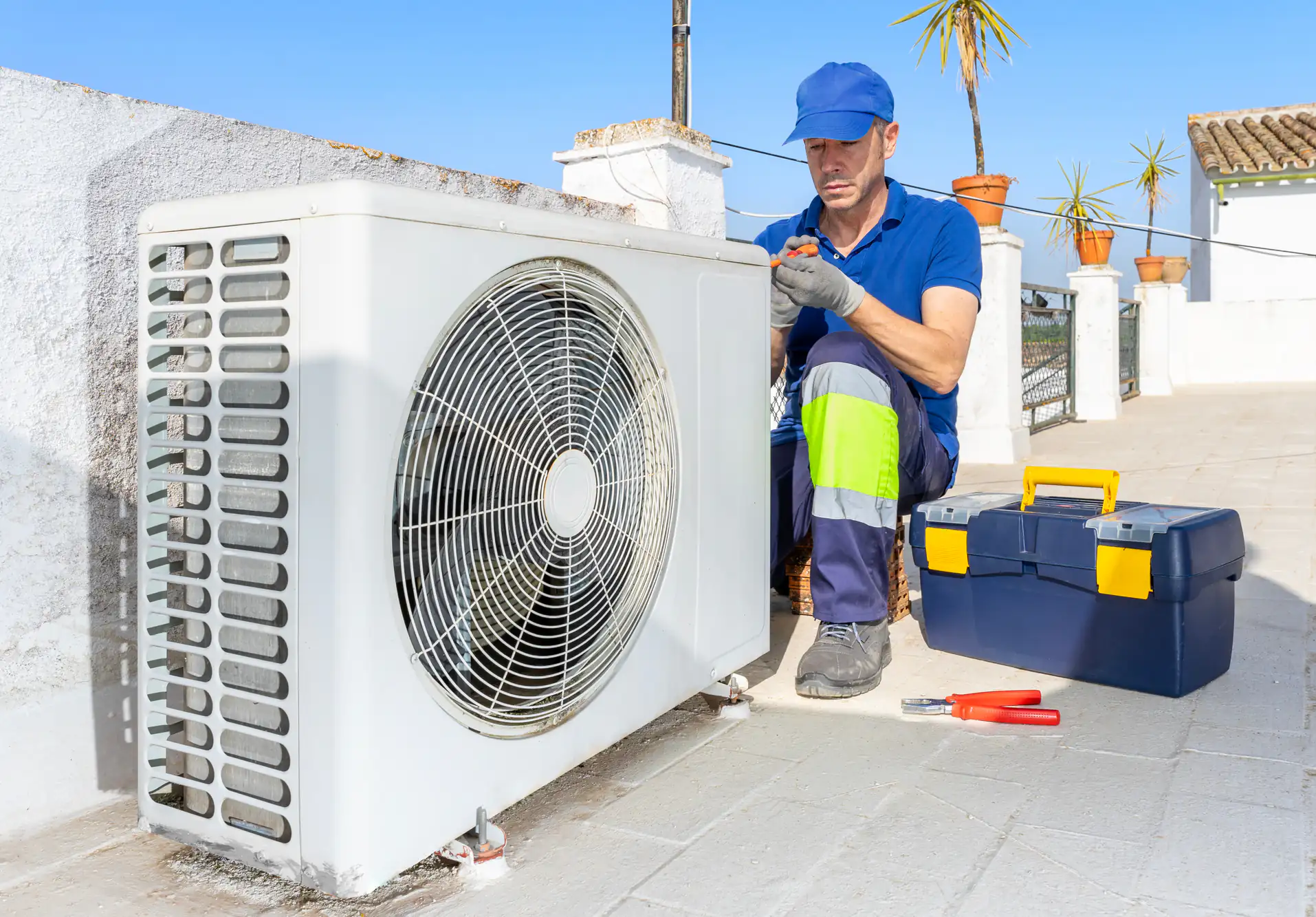
How to Evaluate the HVAC System in Your New Bexar County Home
When you move into a new place — whether you’re renting off-base in Schertz, buying near Converse, or settling into a neighborhood close to Lackland — the HVAC system deserves a real look before you need it most. Most people don’t think about it until the air stops blowing cold. By then, you’re already in a tough spot.
Start with the basics. Find the unit outside and look for a manufacturer’s label — it will usually include a date of manufacture or a serial number you can decode online. If the system is more than ten years old and hasn’t had recent maintenance, that’s worth knowing upfront. Inside, check the air filter. A clogged filter is one of the most common reasons systems underperform, and it’s also one of the easiest things to fix. If the filter looks like it hasn’t been changed in months, that’s a sign the previous occupant wasn’t keeping up with basic maintenance.
Pay attention to how the system sounds and feels when it runs. It should cycle on, cool the space efficiently, and cycle off without running for unusually long stretches. If it’s running constantly and the house still feels warm, or if you hear grinding, rattling, or banging, those are signs something needs attention. Refrigerant leaks, failing capacitors, and compressor issues are among the most common problems we see in Bexar County homes — and catching them early almost always costs less than waiting for a full breakdown.
One thing that often gets overlooked is the ductwork. San Antonio’s heat and humidity put real stress on ducts over time, and leaky or poorly sealed ducts can reduce your system’s efficiency dramatically — which shows up directly on your electric bill. One of our customers saw her electric bills drop by around $100 a month after we replaced her heat pump and addressed the ductwork. That kind of savings is real, and it starts with knowing what you’re working with.
If you have any doubt about the system’s condition, a diagnostic inspection from a licensed HVAC technician is the most straightforward way to get answers. We’ll walk you through what we find, explain your options, and give you an honest read on whether the system needs repair, maintenance, or replacement.
AC Repair vs. Replacement: How to Make the Right Call in San Antonio's Climate
This is the question we hear most often, and it’s also the one where a lot of homeowners feel the most vulnerable. Nobody wants to spend money on a repair that buys them six more months, but nobody wants to replace a system that had years of life left in it either. The honest answer is that it depends on a few specific factors — and any contractor who defaults to replacement without walking you through those factors isn’t giving you the full picture.
The general rule of thumb is the 5,000 rule: multiply the age of the system by the estimated repair cost. If that number exceeds $5,000, replacement is usually the smarter long-term investment. But that’s just a starting point. In Bexar County’s climate, you also have to factor in efficiency. Older systems — anything with a SEER rating below 14 — are working significantly harder than modern equipment to produce the same amount of cooling. Replacing an aging, inefficient system with a properly sized, high-efficiency unit often pays for itself in reduced energy costs over a few years, especially given how hard San Antonio summers push your equipment.
On the other hand, if your system is less than ten years old and the repair is straightforward — a capacitor, a contactor, a refrigerant recharge — repair almost always makes sense. These are common fixes that a qualified technician can handle quickly, and they don’t signal that the rest of the system is on its way out.
What you want to avoid is making this decision under pressure. When your AC fails on a 100-degree afternoon and you’re standing in a hot house with kids or pets, the temptation is to say yes to whatever the technician recommends just to get the air back on. That’s exactly when some contractors push unnecessary replacements. The best protection against that is calling a company that will show you what they found, explain the options clearly, and let you make the call.
We’ve had technicians complete a full diagnostic and tell a customer the system could be repaired when it would have been easy to recommend a full replacement. That’s not a business strategy — it’s just the right thing to do. If you’re weighing repair versus replacement and want a straight answer, we’re happy to walk you through it.
Finding an HVAC Company You Can Trust When You're New to Bexar County
One of the hardest parts of PCSing is building a reliable list of local contractors from scratch. You can’t ask a neighbor you’ve known for five years. You’re relying on Google reviews, military spouse Facebook groups, and your own gut instinct — and in a market as competitive as Bexar County, there are a lot of companies competing for that first call.
The good news is that we have solid options here. The challenge is knowing what to look for. A few things separate trustworthy HVAC companies from the ones that will waste your time or your money, and they’re not hard to spot once you know what to check.
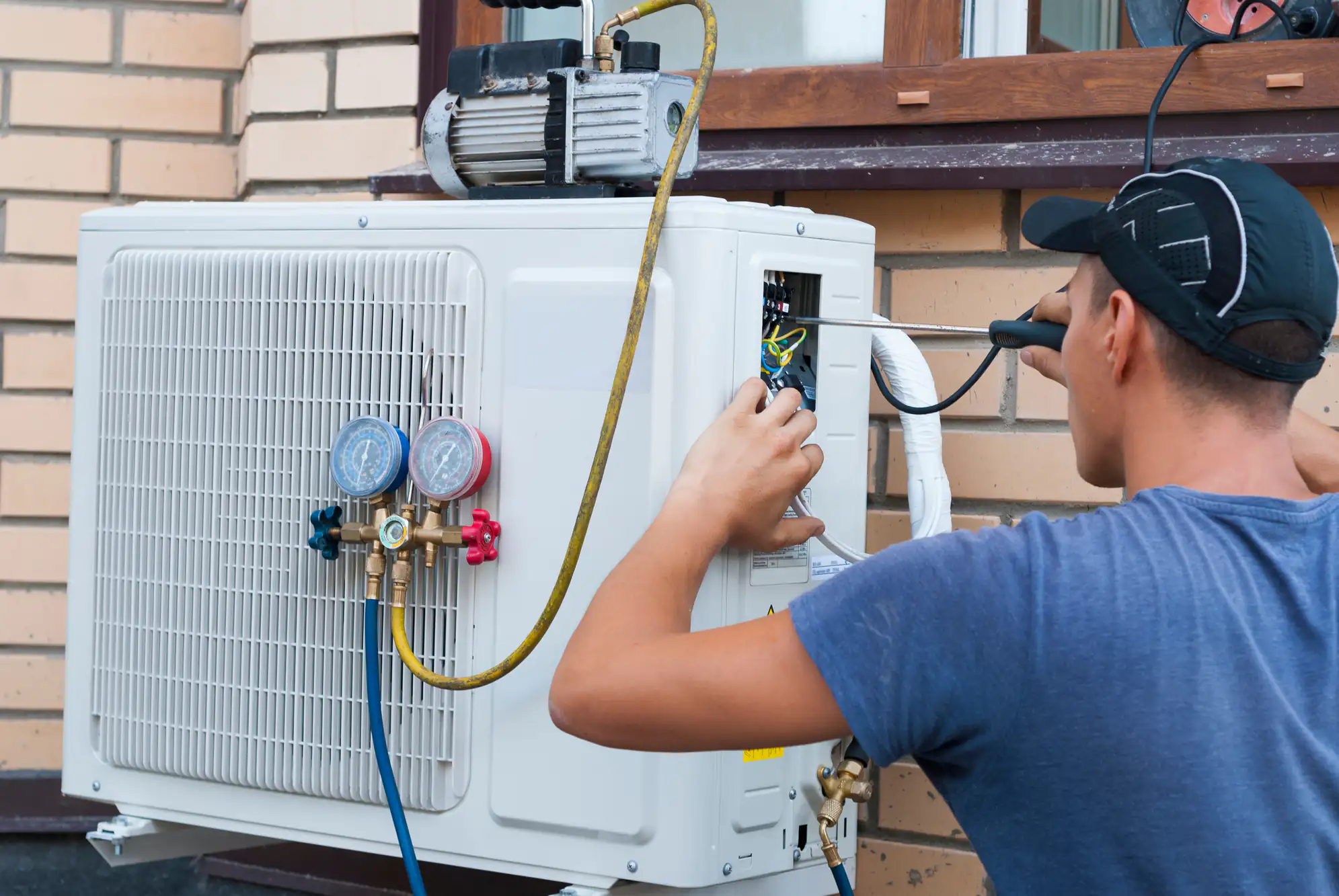
What a Legitimate HVAC Company in Texas Should Be Able to Show You
In Texas, HVAC contractors are required by law to hold a license through the Texas Department of Licensing and Regulation — the TDLR. This isn’t optional, and it’s publicly verifiable. Before you let any contractor work on your system, you can look up their license on the TDLR website in about two minutes. If a company hesitates when you ask about their license, that’s your answer.
Beyond licensing, technicians who handle refrigerants are required to hold EPA Section 608 certification. This is a federal requirement, and it ensures the person working on your system knows how to handle refrigerants safely and legally. NATE certification — from the North American Technician Excellence organization — is a voluntary credential that goes further, requiring technicians to pass rigorous testing on advanced HVAC knowledge. It’s not required, but it’s a meaningful signal that a company invests in its people.
You should also ask about insurance. A licensed, insured contractor is protected — and so are you — if something goes wrong during the job. A company that can’t provide proof of insurance is a liability you don’t need.
Beyond the credentials, pay attention to how the company communicates. Do they give you a written estimate before starting work? Do they explain what they found without pressuring you to decide on the spot? Do they show up in a marked vehicle, in uniform, and on time? These aren’t small things. They’re consistent signals of how a company operates. Military families in Schertz, Universal City, and Converse have told us they chose us specifically because we showed up when we said we would and explained everything clearly before asking for a decision. That’s the baseline — it should be the standard, not a differentiator.
One more thing worth mentioning: be skeptical of “free estimates.” In the HVAC industry, a free estimate often means a salesperson comes out, spends a few minutes looking at your system, and then presents a quote designed to scare you into a decision. A legitimate diagnostic — where a trained technician actually inspects your system, tests components, and identifies the real problem — takes time and expertise. We charge for service calls because that’s what honest work looks like.
Emergency AC Repair in San Antonio: What to Know Before You Need It
At some point, most Bexar County homeowners will face an AC failure in the middle of summer. It’s not a question of if — it’s when. Knowing who to call before that happens is one of the most useful things you can do when you first arrive in San Antonio.
Emergency AC repair means different things to different companies. Some list 24/7 availability on their website but send you to voicemail after 6 PM. Others show up but charge significantly more for after-hours calls without telling you upfront. When you’re evaluating HVAC companies, ask directly: do you actually answer calls at night and on weekends, and is there a different rate for after-hours service? The answer tells you a lot.
We offer genuine 24/7 emergency service — nights, weekends, and holidays — because that’s when AC systems fail most inconveniently. San Antonio doesn’t cool down much after dark in July. A system that stops working at 9 PM on a Saturday is still a health and safety issue, especially for families with young children or elderly relatives in the home. We’ve had technicians working past midnight to complete same-day installations because leaving a family without air conditioning overnight wasn’t acceptable.
It’s also worth knowing that San Antonio’s winters can surprise people who moved here from warmer climates. The 2021 Winter Storm Uri dropped temperatures into single digits across Bexar County, and thousands of homes experienced heating failures because their systems had never been tested in that kind of cold. If you’re moving here from a warm-weather duty station and you’ve never thought much about your heating system, it’s worth having it inspected before winter arrives. A heat pump or furnace that’s been sitting idle for months may not perform the way you expect when you actually need it.
For military families living near Lackland AFB, Fort Sam Houston, or Randolph AFB — and especially those in communities like Kirby, Converse, or Westover Hills — having a local HVAC company you already trust before an emergency happens is genuinely valuable. The worst time to research contractors is when the air is off and it’s 102 degrees outside.
Your Go-To HVAC Company in Bexar County, TX
Moving to Joint Base San Antonio is a big transition, and getting your home’s HVAC situation sorted out early makes everything else a little easier. Knowing the age of your system, understanding what honest AC repair looks like, and having a contractor’s number saved before something goes wrong — those are small steps that matter a lot when the heat is real and the timeline is tight.
We’re a veteran-owned company based right here in Bexar County. We’ve been doing this since 2010, and our team brings over 30 years of combined experience to every call. We serve San Antonio, Converse, Schertz, Live Oak, Helotes, Alamo Heights, Fair Oaks Ranch, Boerne, and everywhere in between. We also offer 0% financing for 60 months on system replacements — because a PCS move is already expensive enough.
If you have questions about your system, want to schedule a diagnostic, or need emergency AC repair, Texas Air Repair is ready to help. Give us a call at 210-380-8000. We’ll give you a straight answer and get it handled.