Your commercial system runs harder than any residential unit ever will. In Universal City, where summer temps regularly climb past 100 degrees and humidity makes your equipment work overtime, that constant demand adds up fast.
Businesses with maintenance contracts see 40 to 60 percent fewer emergency repairs. That’s not marketing speak—that’s what happens when someone catches a worn belt before it snaps during your lunch rush or spots low refrigerant before your compressor burns out on the hottest day of the year.
A well-maintained system also runs up to 40 percent more efficiently than one that’s been ignored. When your HVAC accounts for roughly 40 percent of your building’s energy use, that efficiency difference shows up directly on your utility bills. Most Universal City businesses we work with see their maintenance contract pay for itself within the first year just from energy savings alone.
You also get predictable costs instead of budget-killing emergencies. Scheduled service at times that work for your operations. Priority response when something does go wrong. And detailed reports showing exactly what was checked, what was found, and what you should watch for down the road.
We’ve been handling commercial HVAC maintenance services across the San Antonio metro—including Universal City—since the late ’90s. We’re veteran-owned, which means we show up when we say we will and we don’t cut corners.
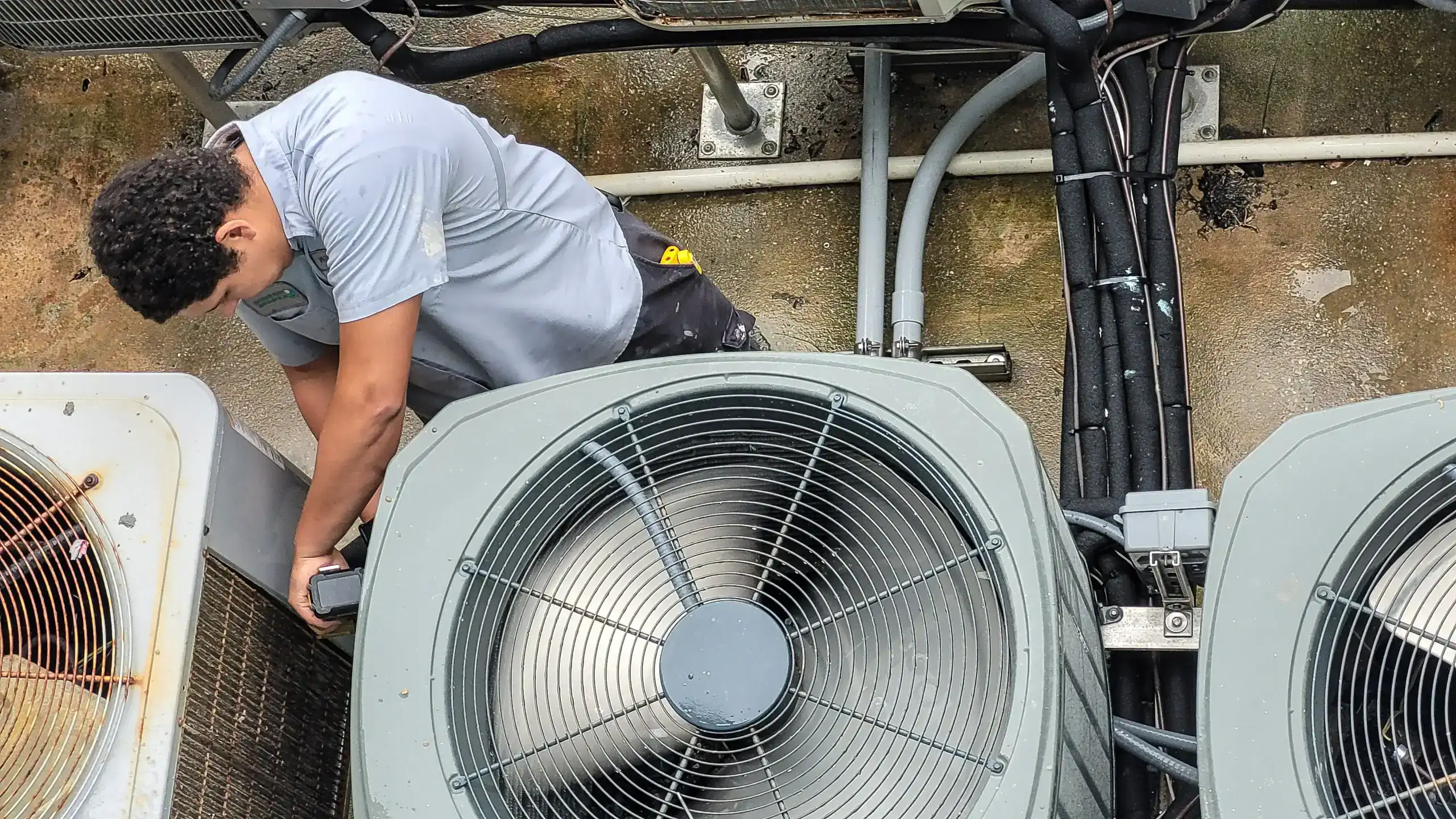
Our technicians aren’t residential guys trying to figure out commercial equipment. They’re trained specifically on the rooftop units, package systems, and multi-zone setups that Universal City businesses actually use. That matters when you’re dealing with equipment that runs nearly nonstop during Texas summers.
We’re available 24/7 because commercial breakdowns don’t wait for business hours. When your system fails and you’ve got employees, customers, or inventory at risk, you need someone who answers the phone and gets there fast. We’ve built our reputation in Universal City on doing exactly that for over two decades.
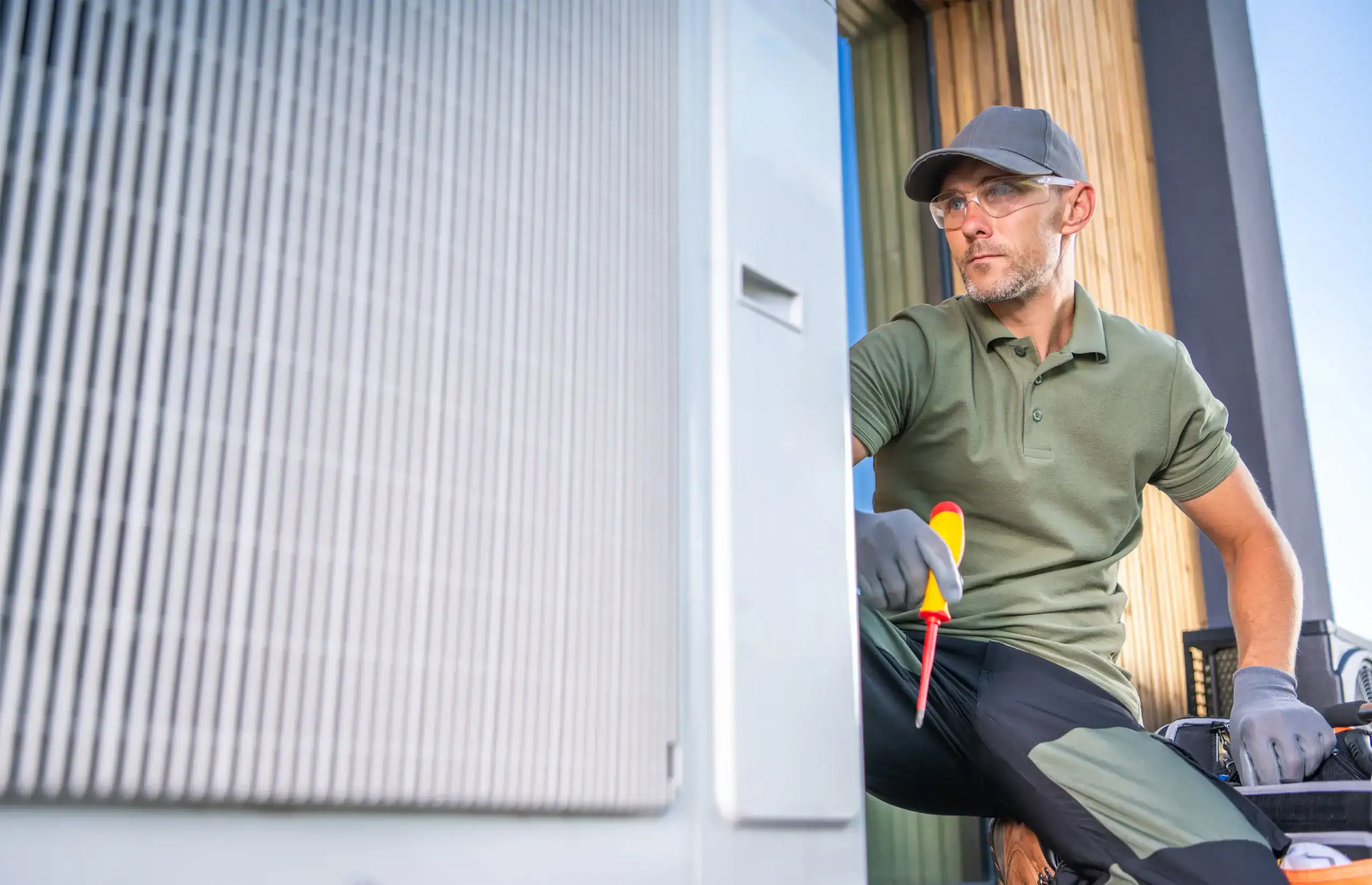
We start by testing your system’s overall performance—checking airflow, measuring temperature differentials, and documenting how hard your equipment is working to maintain your setpoints. This baseline tells us if something’s already struggling.
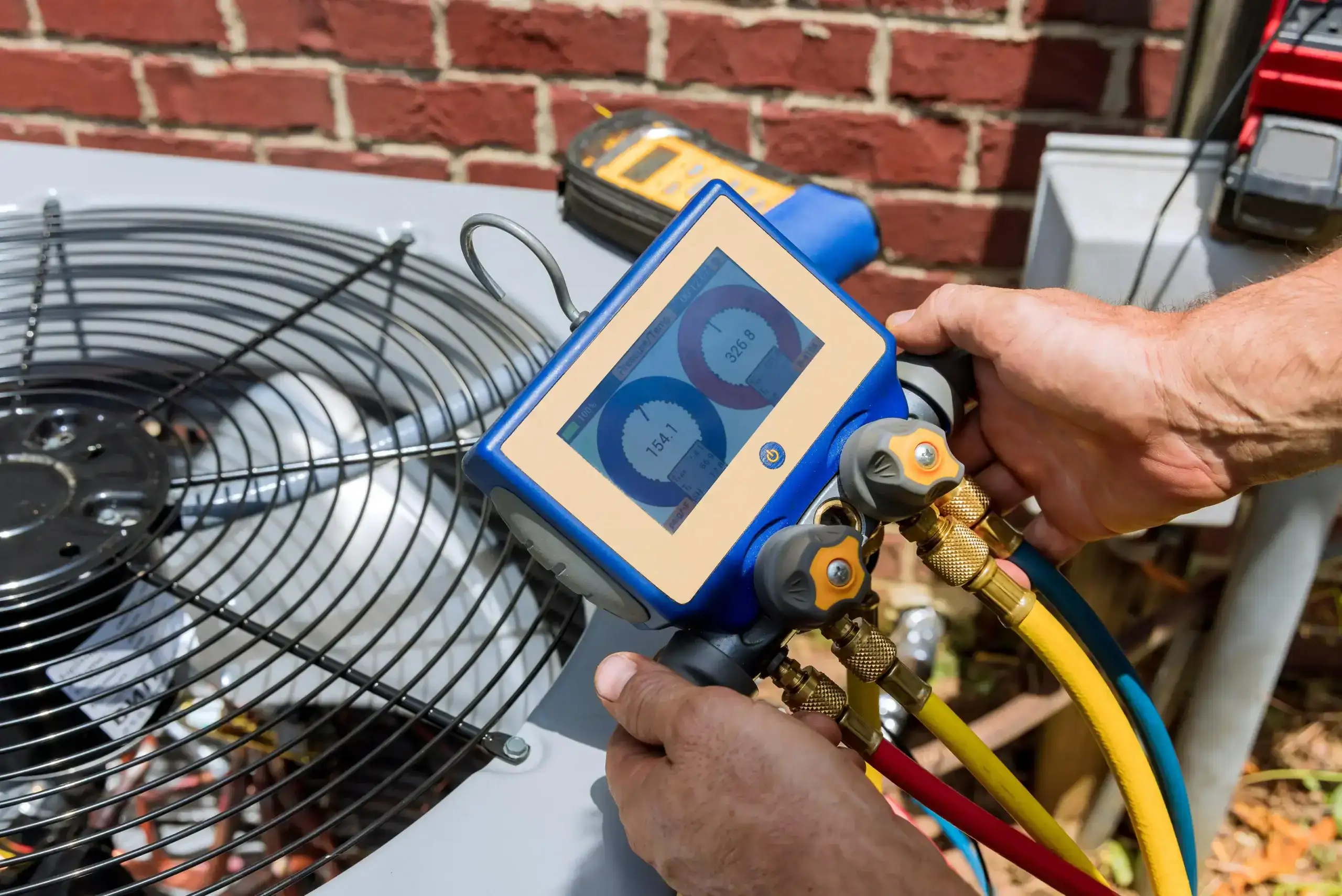
Then we move into the detailed work. Cleaning coils and checking refrigerant levels. Inspecting electrical connections and testing capacitors. Examining belts, motors, and bearings for wear. Verifying that your thermostats and zone controls are communicating properly with the equipment. For rooftop units common in Universal City, we also check drainage systems and weatherproofing.
Every component gets documented. You’ll receive a report showing what we found, what we serviced, and what might need attention in the next few months. No surprises, no upselling—just clear information about your system’s condition.
If we spot something that needs immediate attention, we’ll explain what’s happening, why it matters, and what it’ll cost to fix. You decide whether to handle it now or schedule it for later. Most problems we catch during maintenance are small enough that fixing them right away costs a fraction of what an emergency repair would run.

Ready to get started?
Most commercial systems in Universal City need service two to four times per year, depending on your equipment type and how hard it runs. Rooftop units and package systems typically need quarterly visits to handle the workload that Texas weather demands.
Each visit includes a full system inspection, filter replacement or cleaning, coil cleaning, refrigerant level check, electrical connection testing, belt and motor inspection, thermostat calibration, and airflow verification. We’re also checking components that residential systems don’t have—multiple thermostats, zone controls, larger coils, more complex ductwork, and commercial-grade parts that require different expertise.
You’ll get priority scheduling at times that minimize disruption to your business. Priority response if you do need repairs between visits. Detailed service records that help with building compliance and warranty requirements. And predictable costs that make budgeting actually possible.
The goal isn’t just to keep your system running—it’s to catch small issues before they become expensive problems, keep your energy costs as low as possible, and extend your equipment’s lifespan so you’re not replacing units years earlier than necessary.

It depends on your equipment and operating conditions, but most commercial systems in Universal City need service two to four times per year. If you’re running rooftop units or package systems, quarterly maintenance is usually the right call because of how hard Texas weather makes your equipment work.
Systems that run constantly during business hours put more stress on components than residential units that cycle on and off throughout the day. Add in Universal City’s extreme summer heat and high humidity, and you’ve got conditions that accelerate wear on everything from belts to compressors.
Restaurants, medical offices, and retail spaces with high customer traffic often need more frequent service because indoor air quality and comfort directly affect their business. Warehouses or light industrial facilities might get away with less frequent visits if their systems aren’t running as hard. The right schedule depends on your specific situation, and we can recommend a plan based on your equipment type, operating hours, and business needs.
Your energy bills go up first. Dirty coils, clogged filters, and low refrigerant force your system to work harder to maintain the same temperatures. In a commercial building where HVAC typically accounts for 40 percent of your electricity use, that inefficiency adds up fast—sometimes hundreds of dollars per month.
Then you start seeing more frequent breakdowns. Belts that could’ve been replaced during a scheduled visit snap during business hours. Electrical connections that should’ve been tightened cause component failures. Refrigerant leaks that could’ve been caught early turn into compressor replacements.
The real cost is downtime. When your system fails during a Texas summer, you’re not just dealing with uncomfortable employees—you’re potentially losing customers, productivity, and revenue until repairs are complete. Emergency service costs more than scheduled maintenance, parts might not be immediately available, and you’re stuck waiting while your business suffers. Most businesses that skip maintenance end up spending more on emergency repairs and higher energy bills than they would’ve spent on a maintenance contract.
Technically, maybe. Practically, you’re taking a risk. Commercial systems aren’t just bigger versions of residential equipment—they’re engineered differently, installed differently, and require different expertise to service properly.
Rooftop units, package systems, and multi-zone commercial setups have components and configurations that residential techs rarely encounter. The troubleshooting process is different. The parts are different. The stakes are different because when a commercial system fails, it affects dozens or hundreds of people instead of one family.
A residential tech might be able to change filters and check refrigerant, but they’re less likely to catch the early warning signs of commercial-specific problems. They might not know the right maintenance intervals for your equipment type. They probably don’t carry commercial-grade parts on their truck. And they’re definitely not used to working under the pressure of keeping a business operational. You want technicians who’ve spent years working specifically on commercial equipment in conditions like Universal City’s climate—not someone learning on your system.
Honestly, most companies use those terms interchangeably. What matters more than the name is what’s actually included in the service.
A thorough commercial maintenance visit should include testing your system’s performance, cleaning critical components like coils and blower assemblies, checking and adjusting refrigerant levels, inspecting all electrical connections, examining belts and motors for wear, verifying thermostat accuracy and zone control operation, and documenting everything so you have a clear record of your system’s condition.
Some companies offer “tune-ups” that are really just filter changes and visual inspections. That’s not enough for commercial equipment working as hard as yours does in Universal City. You need someone who’s actually measuring performance, testing components, and catching problems before they cause breakdowns.
Before you sign up for any maintenance plan, ask exactly what’s included in each visit. How long does the service take? What gets inspected? What gets cleaned? What gets tested? Do you receive a written report? The answers will tell you whether you’re getting real preventive maintenance or just a quick look-over.
Most maintenance contracts for small to medium commercial systems in Universal City run somewhere between a few hundred to a couple thousand dollars per year, depending on your equipment size, how many units you have, and how often they need service.
That might sound like a lot until you compare it to emergency repair costs. A compressor replacement can run several thousand dollars. A refrigerant leak repair during an emergency service call costs significantly more than catching and fixing that same leak during scheduled maintenance. And those costs don’t include the revenue you lose when your system is down during business hours.
The businesses we work with typically see their maintenance contracts pay for themselves through lower energy bills alone. Add in fewer emergency repairs, longer equipment life, and less downtime, and the return on investment is pretty clear.
The exact cost for your situation depends on your specific equipment and needs. Any company offering you a price without looking at your system is either guessing or planning to upsell you later. The right approach is to have someone assess your equipment, understand your operating conditions, and recommend a maintenance schedule that actually makes sense for your business.
If your business operates outside normal hours, absolutely. If you only operate during the day, it depends on what you can afford to lose.
A system failure at 2 AM might not matter if your building is empty and you can get it fixed before opening. But if you’re a restaurant with dinner service, a medical facility with patients, or a retail store during a weekend rush, waiting until Monday morning isn’t an option.
Even for businesses that operate standard hours, Texas weather doesn’t care about your schedule. Your system is most likely to fail during extreme heat—exactly when you need it most and when every other HVAC company is slammed with calls. Having a maintenance contract with a company that offers 24/7 emergency service means you’re not stuck at the bottom of a call list while your business suffers.
The real value is priority response. When you’ve got a maintenance contract with a company that knows your system because they’ve been servicing it regularly, they can often diagnose and fix problems faster than a company seeing your equipment for the first time during an emergency. That means less downtime, lower costs, and a lot less stress when something does go wrong.
Other Services we provide in Universal City
 Call Now