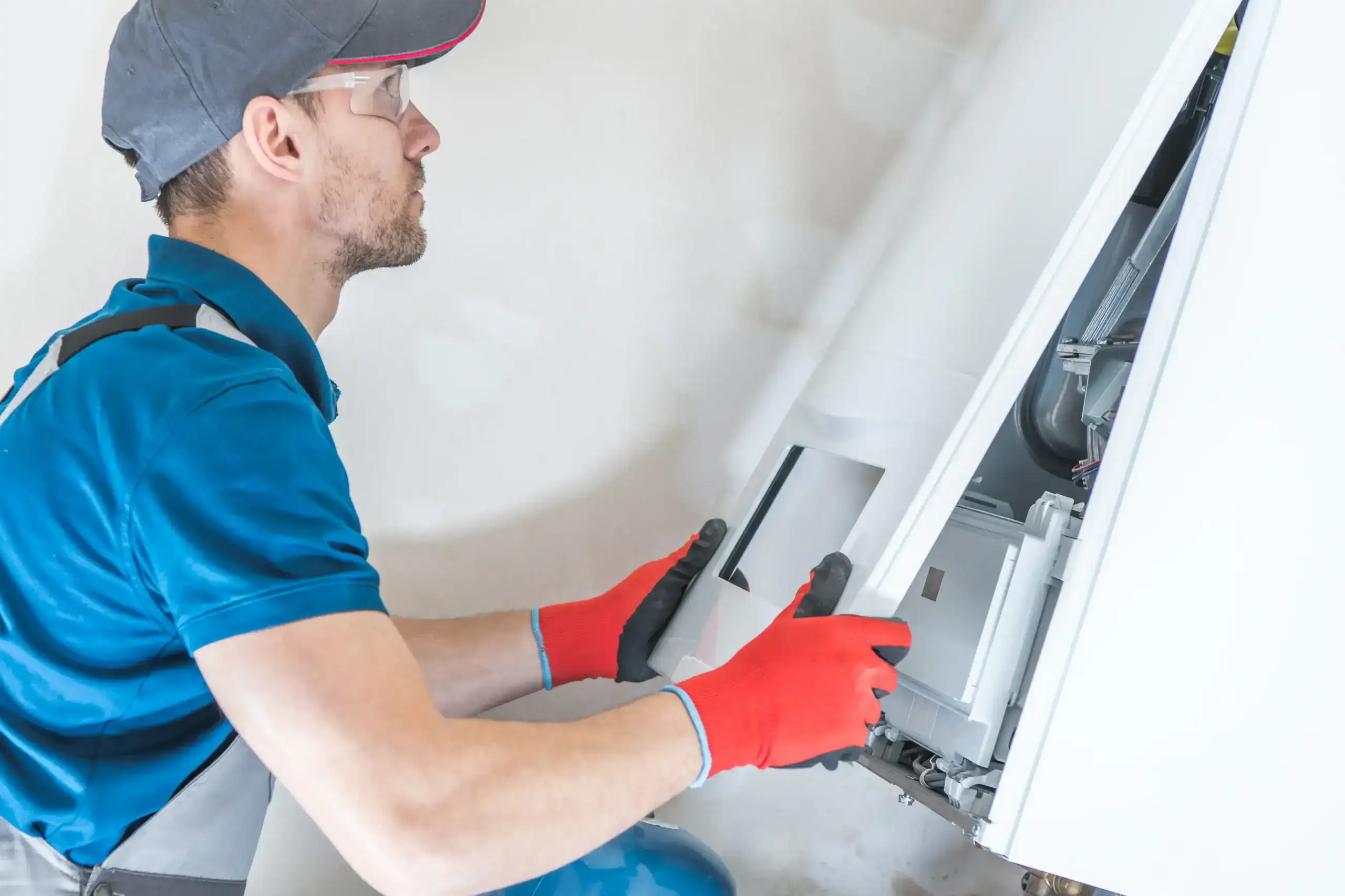
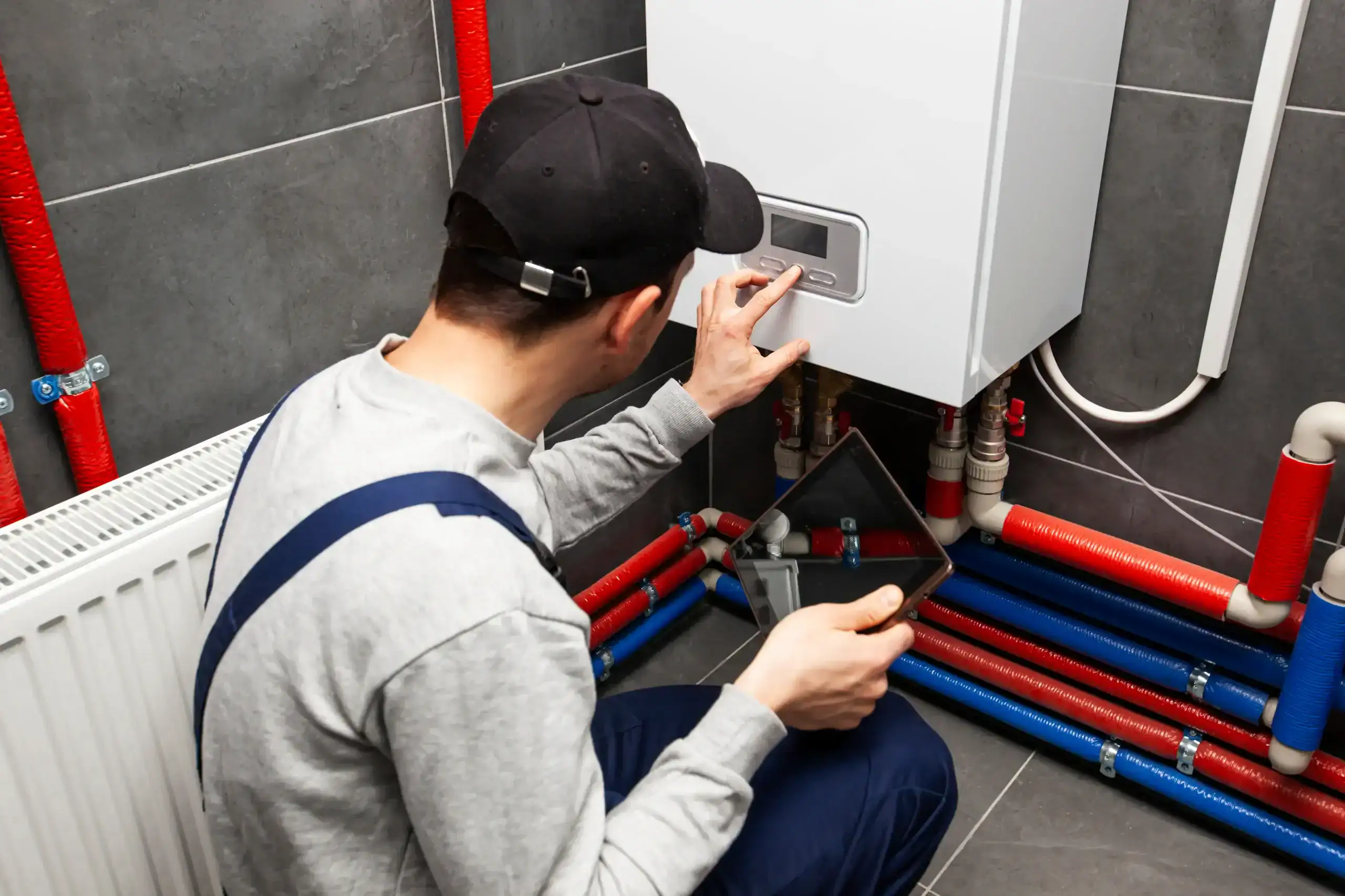
You wake up to a 38-degree morning and your heater’s blowing cold air. Or it’s cycling on and off every ten minutes and you’re not sure if it’ll make it through the night.
San Antonio winters are unpredictable. One day it’s 70 degrees, the next morning you’re scraping frost off your windshield. Your heating system has to go from zero to full blast in hours, and that’s when small problems turn into complete failures.
When your furnace quits during a cold snap, you’re not just uncomfortable. Indoor temps below 55 degrees put your pipes at risk. Your family’s bundled up in blankets. And you’re calling around trying to find someone who’ll actually pick up the phone after 5 PM.
Our heating repair service in San Antonio, TX gets your system running again – fast. Most repairs happen the same day. You get a licensed technician who diagnoses the real problem, explains what’s wrong in plain terms, and gives you the cost before any work starts. No surprises on the bill. No waiting three days for a callback.
Texas Air Repair is a veteran-owned HVAC company that’s been handling furnace repair in San Antonio, TX since before the 2011 freeze that caught half the city off guard. We’ve seen what happens when heating systems fail during Texas cold fronts – and we’ve fixed thousands of them.
Our technicians are licensed, insured, and trained on the heating systems most common in San Antonio homes. We’re available 24/7 because heater problems don’t wait for business hours. We’re a family-owned company, which means we’re not running service calls like an assembly line.
You call, we answer. You need help at 2 AM on a Saturday, we send someone. That’s how we’ve built our reputation across San Antonio, and it’s why homeowners call us back when something goes wrong.
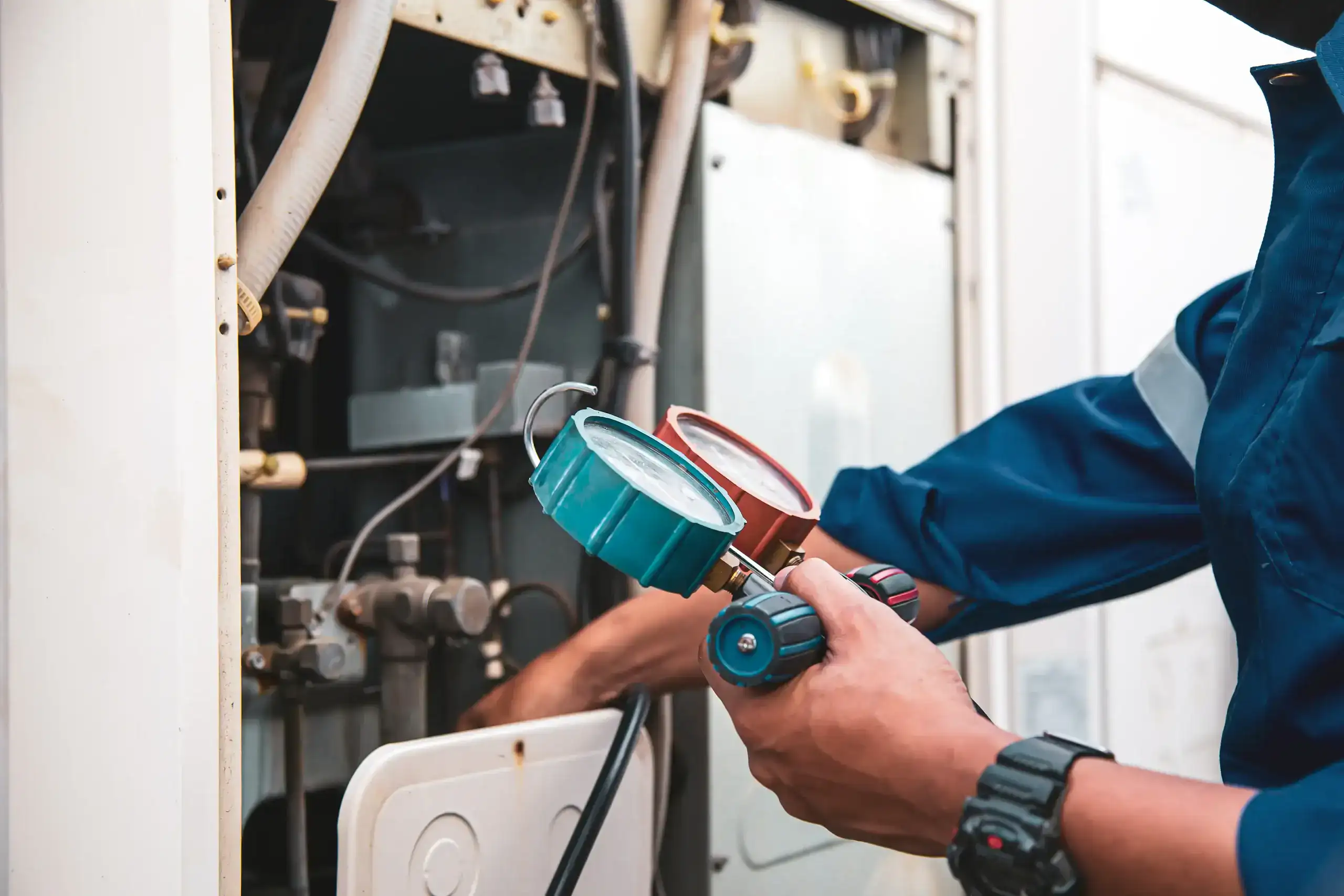
You call or submit a request online. We ask a few questions about what’s happening – no heat at all, strange noises, system cycling constantly – so we know what to bring.
We schedule a time that works for you, usually same-day. If it’s an emergency, we come now. A licensed technician shows up with a fully stocked truck and diagnostic equipment.
The tech runs a full system check: thermostat, ignition, burners, heat exchanger, blower motor, electrical connections, and airflow. Most heating problems in San Antonio come from a handful of common failures – worn igniters, dirty flame sensors, failed capacitors, or clogged filters that force the system to overheat and shut down.
Once we find the problem, we explain what’s wrong and what it’ll cost to fix. You approve the work, we make the repair, and we test the system to make sure it’s heating properly before we leave. You get a warranty on parts and labor. If something doesn’t feel right a week later, you call us back.
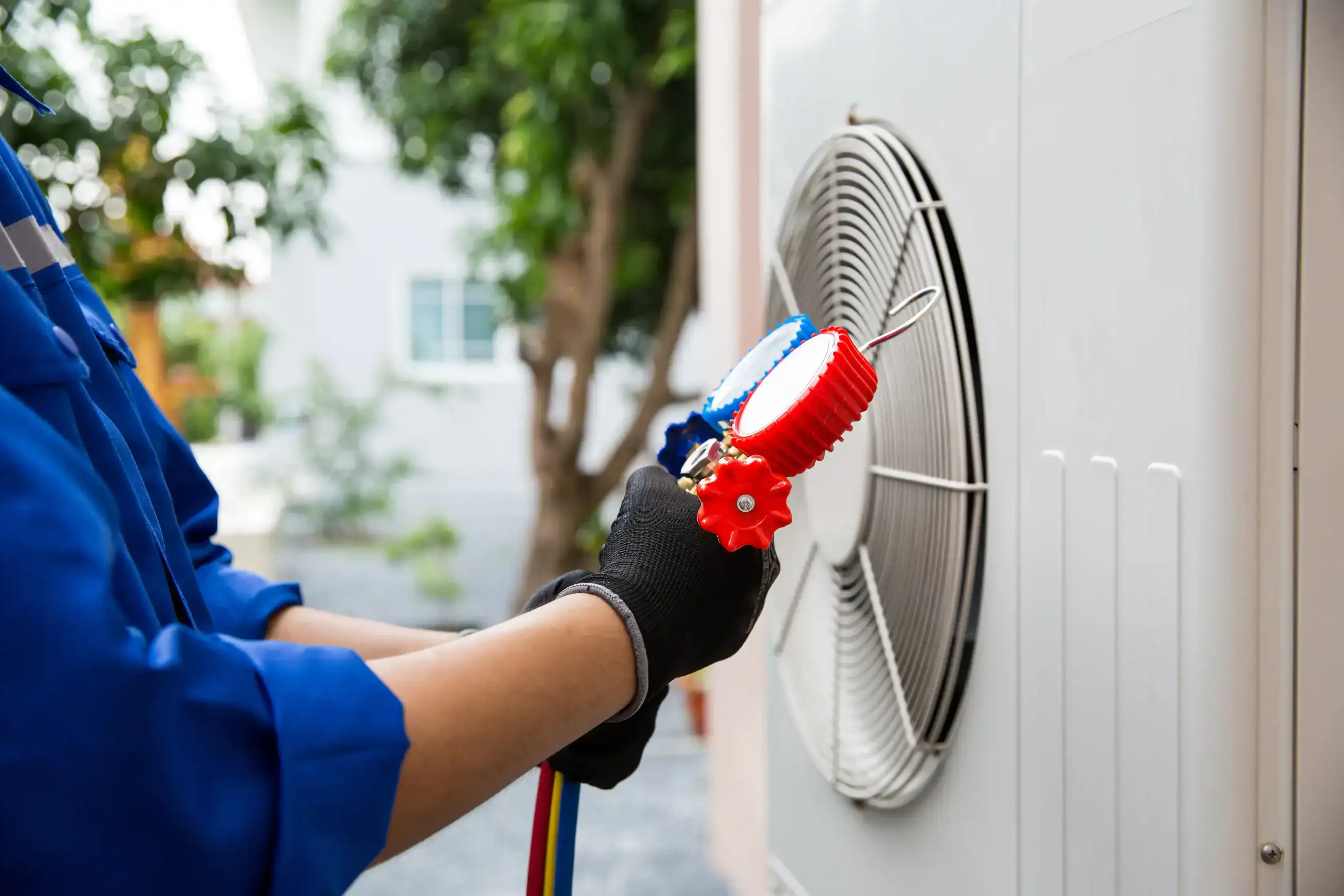
Ready to get started?
Every heating repair in San Antonio, TX starts with a full diagnostic. We don’t guess. We test voltage, check gas pressure, measure airflow, and inspect every component that could cause your system to fail.
Common repairs include replacing faulty igniters that won’t light the burners, cleaning or replacing flame sensors covered in carbon buildup, swapping out failed capacitors that prevent the blower from starting, fixing thermostat wiring issues, and addressing limit switches that shut the system down when it overheats. We also handle heat pump repairs, which are common in San Antonio because they provide both heating and cooling.
San Antonio’s climate is hard on HVAC systems. Summer heat runs your AC nonstop for months, wearing down electrical components. Then winter hits and your system has to switch modes and fire up the heat. Parts that were marginal in October fail in January when you need them most.
We carry the most common repair parts on our trucks – igniters, capacitors, contactors, sensors, and motors – so we can finish most jobs in one visit. If your system needs a specialized part, we source it fast and keep you updated. You’re not waiting a week in the cold.
Most heating repairs in San Antonio, TX range from $150 to $600 depending on what’s broken. A simple fix like replacing an igniter or flame sensor usually runs $150 to $300. Blower motor or capacitor replacements typically cost $250 to $500. More involved repairs like heat exchanger issues or control board failures can run higher.
You’ll get an exact price before we start any work. We diagnose the problem, explain what needs to be fixed, and give you the cost upfront. No hidden fees or surprise charges when the job’s done.
Emergency service rates apply for after-hours calls, but we’re transparent about that when you call. If your heater fails at midnight and you need it fixed now, you’ll know what that costs before we send someone out.
Short cycling – when your furnace fires up then shuts down after a few minutes – usually means your system is overheating or there’s a sensor problem. In San Antonio homes, the most common causes are dirty air filters, failed limit switches, or bad flame sensors.
A clogged filter restricts airflow. Your furnace heats up too fast, the limit switch detects the high temperature, and shuts everything down as a safety measure. The system cools off, tries to fire again, and the cycle repeats.
Flame sensors can get coated with carbon buildup over time. The sensor can’t detect the flame properly, so it shuts off the gas valve thinking the burner didn’t light. Your furnace tries to ignite, fails the sensor check, and shuts down. This happens over and over until someone cleans or replaces the sensor.
Both problems are fixable, usually in one visit. But if you ignore short cycling, you’ll wear out your igniter and other components from constant start-stop stress. Get it checked before a $200 repair turns into a $1,500 problem.
Yes. We offer 24/7 emergency heating repair in San Antonio, TX. If your heater goes out at 11 PM on a Sunday and it’s 35 degrees outside, we’ll send a licensed technician to your home.
Real emergencies get immediate response. We’re not telling you to wait until Monday morning when your house is 50 degrees and dropping. Our techs carry the most common repair parts, so there’s a good chance we’ll have your heat running again that same night.
Emergency rates apply for after-hours service – nights, weekends, and holidays. We’re upfront about pricing when you call. You decide if you want us to come now or if you can wait until regular business hours.
Most San Antonio homeowners call us for emergency service during cold fronts when temperatures drop into the 30s overnight. That’s when heating systems that were limping along suddenly quit completely. We’ve done 2 AM repairs, Christmas Eve fixes, and plenty of weekend calls. It’s part of what we do.
Most furnaces and heating systems in San Antonio, TX last 10 to 15 years with regular maintenance. Heat pumps, which handle both heating and cooling, typically last 12 to 15 years. Straight AC and furnace combinations can push 15 to 20 years if they’re well-maintained.
San Antonio’s climate is harder on HVAC systems than you’d think. Your AC runs constantly through brutal summers, wearing down electrical components and compressors. Then your heating system sits unused for months and has to fire up suddenly when a cold front hits. That on-off cycle creates stress.
If your heating system is over 12 years old and needs a major repair – like a cracked heat exchanger or failed compressor – replacement often makes more financial sense than repair. You’re looking at a system that’s near the end of its lifespan anyway, and you’ll likely face more breakdowns in the next few years.
We’ll tell you honestly if repair makes sense or if you’re better off replacing the system. We’re not here to sell you a new furnace if yours has five good years left. But we’re also not going to let you dump $2,000 into a 16-year-old system that’ll fail again next winter.
A furnace burns gas or uses electric heating elements to create heat, then blows that warm air through your home. A heat pump moves heat from outside air into your house during winter, and reverses the process to cool your home in summer. Many San Antonio homes use heat pumps because they handle both heating and cooling in one system.
Furnace repairs typically involve igniters, burners, gas valves, flame sensors, and heat exchangers. Heat pump repairs deal with refrigerant issues, reversing valves, defrost controls, and compressor problems. The blower motor, capacitors, and thermostat components are similar between both systems.
Heat pumps struggle when outdoor temperatures drop below 35 degrees. They have to work harder to extract heat from cold air, and they’ll often run auxiliary electric heat strips to keep up. That’s why you might notice your heat pump running constantly during San Antonio cold snaps – it’s normal operation, not necessarily a problem.
If your heat pump is blowing cold air, making grinding noises, or icing up during heating mode, something’s wrong. We handle both furnace repair and heat pump repair in San Antonio, TX. Our techs diagnose which type of system you have and what’s causing the problem, then fix it right.
If your heating system is under 10 years old and the repair costs less than $1,000, repair usually makes sense. If your system is over 12 years old and you’re looking at a repair bill over $1,500, replacement is often the better financial decision.
Here’s the math: A 14-year-old furnace needs a $1,800 repair. That system might last another two to four years before something else fails. You could easily spend another $1,000 to $2,000 in repairs during that time. A new system costs $3,500 to $6,000 installed, comes with a warranty, and will last 12 to 15 years with lower energy bills.
We use a simple guideline: multiply the repair cost by your system’s age. If that number is over $5,000, replacement makes more sense. A $400 repair on a 10-year-old system equals $4,000 – repair it. A $1,200 repair on a 15-year-old system equals $18,000 – replace it.
We’ll give you an honest recommendation based on your specific situation. Some systems are worth fixing. Others are money pits waiting to break again. We’ve been doing heating repair in San Antonio, TX long enough to know the difference, and we’ll walk you through the options so you can make the right call for your home and budget.
Other Services we provide in San Antonio
 Call Now