

We are here to help you, not sell you!
In today's world it's hard to find people you can trust to truly help you. We don't send a pushy commissioned salesperson to pressure you to buy the most expensive system on the market. We send a salary-paid team member to listen to your needs and wants and help you understand the options available so that you can select what works best for you and your family.
See why San Antonio trusts us with their comfort
AC Replacement in San Antonio, TX — Done Right
You're probably getting two or three quotes. Here's what makes ours different.
Send a commissioned salesperson who's paid to close.
Our equipment specialists earn a comfortable salary. They're paid to help you make the right call, not to sell you the most expensive system.
The owner is behind a desk. You'll never meet him.
Detailed photos of the installation are uploaded to your account before and after so that Henry Rodriguez, owner of Texas Air Repair, can review your system and ensure your install was done correctly.
Push a replacement whether you need one or not.
We built our reputation on doing what is right, delivering consistent top-quality workmanship and standing behind our work with fast, friendly, and fair 24/7 service after the fact.
Staffed by technicians still learning the trade.
Henry started his HVAC career in 1993. Our team members have extensive knowledge and experience getting you back to comfort quickly.
AC Repair vs. Replacement
Not sure if you need a new system? Let's figure it out together
We can fix anything (given enough time and resources). But sometimes a repair stops making financial sense. Here's how we think about it.
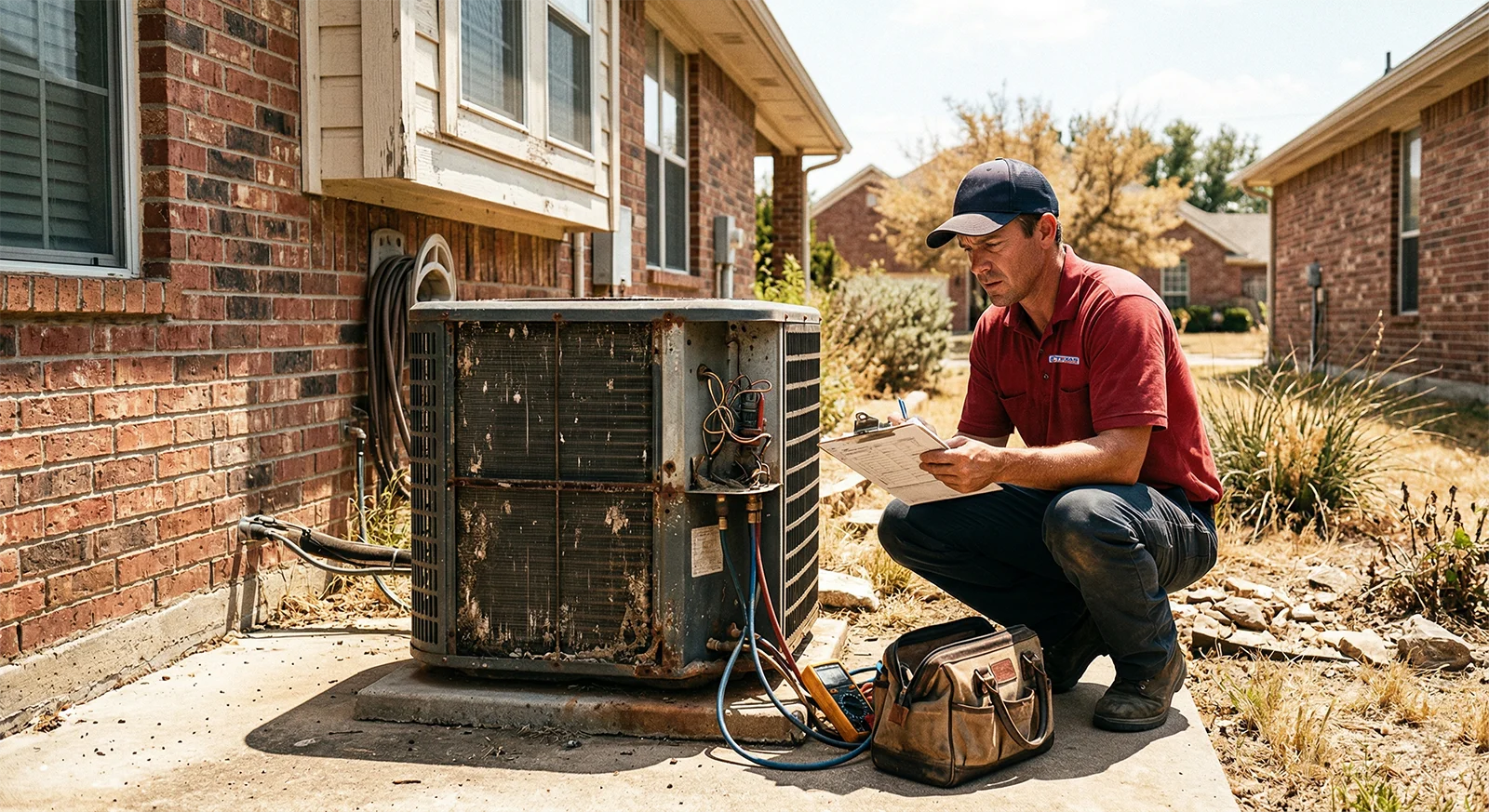
AC replacement usually makes sense when:
- Your system is 10 to 12+ years old and repair costs keep stacking up
- You're running R-22 refrigerant (production was banned in 2020 and the cost to recharge keeps climbing)
- Your energy bills keep rising with no other explanation
- You've had multiple repairs in the past two years

AC repair probably makes more sense when:
- Your system is under 10 years old with a solid maintenance history
- The issue is isolated: one part, one fix
- The repair cost is low relative to what the system has left in it
We'll walk you through the numbers honestly. If a repair is viable, that's what we'll recommend.
AC Replacement Process in San Antonio, TX
Next steps, from call to cool
Call or book online
Reach us at 210-380-8000 or schedule online. We'll ask a few questions about your current system and set up a time that works for you.
AC replacement estimate
A technician comes to your home, inspects your current system, takes measurements, and evaluates your options.
Honest recommendation
We walk you through what we found, explain your options in plain English, and give you a written estimate. If a repair makes more sense, we'll tell you that too.
New AC installation
Our crew handles the full installation as early as same-day. We stress-test everything before we leave.
Trane AC Installation in San Antonio
Trane systems, built for San Antonio heat
We install Trane heating and cooling systems because they're built for climates like ours. High efficiency, reliable performance, and one of the strongest warranties in the industry.

Every replacement includes
- New Trane system sized to your home
- Full removal and disposal of your old unit
- Installation by licensed, EPA-certified technicians
- System testing and calibration before we leave
- Manufacturer warranty active from day one
- Help filing for CPS Energy rebates on qualifying systems
We size every system to your home. Oversized units waste energy. Undersized units can't keep up. We get it right the first time.
AC Replacement Cost & Financing
Quality you can afford
$75 service calls Monday through Friday
A licensed Texas Air Repair tech at your door for just $75. Available 8 AM to 5 PM, same-day appointments when we can. After-hours and Sunday emergencies are still covered 24/7 at $125.
*Residential customers only. $75 rate applies Monday through Friday, 8 AM to 5 PM. After-hours emergency call fee is $125.
0% interest financing for 60 months on select high-efficiency replacement systems with approved credit
If your system needs replacing, we'll come out and give you a free estimate. We'll work with you to find a payment plan that fits.
*Not valid with any other offer.
Military Discount
10% off repairs for active and retired military. Texas Air Repair is a Patriotic Employer.
*Not valid with any other offer.
Senior Discount
10% off repairs for seniors.
*Not valid with any other offer.
First Responder Discount
10% off repairs for first responders.
*Not valid with any other offer.

HVAC Replacement San Antonio
Serving San Antonio and the surrounding communities
We've been replacing AC systems across the San Antonio metro since 2010. Find your city below. If you don't see it, just call us at 210-380-8000 and we'll let you know if we can get to you.
AC Replacement San Antonio FAQ
Before you call, here's what most people ask
How much does AC replacement cost in San Antonio?
AC replacement cost depends on several factors, and no two jobs are priced the same. The main variables are:
- Home size and layout: A larger home requires a higher-capacity system. A two-story home with poor airflow may need additional ductwork.
- System efficiency rating: Higher SEER2 ratings cost more upfront but lower your monthly energy bills. In San Antonio's climate, where AC runs 9 to 10 months a year, efficiency pays for itself faster than most people expect.
- Equipment tier: Entry-level, mid-range, and premium systems carry different price points. We'll walk you through the differences so you can make the right call for your home and budget.
- Existing infrastructure: If your ductwork, electrical, or refrigerant lines need updating, that affects the total.
We don't quote prices over the phone because a number without a proper assessment isn't honest. A technician will come out, evaluate your system, and give you a written estimate.
How long does AC installation take?
Most home and business AC replacements in San Antonio are completed in 1 to 2 days. Here's what a typical installation day looks like:
- Morning arrival: Our crew arrives at the scheduled time with your new system already loaded on the truck.
- Old system removal: We disconnect and remove your existing unit, handling all refrigerant disposal in compliance with EPA regulations.
- New system installation: We install the new equipment, connect all lines, and integrate with your existing ductwork and thermostat.
- Testing and calibration: Before we leave, we run the system through a full stress test to confirm everything is operating correctly and efficiently.
- Walkthrough: We walk you through the new system, answer any questions, and make sure you're comfortable before we pack up.
For emergency replacements, same-day installation is available. Call us at 210-380-8000 and we'll tell you exactly what we can do for you.
What happens to my old AC system?
We handle everything. Once your new system is installed and running, we disconnect and remove the old unit from your property.
Refrigerant is recovered and disposed of in accordance with EPA regulations. It can't legally be released into the atmosphere, and we follow that to the letter.
The old equipment is hauled off by our crew. You don't need to arrange disposal, coordinate a pickup, or leave anything at the curb. By the time we leave, the only thing on your property is a new system running the way it should.
How do I know if I need a new AC system or just a repair?
This is the most important question to get right, and it's one we take seriously. We've built our reputation on telling people when they don't need a new system. But there are situations where continuing to repair an aging unit stops making financial sense.
Here's the honest framework we use:
Replacement usually makes more sense when:
- Your system is 10 to 12+ years old and repair costs keep adding up
- The repair cost exceeds 50% of what a new system would cost
- You're running R-22 refrigerant and facing a major repair (see below)
- Your energy bills have been climbing steadily with no other explanation
Repair usually makes more sense when:
- Your system is under 10 years old with a solid maintenance history
- The issue is isolated: one component, one fix, reasonable cost
- The system is otherwise running efficiently
We'll come out, assess your system, and give you an honest recommendation either way. If a repair makes sense, that's what we'll tell you. If replacement is the smarter call, we'll walk you through why.
My AC uses R-22 refrigerant. What are my options?
R-22 (also called Freon) was phased out under EPA regulations, with production and import banned as of January 1, 2020. The refrigerant still exists in limited supply from recovered stockpiles, but that supply shrinks every year and the cost per pound keeps climbing.
If your system runs on R-22, you have two options:
Option 1: Repair and recharge. If the leak is minor and the system is otherwise in good shape, recharging with reclaimed R-22 may buy you a few more years. This can make sense if the system is relatively young and the repair cost is low. The risk is that you're paying premium prices for a refrigerant that's only going to get more expensive.
Option 2: Replace the system. If your R-22 system is 10+ years old or facing a significant repair, replacement with a modern R-410A or R-32 system almost always makes more financial sense. You get a more efficient system, a refrigerant supply that isn't disappearing, and lower energy bills going forward.
We'll tell you honestly which option makes more sense for your specific situation. Call us at 210-380-8000 and we'll be happy to walk you through it.

Your comfort is one call away.
Free estimates. Honest answers. Open 24 hours a day. Nights, weekends, and holidays.
