Summary:
Your thermostat says 72, but your living room feels like 85. The AC’s running, but something’s off. You’re standing there wondering if this is something you can fix yourself or if you need to call someone.
It’s a fair question. Some AC problems really are simple enough to handle on your own. Others just look simple until you’re three hours in, sweating through your shirt, with parts scattered across the garage floor.
Here’s what actually separates a quick DIY fix from a job that needs professional AC repair. No fluff, no scare tactics—just the reality of what works and what doesn’t when your air conditioner stops doing its job in Austin’s heat.
What You Can Actually Fix Yourself
Some AC troubleshooting doesn’t require a technician. These fixes are straightforward, safe, and you can handle them with basic tools most people already own.
Start with your circuit breaker. If your AC won’t turn on at all, walk to your electrical panel and check if the breaker tripped. Flip it back on. That’s it. It happens more often than you’d think, especially during Austin’s first 100-degree week when everyone’s system kicks into high gear at once.
Next, check your thermostat. Make sure it’s actually set to cool, not heat or off. Confirm the temperature setting is lower than what your house currently reads. Replace the batteries if it’s battery-powered. These sound obvious, but they solve AC problems every single day.
Your air filter matters more than most people realize. A clogged filter chokes your system, forcing it to work harder while cooling less effectively. Pull it out. Hold it up to the light. If you can’t see through it, replace it. Do this every one to three months depending on how much dust your home collects and whether you have pets.

Simple outdoor unit maintenance you can handle
Your outdoor condenser unit sits outside taking whatever Austin throws at it. Dust storms, cottonwood fluff, leaves, grass clippings—all of it ends up coating the fins and blocking airflow. When that happens, your whole system struggles to cool your home.
Turn off the power at the disconnect box near the unit. Clear away any debris, weeds, or plants within two feet of the unit. They block airflow and force your system to work harder than necessary, especially during those stretches when Austin temperatures stay above 95 for weeks.
Look at the fins on the sides of the unit. If they’re caked with dirt or bent, you’ve found part of your problem. You can spray them gently with a garden hose from the inside out to wash away surface dirt. Don’t use a pressure washer—you’ll bend the fins and make things worse. This is basic AC troubleshooting that takes maybe 15 minutes but makes a real difference.
Check that the unit sits level. If it’s tilted, the internal components don’t drain properly and wear unevenly. You can use shims to level it, but if it’s sunk significantly into the ground, that’s a bigger issue worth having someone look at.
These outdoor maintenance tasks are safe and simple. They actually help your system run better. But they’re also where the line starts to blur between what you should do and what you shouldn’t attempt without professional help.
When basic AC troubleshooting doesn't solve the problem
You’ve checked the breaker. You’ve replaced the filter. You’ve cleared the outdoor unit and confirmed the thermostat settings. Your AC still isn’t working right. Maybe it’s running but not cooling. Maybe it’s making grinding or squealing noises. Maybe it’s cycling on and off every few minutes.
This is where most DIY AC repair attempts should stop. What looks like a simple problem from the outside usually isn’t once you start digging into the actual mechanics of the system.
An AC that runs but doesn’t cool could mean low refrigerant. It could mean a failing compressor. It could mean frozen evaporator coils. It could be a dozen other things, and figuring out which one requires diagnostic equipment you don’t own and training you haven’t had. Guessing costs money when you buy the wrong parts.
Strange noises mean something’s loose, worn out, or broken inside. You can’t fix what you can’t identify, and identifying it means taking apart components that are under pressure, connected to electrical systems, and filled with refrigerant that requires certification to handle legally. That’s not a suggestion—it’s federal law.
Here’s what happens when people push past this point: they spend money on parts that weren’t the problem. They break things that were working fine. They void warranties that would have covered the repair. They create safety hazards. And then they call for professional AC repair anyway, except now it costs more because there’s additional damage to fix.
The basic stuff you can handle saves you a service call. Everything beyond that isn’t about whether you’re handy enough. It’s about whether the risk and cost of getting it wrong is worth avoiding a professional HVAC service that’ll diagnose it correctly and fix it right the first time. In Austin’s heat, that answer usually becomes pretty clear pretty fast.
Why Professional AC Repair Matters
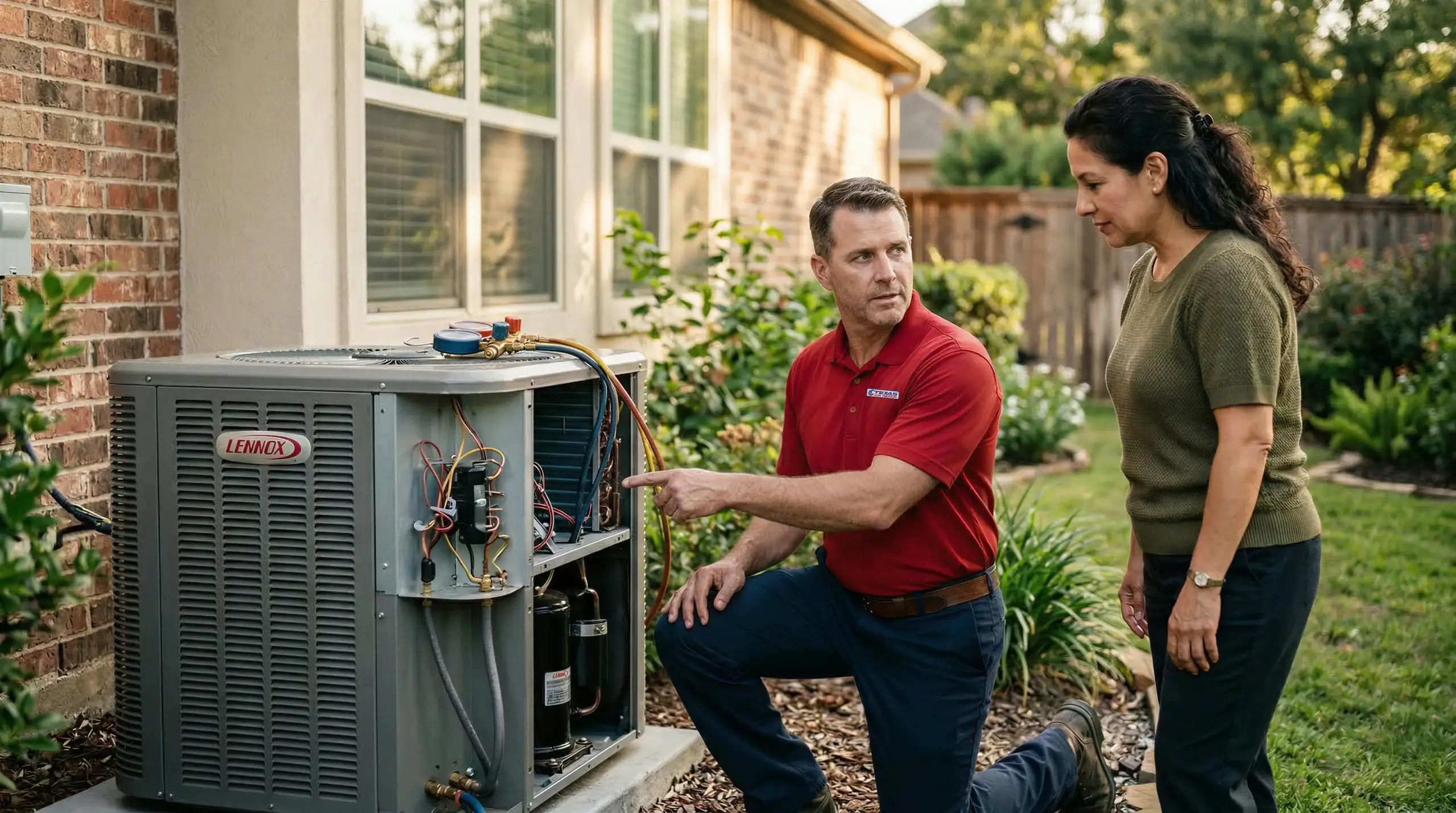
Professional AC repair isn’t just about having fancier tools. It’s about knowing what you’re looking at when you open that panel. A trained technician diagnoses the actual problem, not just the symptom.
Your AC blowing warm air could stem from fifteen different causes. Our technicians know how to test each one systematically instead of guessing. That diagnostic process saves time and prevents the expensive mistake of replacing parts that weren’t broken in the first place.
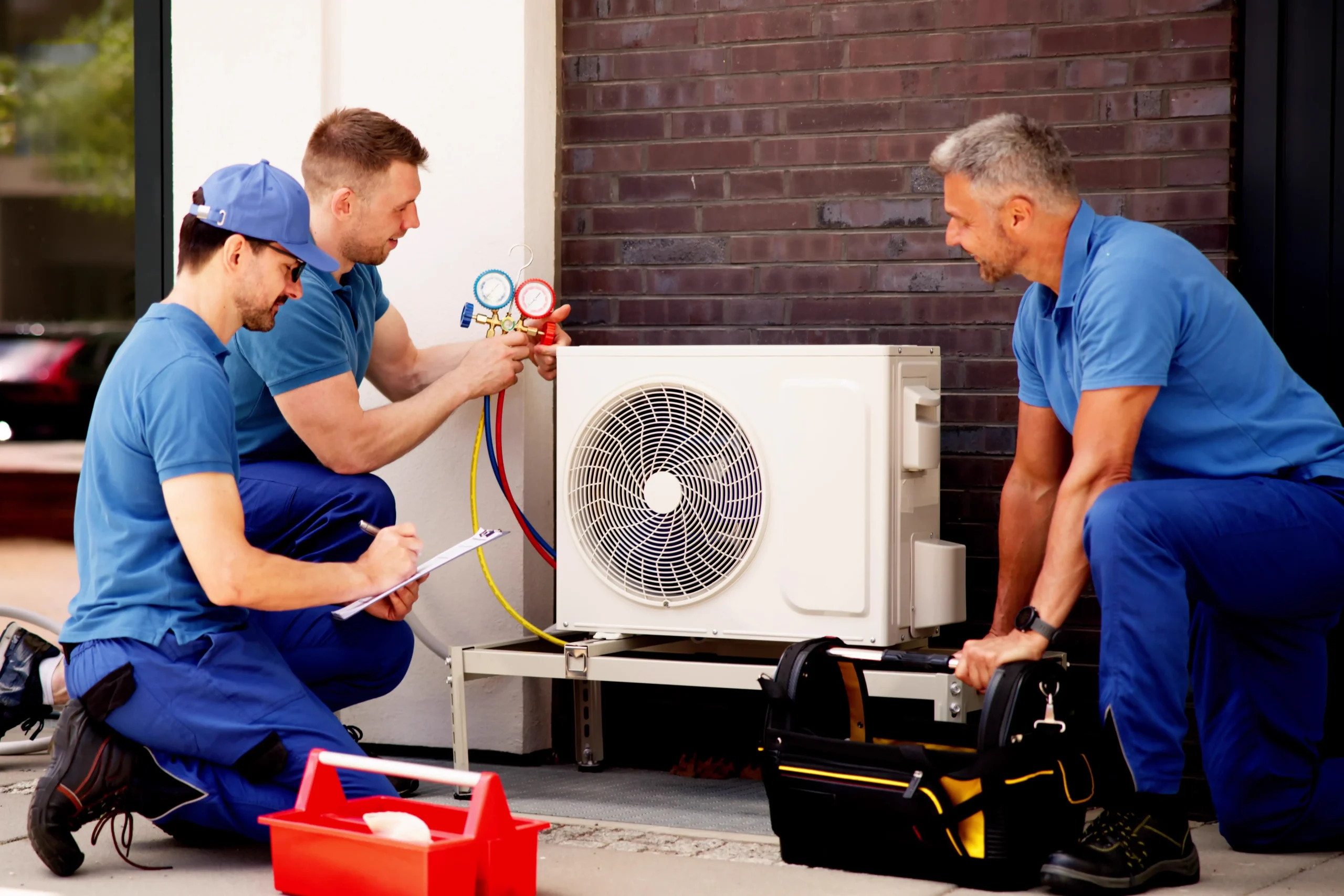
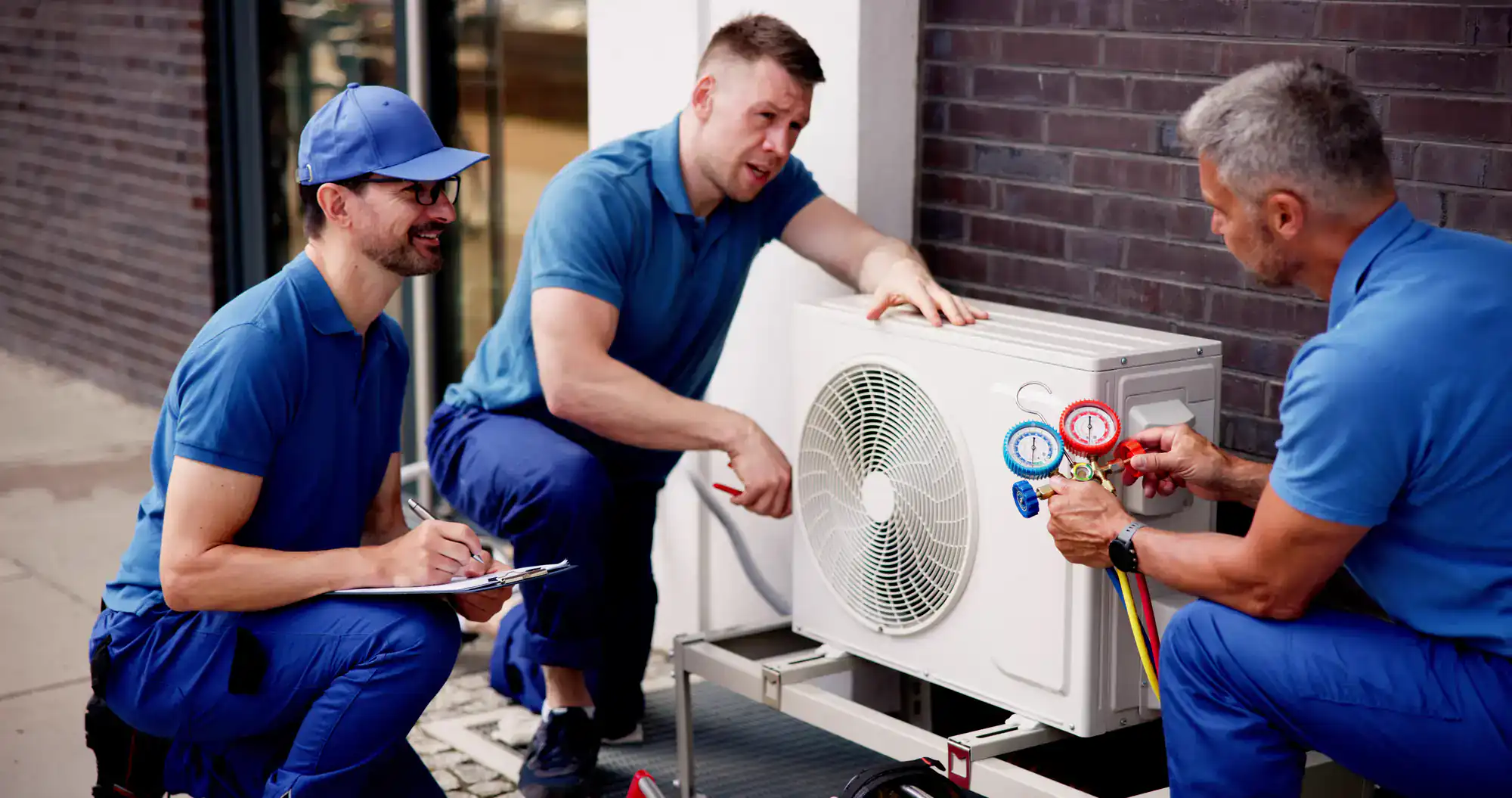
We also have the right equipment. Refrigerant gauges, multimeters, leak detectors, vacuum pumps—these aren’t things you buy for a one-time repair. We use them every day, and we know how to interpret what those tools tell us. That matters when Austin temperatures hit triple digits and your family needs the AC working today, not three days from now after you’ve tried four different fixes.
Then there’s safety. Electrical components can shock you. Refrigerant can poison you. Capacitors hold charges even when the power’s off. We know how to work around these hazards because we’re trained for it and insured for it. You’re not, and that’s not a judgment—it’s just reality.
Refrigerant and electrical work require professional expertise
If your AC’s low on refrigerant, you can’t just top it off like adding oil to your car. Federal law requires EPA certification to purchase, handle, and install refrigerant. That’s not arbitrary red tape—refrigerant is toxic, flammable in some cases, and improper handling creates environmental and health hazards.
More importantly, if your system is low on refrigerant, it’s leaking. Just adding more doesn’t fix the leak. The refrigerant will leak out again, your AC will fail again, and you’ll have wasted money on a temporary patch instead of an actual AC repair.
Finding and repairing refrigerant leaks requires specialized equipment. We use electronic leak detectors or UV dye to locate the exact point where refrigerant escapes. Then we repair the leak, evacuate the system, and recharge it to the manufacturer’s specifications. Get any of those steps wrong and the system won’t work properly. In Austin’s climate where your AC runs nearly year-round, an improperly charged system costs you money every single month through higher electric bills.
Electrical work carries similar risks. Your AC runs on 240 volts in most cases. That’s enough to kill you if you touch the wrong wire. Even if you shut off the breaker, capacitors inside the unit store electrical charges that can shock you hours later. We know how to discharge them safely. Most homeowners don’t even know they’re there.
Wiring problems, failed contactors, blown capacitors, bad motors—these are common AC failures, and they’re all electrical. We can diagnose which component failed, replace it correctly, and test the system to make sure everything else still works properly. Attempting this yourself risks electrocution, fire, or damaging other components in ways that turn a $200 repair into a $2,000 AC replacement.
This isn’t about gatekeeping or protecting business. It’s about recognizing that some jobs require specific knowledge and tools for good reason. The cost of professional AC repair is less than the cost of doing it wrong—sometimes dramatically less.
How professional HVAC service protects your investment
Your AC system represents a significant investment—often $5,000 to $15,000 for a full replacement in Austin. Professional AC repair protects that investment in ways DIY attempts can’t.
First, there’s your warranty. Most manufacturers require professional installation and maintenance to keep warranties valid. Attempt your own repairs and you void that coverage. When something major fails later—like a compressor that costs $1,500 to replace—you’re paying for it entirely out of pocket instead of having the manufacturer cover parts or labor.
Professional repairs also come with their own warranties. If the part fails or the repair doesn’t hold, we come back and make it right at no additional cost. DIY repairs come with no such protection. If you install the wrong part or install the right part incorrectly, you’re buying another part and trying again. That adds up fast.
Then there’s the diagnostic accuracy. We don’t just fix the immediate problem—we identify why it happened and whether other components are at risk. Maybe your compressor failed because of a separate electrical issue. Fix just the compressor and it’ll fail again in six months. We catch both problems and prevent the second failure before it happens, saving you from paying for the same repair twice.
Energy efficiency matters too, especially in Austin where AC systems run hard for eight to ten months a year. An improperly repaired system might run, but it’ll run inefficiently, driving up your electric bill month after month. Professional AC repair ensures the system operates at the efficiency level it was designed for. That difference shows up in your utility costs every single billing cycle.
Finally, there’s time. We show up, diagnose the problem, have the parts on our truck, complete the repair, and test the system—usually in a couple of hours. DIY attempts often stretch across days or weeks as you research, order parts, wait for delivery, realize you ordered the wrong part, and start over. During that time, your family’s sweating through Austin heat that regularly pushes past 100 degrees, and you’re stressed about whether you’ll actually get it working. That’s not worth the money you think you’re saving.
Professional AC repair costs money upfront. But it saves money long-term through warranty protection, accurate diagnosis, efficient operation, and getting your system back online quickly. That’s not a sales pitch. It’s just math that makes sense when you’re facing Austin summers.
Making the Right Call for Your AC Repair Needs
Some AC problems you can handle. Check the breaker, replace the filter, clear debris from the outdoor unit, verify thermostat settings. These simple troubleshooting steps solve real problems and cost you nothing but a few minutes of your time.
Everything beyond that—refrigerant issues, electrical problems, component failures, strange noises you can’t identify—needs professional AC repair. Not because you’re incapable, but because the tools, training, safety requirements, and warranty implications make it impractical and risky to attempt yourself.
When your AC stops working right in Austin’s heat, you need it fixed correctly and quickly. Basic troubleshooting might get you there. If it doesn’t, calling us prevents the expensive mistakes that turn a straightforward repair into a complicated mess that costs more and takes longer to resolve.
We bring over 20 years of HVAC service experience to homes across Austin, San Antonio, and Houston. Licensed technicians, honest pricing, 24/7 emergency service, and repairs done right the first time. When your system needs more than basic troubleshooting, you’re calling people who’ve seen it all and know exactly how to fix it.